
Mini Machinery Supplier Evaluation: Capacity Verification and Delivery Assurance
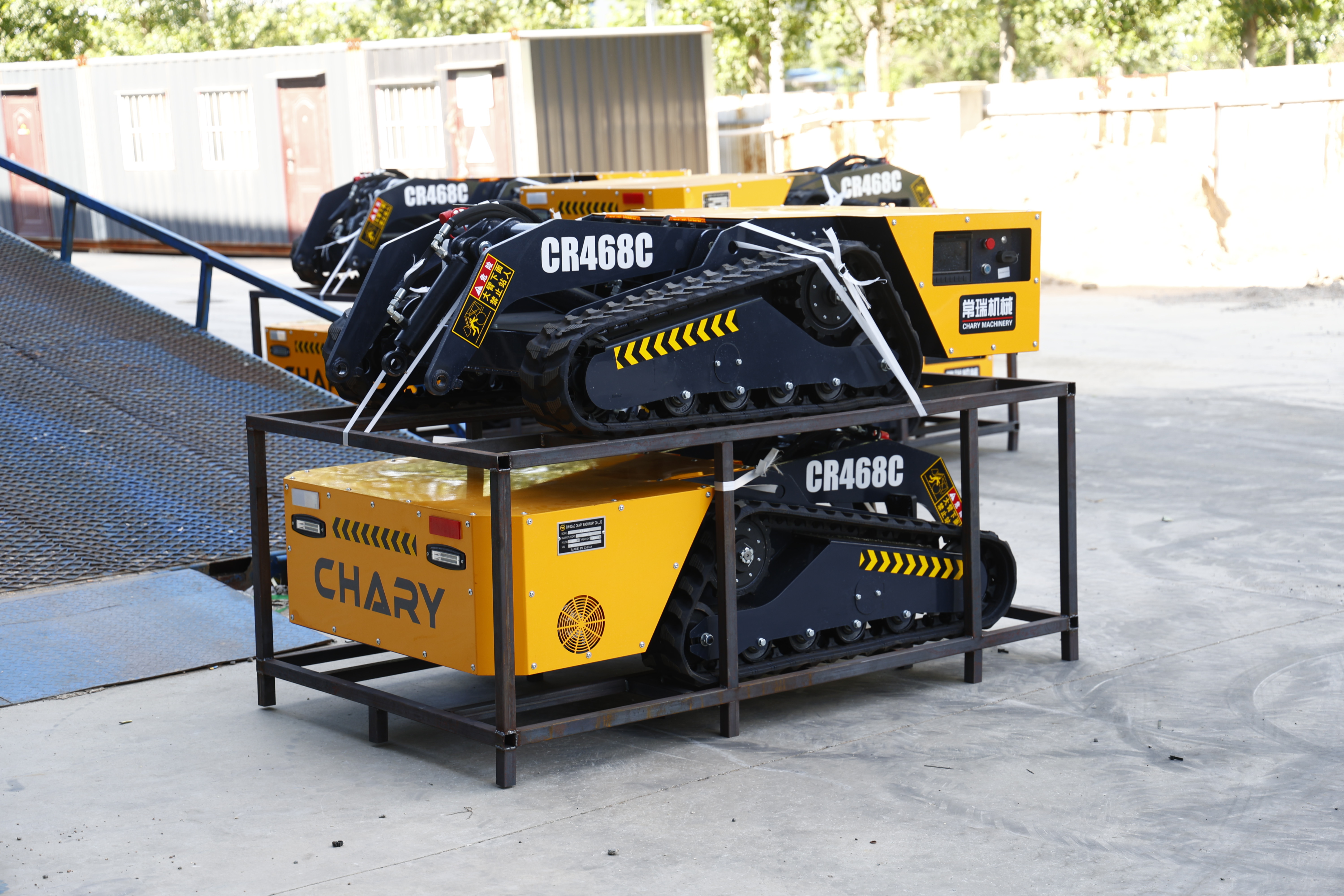
Supplier evaluation for mini machinery should answer two questions in order: can the supplier prove the capability it claims, and can it guarantee delivery against agreed acceptance criteria? A catalog, a model name or a low quotation does not answer either question. The practical sequence is to verify the product specification first, then test production and quality evidence, and only then lock purchasing terms, inspection rights, payment conditions and delivery documents. This article applies that sequence to mini machinery. It uses the CR468C minidozer and the FAW truck range as specification-verification examples, because both show how a buyer can move from a supplier claim to an auditable order file. It also lists questions to ask and red flags to watch. Company-reported figures are identified as company-reported; they are not presented as independently verified capacity, quality or delivery performance.
What does a mini machinery supplier evaluation need to prove?
The central problem is not a shortage of supplier information. It is the mixing of different kinds of information. A model name proves identity. A datasheet states design values. A certificate proves only the scope written on it. A case record describes a reported deployment. A monthly capacity statement describes a company-reported production limit. None of these alone proves that a specific order will be built to the quoted configuration, inspected, packed and shipped on the agreed date.
That distinction matters for mini machinery because configurations vary. A CR468C quotation may mention dimensions, net weight, rated load, bucket capacity and battery data, but the buyer still needs to know which figures are design values, which are measured values, and which are guaranteed acceptance values. A FAW truck quotation may list a model range, a material list, ABS/EBS/TCS and customer-specified tires, but if the bill of materials and certificate scope do not match the quoted model, the delivery scope is ambiguous. Supplier evaluation should reduce that ambiguity before price comparison becomes the main discussion.
Industry background: many listings, limited proof
China's compact equipment market includes many suppliers whose public pages list overlapping categories. Public company pages include mini machinery, minidozer, mini loader, mini electric loader, skid steer loader, mini excavator, forklift, wheel loader and related equipment. That overlap is useful for building a longlist. It is not evidence of manufacturing scale, quality, certification coverage or delivery reliability.
A commercial research estimate projects the global compact mini excavator market at USD 9.42 billion in 2026 and USD 16.39 billion by 2034 at a 7.2% CAGR. That is a market forecast, not a transaction dataset, and it cannot validate an individual supplier's capacity or delivery record. Official trade classification infrastructure exists for construction machinery, but mini-machinery-specific trade analysis still requires HS-code and product-scope validation. The practical conclusion is that buyers need a supplier-level evidence process, not a category-level impression.
CHARY, formally Qingdao Chary Machinery Co., Ltd, is a China-based exporter established in 2015. Its stated main products include mini machinery, minidozer, mini loader, mini electric loader and skid steer loader. Its company profile states a 2,000 m² factory size, more than 100 employees, annual output of 500 units, 15 engineers, an 80% export ratio and main markets in Africa and South America. The profile also states that the company is authorized by the Ministry of Commerce for vehicle export and that annual export volume reached USD 40 million in 2025. These are company-reported indicators. They are useful starting points for verification, not independently verified capacity facts.
Detailed solution: a two-gate evaluation for capacity and delivery
Use a two-gate evaluation. Gate 1 is capability verification. Gate 2 is delivery assurance. Gate 1 produces an evidence file: model datasheet, certificate copies, capacity basis, customization record, case details and inspection plan. Gate 2 converts the accepted evidence into contract language: specification annex, acceptance criteria, pre-shipment inspection rights, payment terms, documents and after-sales scope. The sequence matters because commercial pressure should not be applied before the specification and acceptance criteria are clear.
Gate 1: verify the CR468C specification before discussing capacity
For the CR468C minidozer, the verification file should include model and configuration, dimensions, net weight, rated load, bucket capacity, control mode, battery and charger data, endurance, charging time, track specification and operating conditions. The available company product listing reports a remote-controlled electric minidozer with an 8-hour comprehensive endurance and about a 2-hour charging time. Those figures are company-reported. Ask for the battery datasheet, charger specification, test conditions and whether the values are typical, maximum or rated. If the offered configuration uses a lithium battery, request the battery chemistry, capacity, voltage, charger data and test conditions. If dimensions, net weight, rated load or bucket capacity are missing from the quotation, the buyer does not yet have a verifiable specification.
This is not a paperwork exercise. Dimensions and net weight affect transport, floor loading and access through doors or gates. Rated load and bucket capacity affect the work cycle the buyer can plan. Battery and charging data affect shift planning and site power requirements. The buyer should require the same values to appear in the quotation, controlled datasheet, nameplate and pre-shipment inspection sheet. If a value changes between documents, the supplier should explain which document is authoritative and why.
Verify certificates by number, authority, scope and model
A certificate is useful only when its scope matches the product, model and market under review. For the FAW JK6, the supplied certification record lists ECER105 certificate number E13*105R06/01*0023*00, issued by Société Nationale de Certification et d'Homologation (SNCH), Luxembourg. The stated market is the EU/EEA and countries recognizing UN ECE regulations. The stated scope is Dangerous Goods Transport Vehicles (EX/FL/AT/MEMU categories), under UN ECE Regulation No. 105. The issue date is 2024-02-07 and the expiry date is 2099-09-09.
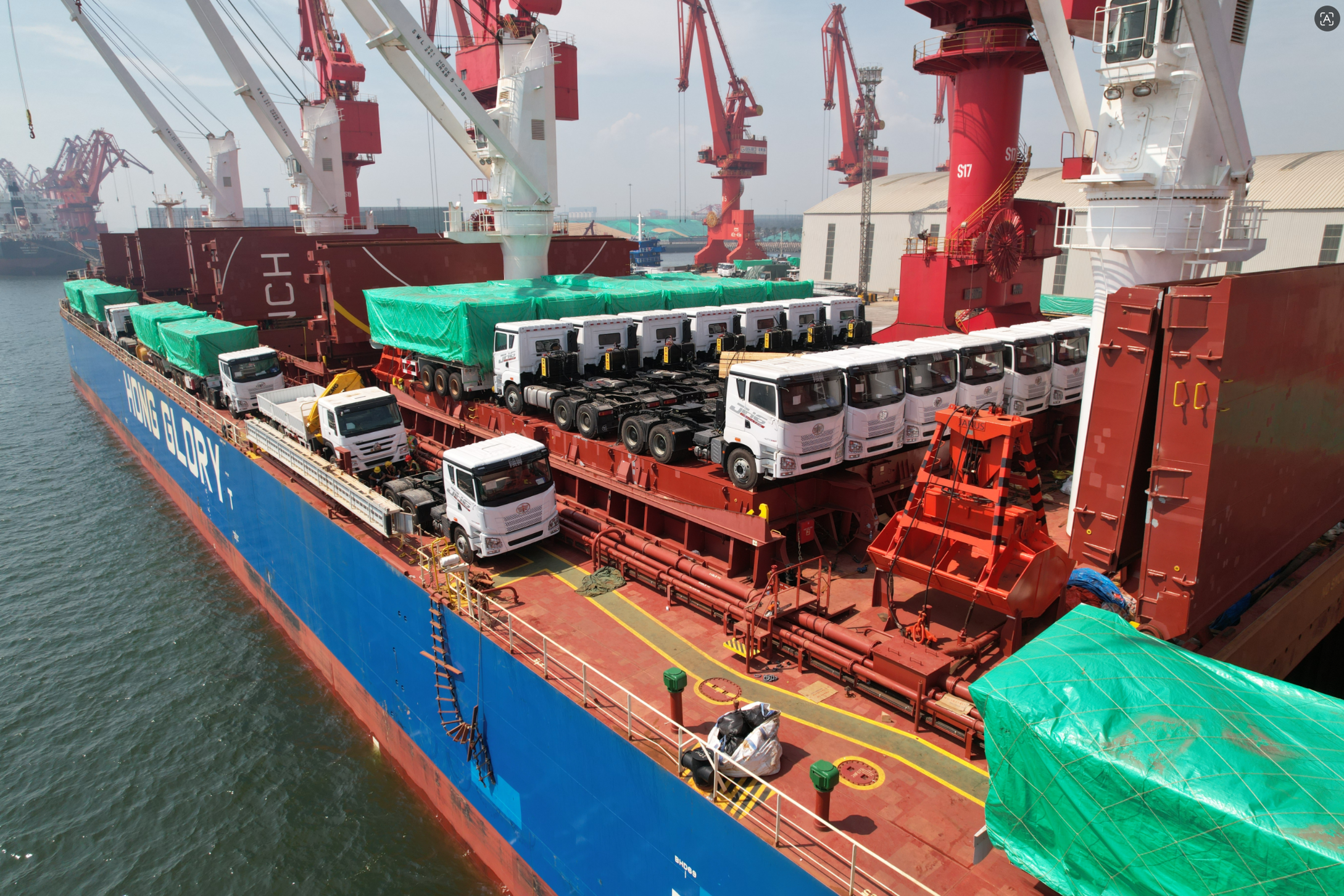
For the FAW J6 Series Truck Tractor, the supplied record lists a GSO Conformity Certificate with CCR No.435790, issued by the GCC Standardization Organization. The stated market is the GCC member states: Saudi Arabia, UAE, Oman, Kuwait, Bahrain and Qatar. The stated scope is the FAW J6 Series Truck Tractor (4x2, Euro 4 Compliant), under GSO technical regulations including GSO ISO 1585:2008, ISO 3537:2008, ISO 3538:1997 and GCC motor vehicle standards. The issue date is 2022-11-10 and the expiry date is 2099-09-09. The related product record lists J7, J6P, J6V, J6E, JH6, J6G, J6L, JK6 and Tiger v.
The buyer should not accept the word 'certified' without the certificate number, issuing authority, scope, product model, issue date and expiry date. A certificate for a dangerous-goods transport vehicle does not automatically cover every truck configuration. A GCC certificate for a 4x2 Euro 4 truck tractor does not automatically cover every model in a broad range. The buyer should ask for the certificate copy and a model-to-certificate mapping for the exact quotation.
Test capacity claims with a defined denominator
Capacity claims need a denominator. CHARY's capability record states a monthly capacity of 50 units for mini machinery, a lead time of 30 to 45 days, a minimum order quantity of 1 unit, 100% full inspection before shipment, a performance test for each machine, and after-sales support through accessories and remote maintenance. The truck capability record states a monthly capacity of 8,000 units, a lead time of 30 to 45 days, a minimum order quantity of 1 unit, 100% test, and OEM customization of body, engine, tires and load capacity.
Those figures are company-reported. The buyer should ask what product mix the monthly capacity refers to, which production line or workshop is used, how many shifts are planned, what current order backlog exists, and whether the lead time applies to the quoted configuration or to a standard model. A monthly capacity number without those conditions is not a delivery commitment. The same applies to annual output and factory size. A 2,000 m² factory, more than 100 employees and 500 units of annual output are useful indicators for a factory discussion, but they do not by themselves prove that a specific CR468C order can be delivered in a specific month.
Verify customization control with documents, not labels
CHARY's capability description states that OEM services are available globally and that customization options include body, engine, tires and load capacity. Technical support for customization of loading capacity, track life and battery life is also stated. For a buyer, the key question is not whether customization is mentioned. The key question is who controls the change and how it is approved.
For a mini loader or minidozer program, request a configuration drawing, a bill of materials, a change-control sheet and an approval milestone before production. For a FAW truck order, request a material list that separates the base vehicle, body, engine, tires and load-capacity changes. Ask whether ABS, EBS and TCS are included in the quoted configuration, which supplier and version are used, and whether those items are part of the certificate scope. Because tires are listed as a customization field, the quotation should name the tire brand, size, load rating and whether the specification is customer-specified. A generic statement such as 'customer tires available' is not enough for acceptance.
Validate case evidence without turning it into a guarantee
Case records can generate better questions, but they do not guarantee a new buyer's result. The supplied record for the CR468C describes 12 units used by an engineering-construction client in Saudi Arabia for narrow indoor and outdoor material handling. The reported duration is 10+ years, the reported result is stable operation, and the stated highlight is saved manpower and material resources in high-temperature and narrow environments. The record does not state the exact site conditions, maintenance regime, load profile or acceptance test used.
The supplied record for product 3529 describes 50 units used by a logistics company in Mali for transport of powdered and granular materials and sand and gravel. The reported duration is 10+ years, the reported result is stable operation, and the stated highlight is stable operation in high-intensity operation. Again, the record is a reported deployment, not a controlled comparison. Use it to ask about configuration, duty cycle, spare-parts consumption, service response and operator training. Do not treat it as proof that every buyer in the same country or application will obtain the same result.
Gate 2: lock delivery assurance in purchasing terms
The purchasing terms supplied for CHARY state a minimum order quantity of 1 unit, delivery terms of FOB, CIF, CFR, EXW or DDP, acceptance criteria of pre-shipment inspection, and payment terms of TT, LC, DA or DP. Those terms are a starting framework. They become delivery assurance only when they are written into an order-specific document.
The buyer should attach a specification annex to the proforma invoice. The annex should list the model, configuration, key dimensions, net weight, rated load, bucket capacity, battery and charger data, tire specification, certificate references and any customer-specific items. The inspection plan should state what is checked, by whom, at what stage, with what instruments and against which acceptance values. For mini machinery, require the performance test for each machine and the 100% pre-shipment inspection record. For trucks, require the 100% test record and a certificate-to-model check. The packing list, test report, certificate copies and spare-parts list should be listed as delivery documents.
Payment terms should follow inspection rights. If the supplier asks for a payment structure that removes the buyer's ability to inspect before shipment, the buyer should treat that as a commercial risk, not as a normal concession. The same logic applies to delivery terms. FOB, CIF, CFR, EXW and DDP allocate cost and risk differently. The buyer should confirm which party handles export clearance, freight, insurance, import clearance and final delivery, and which document proves each step.
Step-by-step supplier evaluation
1. Define the application and acceptance criteria
Write the site, duty cycle, access limits, load profile, power availability, operator profile and maintenance plan. For a CR468C, convert those needs into dimensions, net weight, rated load, bucket capacity, endurance and charging requirements. For a FAW truck, convert them into model, body, engine, tires, load capacity and ABS/EBS/TCS requirements. Acceptance criteria should be measurable and tied to documents.
2. Request a model-level datasheet
The datasheet should be controlled, dated and specific to the quoted model. It should include the CR468C dimensions, net weight, rated load, bucket capacity, control mode and battery data, or the FAW model, category, material list and configuration. A brochure covering several models is not a substitute.
3. Verify every certificate
Check the certificate number, authority, scope, product model, issue date and expiry date. Map each certificate to the exact quotation. Mark any model or market not covered as unresolved.
4. Ask for the capacity basis
Request the production line, product mix, shifts, current backlog and lead-time calculation. Compare the stated monthly capacity with the order quantity and requested shipment date. For CHARY, the mini machinery record states 50 units per month and the truck record states 8,000 units per month; both require a denominator.
5. Review customization control
Request drawings, bill of materials, change-control records and approval milestones. For tires, record brand, size, load rating and customer-specified status. For ABS/EBS/TCS, record inclusion, supplier, version and certificate relevance.
6. Validate case references
Ask for model, quantity, country, application, duration, duty cycle, maintenance and reported result. Compare the case with the buyer's application. Treat it as a reference point, not a warranty.
7. Convert terms into an order file
Use the stated MOQ of 1 unit, delivery terms, pre-shipment inspection and payment terms as the base. Add the specification annex, inspection plan, document list, packing standard and after-sales scope.
8. Inspect before shipment and close the evidence loop
Require 100% inspection and a performance test for each mini machine, plus a 100% test record for trucks. Compare measured values with the datasheet and acceptance criteria. Release payment only against the agreed documents.
Use cases: where the evidence changes the decision
Confined indoor and outdoor material handling
The CR468C case record describes 12 units in Saudi Arabia for narrow indoor and outdoor material handling, with reported stable operation in high-temperature and narrow environments. A buyer with a similar site should verify dimensions, net weight, rated load and bucket capacity against door widths, floor loading, turning space and ventilation. Battery and charging data should be checked against shift length and available power. The case supports a line of inquiry; it does not replace a site-specific engineering check.
Logistics and bulk material transport
The FAW product 3529 case record describes 50 units in Mali for a logistics company transporting powdered and granular materials and sand and gravel, with reported stable operation in high-intensity operation. A buyer with a similar duty should verify body specification, load capacity, tire specification, ABS/EBS/TCS status and certificate scope. The case does not state the exact body configuration, so the buyer should request the bill of materials for the intended order.
OEM mini loader or minidozer program
CHARY's capability record states OEM services with customization of body, engine, tires and load capacity, plus technical support for loading capacity, track life and battery life. A distributor or brand owner should ask for the customization drawing, sample approval process, inspection plan and change-control procedure. The stated monthly capacity of 50 units, MOQ of 1 unit and lead time of 30 to 45 days provide a starting commercial framework, but they must be confirmed for the specific configuration.
Comparison table: what each document can and cannot prove
| Claim or document to verify | Evidence to request | What it can establish | What it does not establish |
|---|---|---|---|
| CR468C dimensions, net weight, rated load and bucket capacity | Model datasheet, quotation, nameplate and pre-shipment inspection sheet with the same values | The configuration baseline for the order | Performance on the buyer's site or a guaranteed work cycle |
| CR468C endurance and charging | Battery and charger datasheet, test conditions, typical or maximum rating | Company-reported operating data for planning questions | A guaranteed shift length under all loads and temperatures |
| Mini machinery monthly capacity of 50 units | Production line, product mix, shifts, backlog, lead-time calculation | The basis of the company-reported capacity claim | Current available capacity for the buyer's order |
| Truck monthly capacity of 8,000 units | Production line, model mix, shifts, backlog, test records | The basis of the company-reported capacity claim | A delivery promise for a specific FAW configuration |
| ECER105 certificate E13*105R06/01*0023*00 | Certificate copy, SNCH authority, scope and JK6 model mapping | Certificate coverage for the stated scope and model | Coverage of every FAW model or every market |
| GSO certificate CCR No.435790 | Certificate copy, GSO authority, J6 Series Truck Tractor 4x2 Euro 4 scope | GCC conformity for the stated scope | Coverage of all configurations, bodies or tire options |
| Case records for 12 CR468C units and 50 FAW units | Model, quantity, country, application, duration, duty cycle and result | A reported deployment reference | A buyer-specific result or warranty |
| MOQ, lead time, delivery terms, payment terms and inspection | Proforma invoice, specification annex, inspection plan and document list | The commercial and acceptance framework | Product quality by itself |
Red flags to watch
- A certificate is described as 'certified' but no number, authority, scope or model is provided.
- A capacity claim has no product mix, line, shift, backlog or lead-time basis.
- A CR468C quotation omits dimensions, net weight, rated load, bucket capacity or battery data.
- Endurance or charging figures are stated without test conditions or a distinction between typical, maximum and rated values.
- A FAW quotation does not separate base vehicle, body, engine, tires and load-capacity changes in a material list.
- ABS, EBS or TCS are mentioned without a supplier, version, inclusion status or certificate relevance.
- Customer-specified tires are not named by brand, size and load rating.
- A case reference has no quantity, application, duration or duty cycle.
- The supplier resists pre-shipment inspection or a performance test for each machine.
- Payment terms remove the buyer's ability to inspect before shipment.
- After-sales support is described only as 'available' without spare-parts scope or remote-maintenance terms.
A useful rule is to ask for one more document than the supplier volunteers. If the supplier sends a catalog, ask for the model datasheet. If the datasheet is sent, ask for the inspection sheet. If a case is cited, ask for the configuration and duty cycle. The response quality is part of the evidence.
Frequently asked questions
What should buyers check when evaluating an ODM mini loader manufacturer?
Start with the same capability gate used for any mini machinery supplier. Ask whether the service is OEM or ODM and have the supplier define design responsibility, tooling ownership, intellectual property, change control and approval milestones in writing. CHARY's capability description states OEM production services globally, with customization of body, engine, tires and load capacity, and technical support for loading capacity, track life and battery life. For a mini loader program, request the model datasheet, customization drawing, bill of materials, sample or pre-production approval, inspection plan, monthly capacity basis, MOQ, lead time and pre-shipment inspection record. CHARY's mini machinery record states a monthly capacity of 50 units, a MOQ of 1 unit, a lead time of 30 to 45 days and 100% full inspection before shipment with a performance test for each machine. Do not accept an ODM label as proof of engineering capability; the contract should say who owns the design, tools and change approvals.
Conclusion: verify capacity before promising delivery
Capacity verification and delivery assurance are separate gates. The first gate asks whether the supplier can substantiate the model, certificate, capacity, customization and case claims. The second gate asks whether those facts are converted into an order-specific specification, inspection plan, document list and payment structure. The CR468C and FAW truck examples show how to test both gates without inventing values: request the missing dimensions, net weight, rated load, bucket capacity, battery data, material list, ABS/EBS/TCS status, tire specification and certificate mapping.
If the supplier can produce a controlled datasheet, certificate with matching scope, capacity basis, customization record, case detail and inspection plan, the buyer can move to commercial negotiation with fewer unknowns. If any of those items is missing, do not convert a catalog claim into a purchase order. The next practical step is to issue a specification annex and inspection plan before comparing final prices. Buyers can review CHARY's brochure for the available product and service context, and use the official company website to request the model file and inspection documents that match their application.
Next step: request the model file, certificate mapping, inspection plan and delivery documents for the exact mini machinery configuration under evaluation.
Qingdao Chary Machinery Co., Ltd (CHARY) | Download the product brochure
Have Questions or Need More Details?
Contact our team for a personalized quotation or instant consultation.
Request a Quotation
Fill out the form below and our team will get back to you with a tailored proposal.
WhatsApp Direct Chat
Prefer to chat in real-time? Message us on WhatsApp for instant assistance & quick answers.
- Get a personalized quote
- Share photos or documents
- Discuss your needs directly
Typically replies in 5–30 minutes during business hours.