
FAW Truck Categories Explained: A Foundational Guide to Body Types and Applications
FAW TRUCK categories are best understood as body-type families first and model names second. A tractor truck pulls a trailer, a dump truck carries and discharges bulk material, a cargo truck carries general goods, and special-purpose bodies such as concrete mixer, garbage, sprinkler, water tank, fuel tank and wrecker trucks add task-specific equipment. FAW TRUCKS is a commercial vehicle brand of FAW Group Corporation, headquartered in Changchun City, Jilin Province, China, and Qingdao Chary Machinery Co., Ltd (CHARY) is a first-level distributor and authorized exporter for FAW TRUCKS.
What Are FAW Truck Categories?
FAW TRUCK categories are commercial truck families grouped by the work the vehicle is built to perform. In the FAW TRUCK product data used for this guide, the listed body types include tractor truck, dump truck, cargo or rigid or light truck, concrete mixer truck, garbage truck, sprinkler truck, water tank truck, fuel tank truck and wrecker truck. The same data set also lists other special-purpose truck types, but the categories in this article are the foundational set most buyers encounter first.
The distinction matters because a model name alone does not tell a buyer whether a vehicle can pull a trailer, discharge coal, carry packaged goods, mix concrete or support municipal water spraying. The body type determines the loading method, the equipment interface, the likely industry fit and the constraints that must be checked before a quotation is issued.
FAW TRUCKS is a commercial vehicle brand of FAW Group Corporation, headquartered in Changchun City, Jilin Province, China. Qingdao Chary Machinery Co., Ltd (CHARY) is a first-level distributor and authorized exporter for FAW TRUCKS. CHARY was established in 2015 and works with commercial vehicle and engineering machinery buyers in markets that include Africa, the Middle East, Southeast Asia, Central Asia and Eastern Europe, and Latin America.
The Buyer Problem: Body Type Names Do Not Explain Fit
A first-time buyer often starts with a model name, a country market and a budget target. That sequence is understandable, but it can lead to a mismatch. A tractor truck is not a substitute for a dump truck. A cargo truck with a standard body is not automatically a refrigerated truck. A water tank truck is not the same as a fuel tank truck. A garbage truck body is not interchangeable with a dump body even if both are used in municipal or construction work.
The practical problem is that body type, chassis configuration, weight range, dimensions, material, safety configuration and compliance evidence must be read together. The FAW TRUCK data set lists a truck weight range of 3000–15000 kg and a size range of 6000×2300×3000 mm to 12000×2550×3800 mm. Those ranges describe the available data envelope, not a promise that every body type is available at every point in the range. Buyers need to confirm the exact combination for the selected model and body.
A second problem is market compliance. The same body type can require different evidence in different destinations. The provided certification data includes a UN ECE R105 entry for dangerous goods transport vehicles and a GCC conformity certificate for a FAW J6 Series Truck Tractor (4x2, Euro 4 Compliant). Those examples show why the certificate scope, model and market must be checked rather than assumed from a general body-type label.
Industry Background: Why Body Types Matter in Commercial Vehicle Procurement
Commercial truck procurement is organized around duty cycles. Logistics freight distribution, logistics fleet operations, coal and mineral transport, port transport, express delivery, industrial goods transport, building materials transport, agricultural and sideline product transport, livestock and poultry transport, general bulk cargo, cold chain transport, urban distribution, urban waste transport, log transport, large machinery and equipment transport and chemical raw material transport are all listed application areas in the FAW TRUCK data used here. Each application puts different demands on the body, loading method and operating environment.
The same data set lists working conditions that include high temperatures, humidity, muddy terrain, rainy weather, snowy weather, highways and urban roads. A truck used on highways for general cargo is not configured in the same way as a truck working in muddy terrain at a mine or construction site. Body type is therefore not a cosmetic choice. It is the first filter that connects the vehicle to the job.
FAW TRUCK body types also share common technical foundations. The data set lists materials that include steel, iron, aluminum alloy and plastic, and safety configurations that include ABS, EBS and TCS. Drive configurations in the application data include rear-wheel drive 6x4 and 6x2 plus all-wheel drive 6x6 and 8x8. Model image names in the product data also include 8x4 dump trucks. Buyers should confirm the exact drive configuration for the selected model instead of treating one configuration as universal across the range.
A Practical Category Map for FAW TRUCK Body Types
The following category map explains what each body type is for, where it commonly fits, and what a buyer should verify. The definitions are deliberately functional: they describe the work the body performs, not a claim that one body type is superior to another.
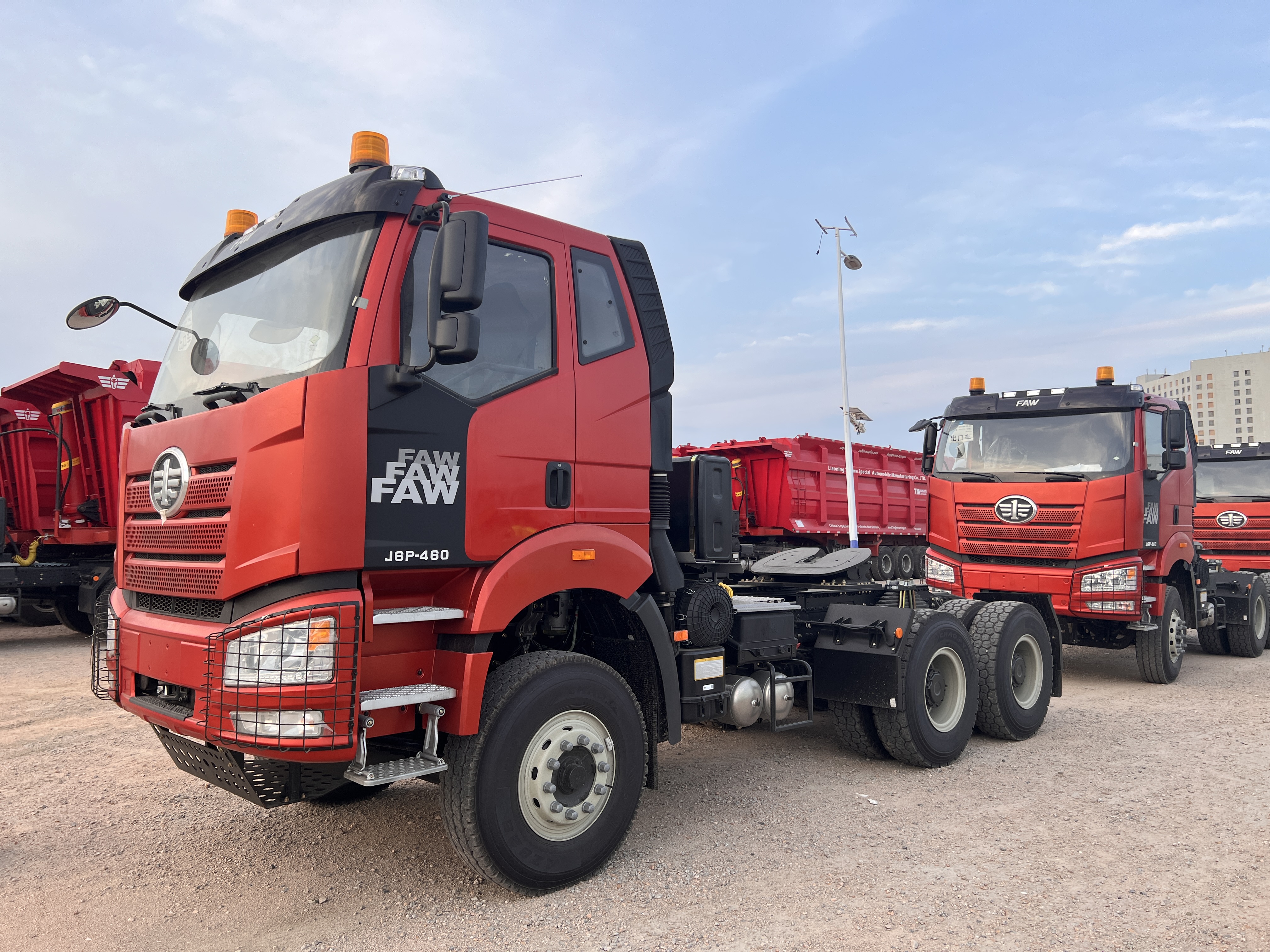
Tractor Truck
A tractor truck is a truck designed to pull a semi-trailer rather than carry cargo in its own body. In the FAW TRUCK range, the tractor truck is one of the listed body types, and it fits logistics freight distribution, logistics fleet operations, port transport and large machinery and equipment transport. The buyer decision is not only the tractor model; it is also the trailer interface, the route, the load and the port or highway duty cycle.
For port and freight fleets, the tractor truck is often evaluated as part of a combination. Confirm the model, drive configuration, safety configuration and trailer compatibility before comparing quotations. A tractor truck quotation that does not state the intended trailer and route is incomplete for procurement purposes.
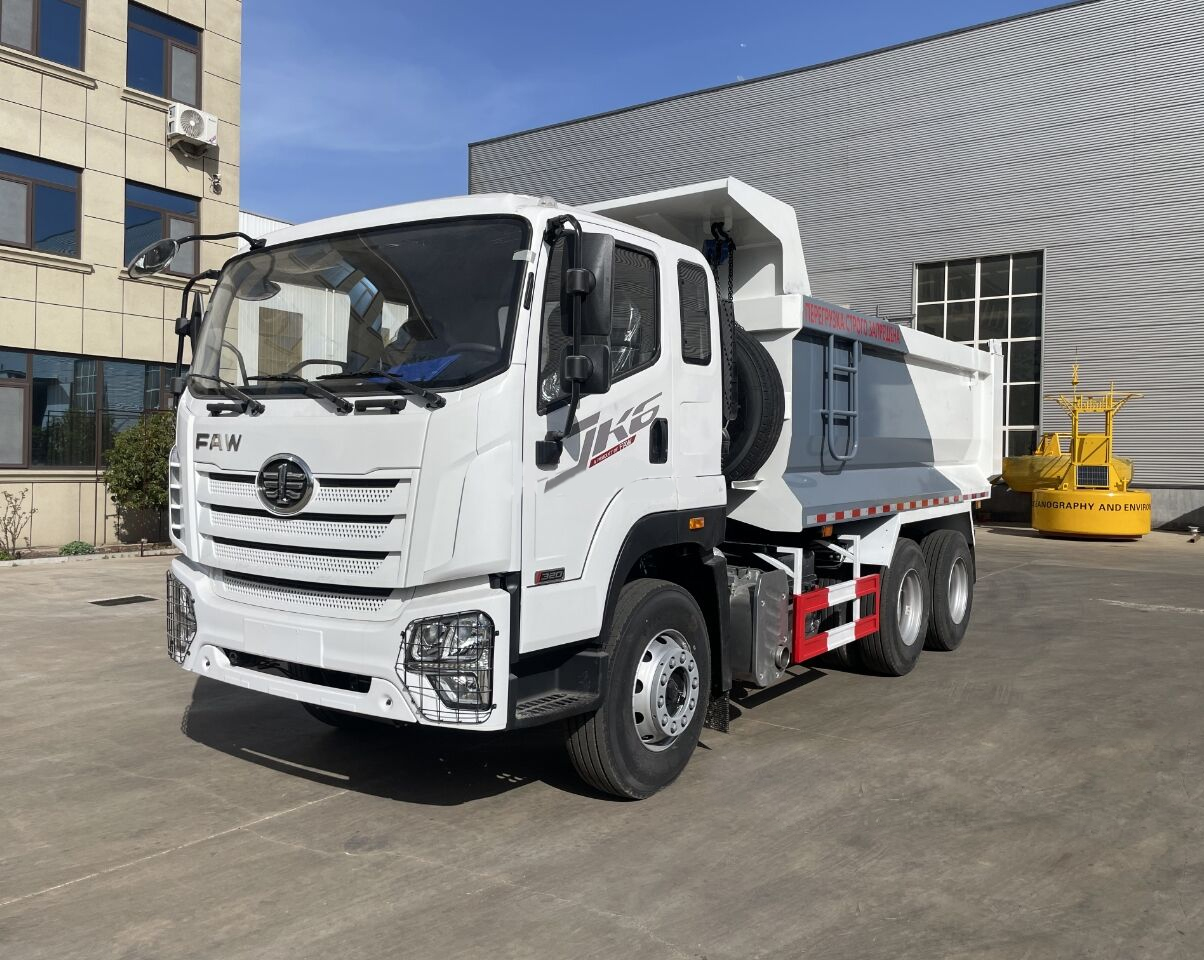
Dump Truck
A dump truck carries bulk material and discharges it through a tipping body. The FAW TRUCK data lists dump trucks as a core body type and connects the range to coal and mineral transport, building materials transport, construction sites and mines. A dump truck is therefore a construction and mining-oriented category, not a general cargo category.
The FAW J6P 8x4 Dump Truck (CA5310) is listed in the verified data with an 11L CA6DM2 engine and 390 hp. That example is useful because it shows why dump truck buyers should ask for model-level specifications rather than rely on the body-type name alone. The same body type can appear across different models and configurations, so engine, load capacity, drive configuration and body details must be confirmed in the quotation.
Cargo, Rigid and Light Truck
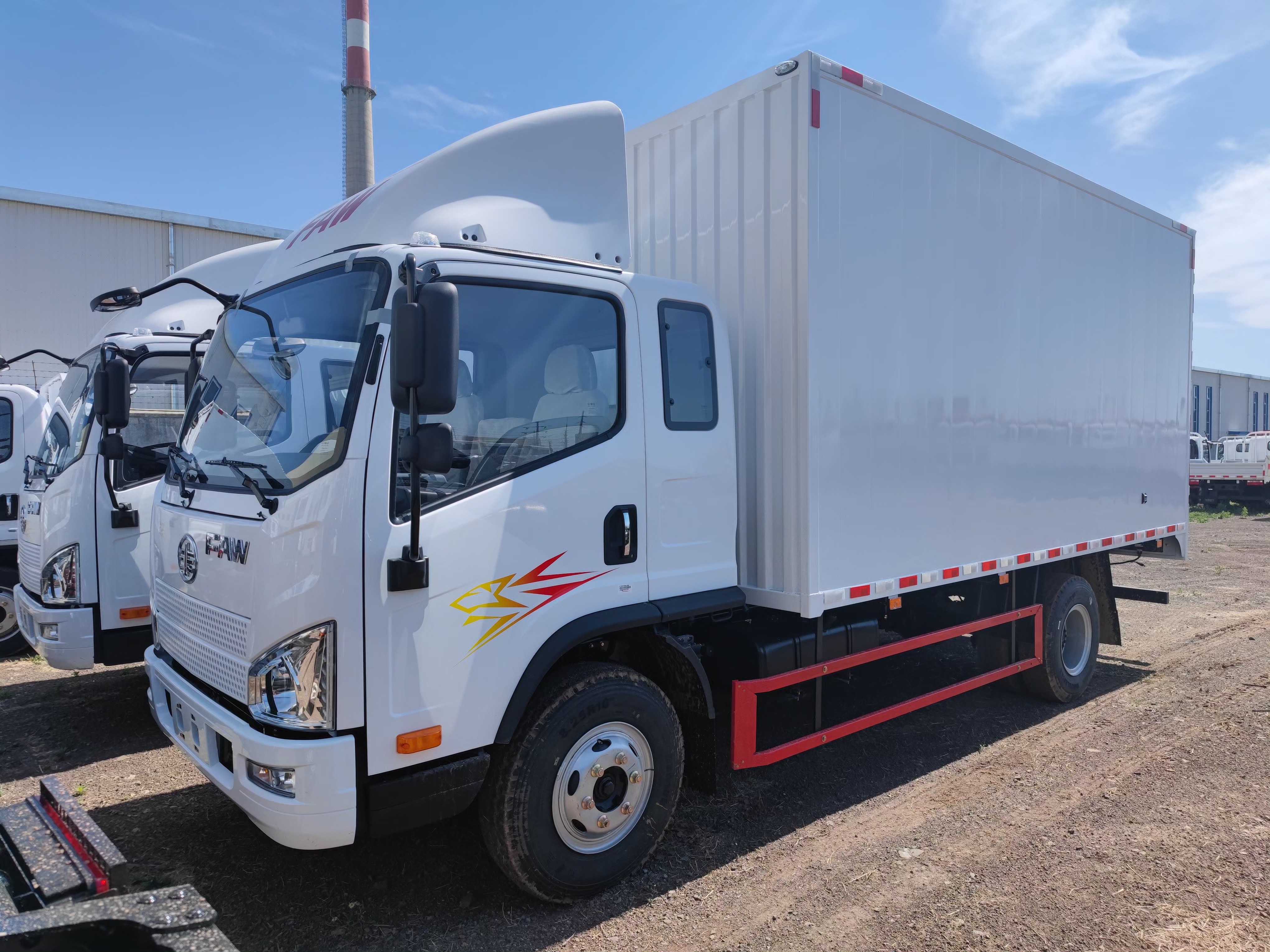
A cargo truck, rigid truck or light truck carries goods in a fixed cargo body. The FAW TRUCK data connects this category to logistics freight distribution, express delivery, daily industrial goods transport, agricultural and sideline product transport, livestock and poultry transport, general bulk cargo, cold chain transport when a refrigerated body is specified, urban distribution, log transport and large machinery and equipment transport.
Cargo truck is a broad label. Before requesting a quotation, define the cargo type, the loading method, the route and whether the body must be refrigerated, boxed, flatbed, stake or another configuration. A standard cargo truck should not be assumed to be a refrigerated truck. The refrigerated truck is a distinct application requirement even when it is built on a cargo-type chassis.
Concrete Mixer Truck
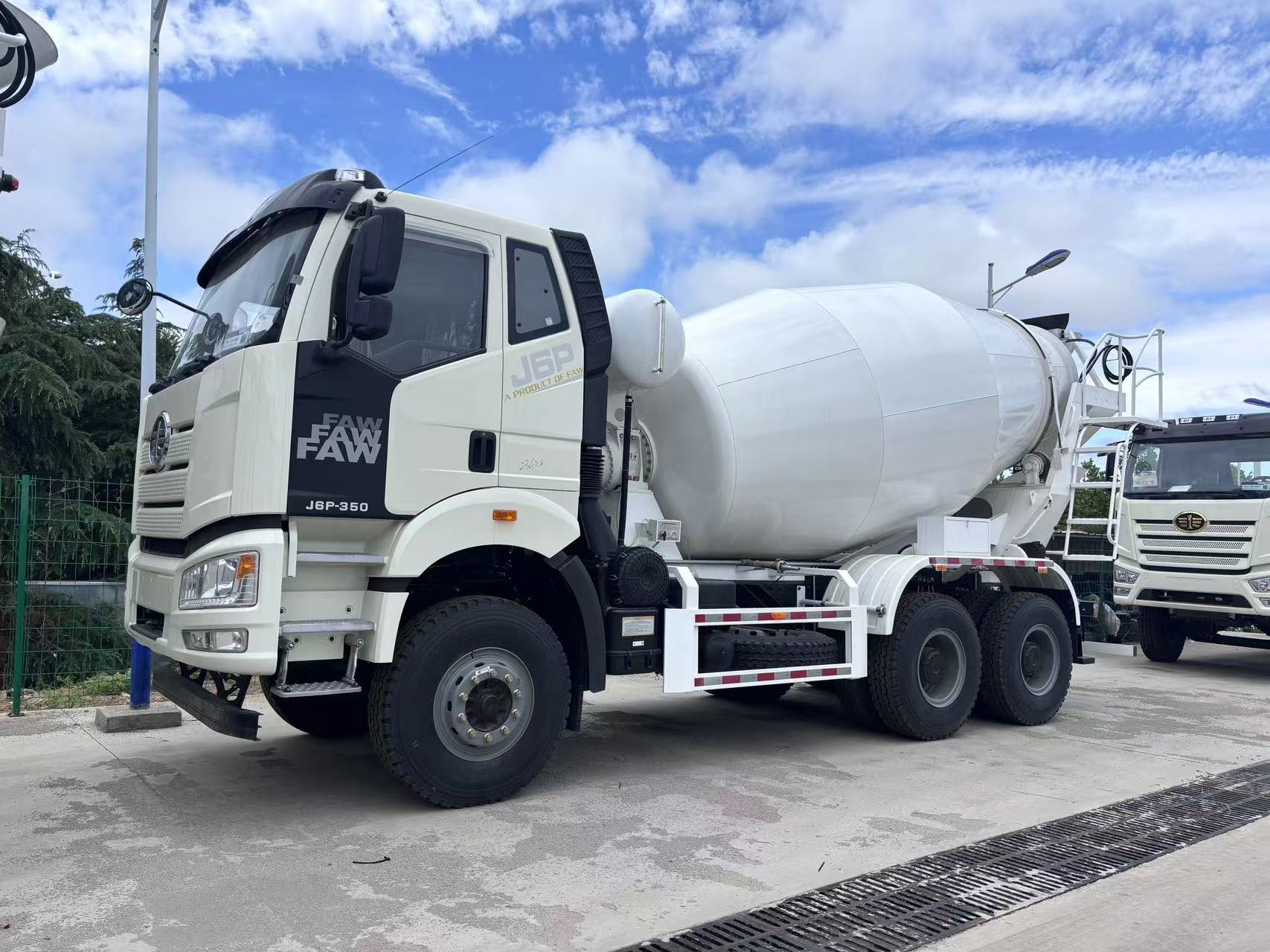
A concrete mixer truck carries and mixes concrete with a rotating drum. The FAW TRUCK data lists concrete mixer truck as a body type and connects the range to building materials transport and construction sites. The key procurement questions are the drum capacity, the discharge method, the site access conditions and the chassis configuration that supports the mixer body.
Concrete mixer trucks are not selected by body name alone. The buyer should confirm the model, the body builder specification, the weight and dimension envelope, and the safety configuration. Because concrete work is schedule-sensitive, the quotation should also state the delivery and lead-time assumptions.
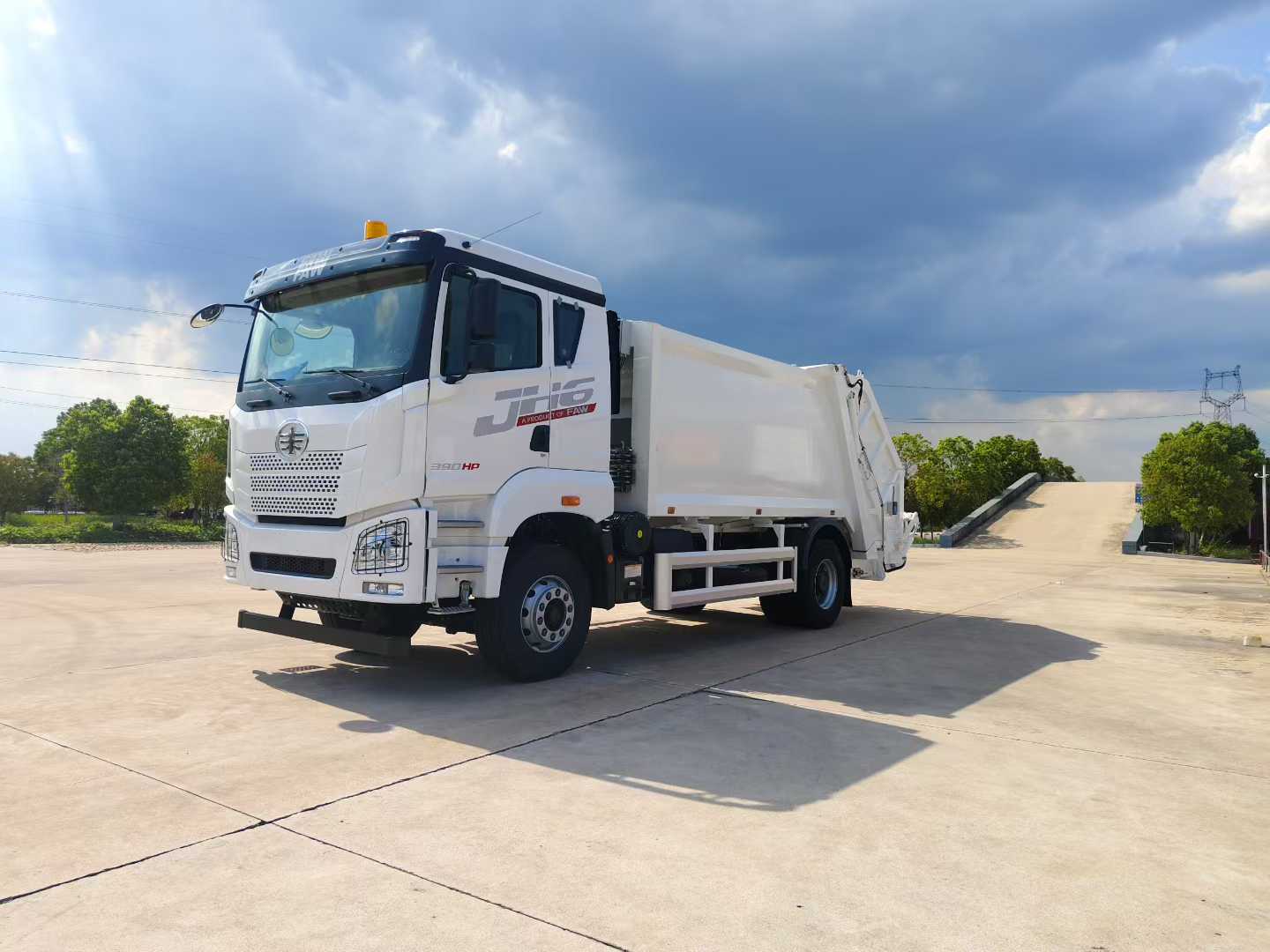
Garbage Truck
A garbage truck is a municipal and urban waste transport body. The FAW TRUCK data lists garbage truck as a body type and connects the range to urban waste transport, cities, transfer stations and urban distribution. The body design matters because waste collection involves stopping, loading and compacting or containing material, not simply tipping a load.
Buyers should confirm the loading method, body volume, chassis model and operating environment. A garbage truck used in a dense urban area has different requirements from a dump truck used at a construction site, even if both work in the same city.
Sprinkler Truck
A sprinkler truck carries water and sprays it for municipal, construction-site or road-related work. The FAW TRUCK data lists sprinkler truck as a body type and connects the range to cities, urban roads and construction sites. Sprinkler trucks are often specified with a tank, pump and spray system, so the body equipment is as important as the chassis.
Buyers should confirm the tank material, spray equipment, pump specification and intended route. The data set lists steel, iron, aluminum alloy and plastic among materials used across the range, but the exact material for a sprinkler tank should be confirmed in the quotation.

Water Tank Truck
A water tank truck carries water in a tank body. It is a listed FAW TRUCK body type and is related to municipal, construction-site and urban support work. The buyer should distinguish between a water tank truck and a sprinkler truck: both carry water, but the sprinkler truck adds spraying equipment for a specific task.
Confirm the tank capacity, tank material, discharge or transfer method and chassis configuration. If the truck will support dust control, road work or site services, state that use in the inquiry so the body specification can be matched to the task.
Fuel Tank Truck
A fuel tank truck carries fuel in a dedicated tank body. The FAW TRUCK data lists fuel tank truck as a body type and connects the range to chemical raw material transport. Fuel tank trucks are a compliance-sensitive category because the tank, vehicle and market requirements must be verified before import or operation.
Buyers should confirm the tank specification, safety equipment, chassis model and the applicable market requirements. The provided certification data includes UN ECE R105 for dangerous goods transport vehicles, with certificate E13*105R06/01*0023*00 issued by Société Nationale de Certification et d'Homologation (SNCH), Luxembourg, under UN ECE Regulation No. 105. That certificate is associated with the FAW JK6 in the product data and covers dangerous goods transport vehicle categories EX/FL/AT/MEMU. It should not be assumed to apply to every fuel tank truck configuration without checking the exact scope.
Wrecker Truck
A wrecker truck provides recovery and towing support. It is a listed FAW TRUCK body type and is used where a vehicle needs to be lifted, towed or recovered. The procurement questions are the recovery equipment, boom or crane specification, chassis configuration and the road or site conditions where the wrecker will operate.
Because wrecker bodies vary widely, the buyer should request a body specification and confirm the equipment against the intended recovery task. A wrecker truck should not be specified from the chassis model alone.
FAW TRUCK Models and the Category Decision
The FAW TRUCK model range used in this guide includes J7, J6P, JH6, J6L, JK6 and Tiger V. These model names sit above or alongside the body-type decision. A buyer should not choose a model first and then ask what body types are available without defining the work. The more reliable sequence is to define the body type and duty cycle, then confirm which model and configuration can support it.
The data set also lists J6V, J6E, J6G and NEW J5P in the broader product range, and it lists body types that include sweeper, concrete pump, asphalt distributor, high altitude platform and fire truck. This guide keeps the focus on the foundational categories named at the start so that first-time buyers are not overwhelmed by every special-purpose variant.
Step-by-Step Breakdown: How to Choose a FAW TRUCK Body Type
- Define the duty cycle. State what the truck will carry or do, where it will operate and how it will be loaded or unloaded. Use the application language from the project: logistics distribution, coal and mineral transport, port transport, construction materials, urban waste, cold chain, chemical raw materials or recovery support.
- Select the body type before the model. Choose tractor, dump, cargo, concrete mixer, garbage, sprinkler, water tank, fuel tank or wrecker based on the work. Do not use a cargo truck as a substitute for a dump truck or a water tank truck as a substitute for a sprinkler truck without confirming the body equipment.
- Check the weight and dimension envelope. The FAW TRUCK data lists a truck weight range of 3000–15000 kg and a size range of 6000×2300×3000 mm to 12000×2550×3800 mm. Confirm that the selected model and body fall within the intended envelope for the route, bridge limits and site access.
- Confirm the drive configuration. The application data lists rear-wheel drive 6x4 and 6x2 plus all-wheel drive 6x6 and 8x8. Model image names also include 8x4 dump trucks. Confirm the exact configuration for the selected model rather than assuming a single drive layout across the range.
- Verify materials and body equipment. The data set lists steel, iron, aluminum alloy and plastic among materials used across the range. For tank, mixer, dump, garbage and wrecker bodies, confirm the specific material and equipment because the body builder specification is part of the product.
- Check safety configuration. The FAW TRUCK data lists ABS, EBS and TCS as security configurations. Confirm which safety systems are included in the selected model and market specification.
- Match compliance evidence to the market and body. Check the certificate scope against the exact model and destination. The provided data includes ECE R105 for dangerous goods transport vehicles and a GCC certificate for a FAW J6 Series Truck Tractor (4x2, Euro 4 Compliant). Do not assume that a Euro 2, Euro 5 or other emissions label applies across the range without market-specific verification.
- Request a configured quotation. The quotation should state the model, body type, engine, tires, load capacity, safety configuration, compliance scope and destination. CHARY's customization list includes body, engine, tires and load capacity, so those items should be stated in the inquiry rather than left to assumption.
- Confirm sample, testing and lead time. CHARY lists a MOQ of 1 unit, 100% test quality control, a monthly capacity of 8,000 units and a lead time of 30–45 days. Confirm the schedule against the selected body type and configuration.
- Plan after-sales and spare parts. CHARY's profile includes global technical support for after-sales service and spare parts for commercial vehicles and engineering machinery. Confirm the service route and spare-parts plan for the destination market.
Comparison Table: FAW TRUCK Body Types at a Glance
| Body type | Core work | Application fit listed in the FAW TRUCK data | What to verify before quotation |
|---|---|---|---|
| Tractor truck | Pulls a semi-trailer | Logistics freight distribution; logistics fleet; port transport; large machinery and equipment transport | Trailer compatibility; drive configuration; route; safety configuration |
| Dump truck | Carries and discharges bulk material | Coal and mineral transport; building materials; construction sites; mines | Body type; engine; load capacity; drive configuration; site access |
| Cargo truck | Carries general goods in a fixed body | Logistics distribution; express; industrial goods; agricultural products; cold chain when refrigerated | Cargo body type; refrigeration requirement; loading method; weight and dimensions |
| Concrete mixer truck | Carries and mixes concrete | Building materials; construction sites | Drum and discharge specification; chassis; site access; lead time |
| Garbage truck | Collects and contains urban waste | Urban waste transport; cities; transfer stations | Loading method; body volume; chassis; operating environment |
| Sprinkler truck | Carries and sprays water | Cities; urban roads; construction sites | Tank material; pump and spray equipment; route; chassis |
| Water tank truck | Carries water in a tank | Municipal, construction-site and urban support work | Tank capacity; material; discharge method; body equipment |
| Fuel tank truck | Carries fuel in a dedicated tank | Chemical raw material transport; fuel distribution | Tank specification; safety equipment; compliance scope; market requirements |
| Wrecker truck | Provides recovery and towing support | Recovery, towing and roadside support | Recovery equipment; boom or crane specification; chassis; operating conditions |
Use Cases: Matching Body Types to Real Work
In logistics and distribution, the tractor truck and cargo truck are the first categories to review. A tractor truck fits trailer-based freight and port transport, while a cargo or rigid truck fits general goods, express, industrial products and agricultural products. If the cargo requires temperature control, the refrigerated truck requirement should be stated separately so the body is not confused with a standard cargo body.
In construction and building materials, the dump truck and concrete mixer truck are central categories. The dump truck handles bulk material and site clearing, while the concrete mixer truck supports concrete delivery. Both should be checked against site access, weight and dimension limits, and the loading or discharge method.
In mining and coal transport, the dump truck is the natural starting category. The FAW TRUCK data connects dump trucks to coal and mineral transport, and the working conditions include muddy terrain and high temperatures. Buyers should confirm the body, engine, drive configuration and cooling or operating assumptions for the site.
In port transport, the tractor truck is a common category because trailer movement is the core task. Port buyers should confirm the tractor-trailer combination, the route, the load and the safety configuration. A tractor truck quotation should identify the trailer interface and the intended port duty cycle.
In municipal and urban service, the garbage truck, sprinkler truck and water tank truck cover different tasks. Garbage trucks handle waste collection and transfer station work. Sprinkler trucks spray water for roads or sites. Water tank trucks carry water for municipal or site support. These bodies should not be treated as interchangeable because their equipment and loading methods differ.
In fuel and chemical-related transport, the fuel tank truck is the category to review. Compliance is especially important. The provided ECE R105 certificate covers dangerous goods transport vehicles in categories EX/FL/AT/MEMU and is associated with the FAW JK6. The buyer should confirm that the exact vehicle and market are within the certificate scope.
A logistics company in Mali provides a useful case signal. The provided case data records 50 units used for transport of powdered and granular materials and sand and gravel, with 10+ years of operation and stable operation under high-intensity use. That case does not replace a configuration review, but it shows why body type and duty cycle should be confirmed before a fleet order is placed.
Compliance Constraints Buyers Should Check
Compliance is not a single label attached to every FAW TRUCK. It is a relationship between the vehicle, the body, the market and the intended use. The provided certification data gives two concrete examples.
The ECE R105 entry lists certificate E13*105R06/01*0023*00, issued by Société Nationale de Certification et d'Homologation (SNCH), Luxembourg, under UN ECE Regulation No. 105. Its scope is dangerous goods transport vehicles in EX/FL/AT/MEMU categories. It is associated with the FAW JK6 and is relevant to the EU, EEA and countries recognizing UN ECE regulations. The issue date is 2024-02-07 and the expiry date is 2099-09-09.
The GCC entry is a GSO Conformity Certificate for Motor Vehicles, certificate CCR No.435790, issued by the GCC Standardization Organization (GSO). Its scope is a FAW J6 Series Truck Tractor (4x2, Euro 4 Compliant), and it covers GCC member states including Saudi Arabia, UAE, Oman, Kuwait, Bahrain and Qatar. The standard references listed include GSO ISO 1585:2008, ISO 3537:2008, ISO 3538:1997 and GCC motor vehicle standards. The issue date is 2022-11-10 and the expiry date is 2099-09-09.
These examples should be read as scope-specific evidence. A buyer should ask for the certificate that matches the exact model, body type and destination. This is especially important for fuel tank trucks, dangerous goods transport, and any market that requires a specific emissions or type-approval standard.
Materials, Dimensions and Safety: What the Data Supports
The FAW TRUCK data set lists materials that include steel, iron, aluminum alloy and plastic. It does not assign one material to every body type. For a dump body, tank, mixer drum or wrecker equipment, the material and thickness should be confirmed in the body specification. Material choice affects the body, not just the chassis.
The listed size range is 6000×2300×3000 mm to 12000×2550×3800 mm, and the listed truck weight range is 3000–15000 kg. These figures are useful for initial screening. They should not be used as a substitute for the exact model datasheet, because body equipment can change the final dimensions and weight.
The listed safety configuration includes ABS, EBS and TCS. Buyers should confirm which systems are included in the selected model and market version. Safety configuration should be stated in the quotation so that the offer can be compared on the same basis.
FAQ
Which FAW truck categories need compliance checks before import?
All categories should be checked against the destination market, but fuel tank trucks and other dangerous goods transport vehicles need particular attention. The provided data includes ECE R105 certificate E13*105R06/01*0023*00 for dangerous goods transport vehicles in EX/FL/AT/MEMU categories, associated with the FAW JK6, and a GCC certificate CCR No.435790 for a FAW J6 Series Truck Tractor (4x2, Euro 4 Compliant). Confirm that the certificate scope matches the exact model, body and market.
Can CHARY customize the body type, engine, tires and load capacity?
Yes. CHARY's capability data lists customization for body, engine, tires and load capacity, with OEM production mode and a MOQ of 1 unit. The buyer should state the body type and duty cycle first, then confirm the model and configuration in the quotation.
How should buyers approach FAW truck price when comparing body types?
A body-type guide does not create a single FAW truck price. The quotation should be configured by body type, model, engine, tires, load capacity, safety configuration, market and compliance scope. CHARY's customization list includes body, engine, tires and load capacity, so those choices belong in the quote request rather than in a generic price comparison.
Can buyers request a sample or pre-order inspection?
CHARY lists a MOQ of 1 unit and 100% test quality control. For a sample or pre-order inspection, confirm the exact model, body type and destination with CHARY before shipment so that the inspection matches the ordered configuration.
What is the lead time for a FAW truck order?
CHARY lists a lead time of 30–45 days and a monthly capacity of 8,000 units. Confirm the schedule against the selected body type and configuration. Send the requirement to sales@fawglobal.com or WhatsApp +86 186 6398 2168 for a configured response.
Conclusion: Start With the Body Type, Then Constrain the Quote
FAW TRUCK categories become easier to compare when the buyer starts with the body type and the duty cycle. Tractor trucks fit trailer-based freight and port transport. Dump trucks fit bulk material, construction and mining. Cargo trucks fit general goods and distribution, with refrigerated transport treated as a separate requirement. Concrete mixer, garbage, sprinkler, water tank, fuel tank and wrecker trucks each carry task-specific equipment that must be confirmed in the quotation.
The next step is to turn the category decision into a constrained inquiry: model, body type, weight and dimension envelope, drive configuration, materials, safety configuration, compliance scope, quantity and destination. CHARY is a first-level distributor and authorized exporter for FAW TRUCKS and can support a configured quotation, sample discussion and after-sales planning.
Request a Configured FAW TRUCK Quotation
Send the body type, model, application, destination and quantity to CHARY. Include any compliance requirement, body equipment, material preference and lead-time target so the quotation can be built around the real duty cycle.
Email: sales@fawglobal.com
Tel and WhatsApp: +86 186 6398 2168
Website: www.charymachinery.com
Address: No. 266 Jiushui East Road, Qingdao, China
For category and specification reference, download the CHARY brochure.
Have Questions or Need More Details?
Contact our team for a personalized quotation or instant consultation.
Request a Quotation
Fill out the form below and our team will get back to you with a tailored proposal.
WhatsApp Direct Chat
Prefer to chat in real-time? Message us on WhatsApp for instant assistance & quick answers.
- Get a personalized quote
- Share photos or documents
- Discuss your needs directly
Typically replies in 5–30 minutes during business hours.