
Mini Machinery: CR468C Minidozer & FAW Truck Pairing Guide
Mini Machinery Application Guide: CR468C Minidozer & FAW Truck Pairing by Project Scenario
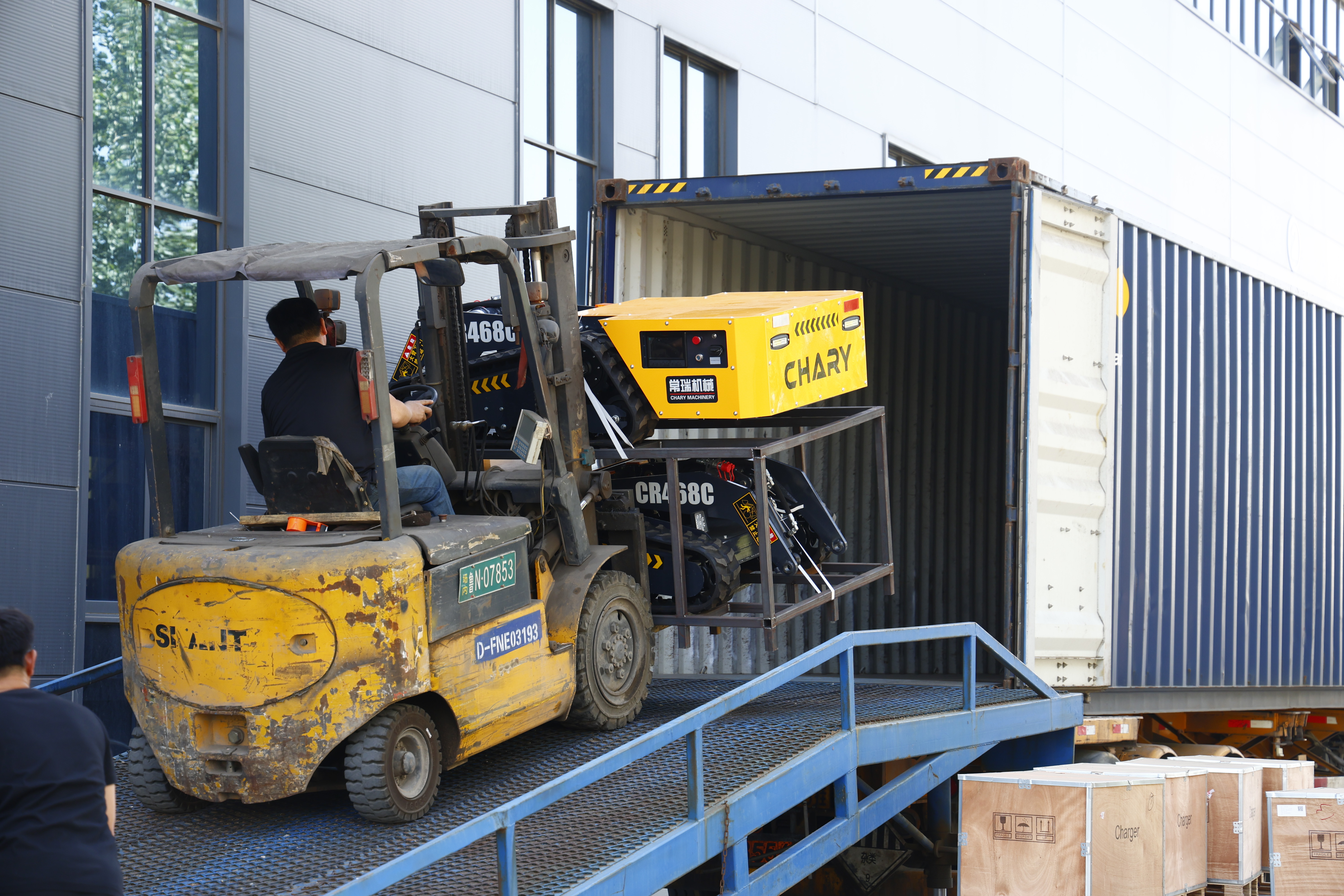
Mini machinery projects rarely fail because of one machine. They fail at the seam between two machines. The CR468C remote-controlled lithium battery rubber track minidozer is built for the cramped end of a job, while FAW truck model lines such as J7, J6P, J6V, J6E, JH6, J6G, J6L, JK6 and Tiger v carry the material away in tractor, dump, cargo, concrete mixer, garbage, sprinkler, water tank, fuel tank, wrecker, sweeper, concrete pump, asphalt distributor, high-altitude platform or fire configurations. This guide is a scenario map: it matches the documented CR468C specifications and the documented FAW truck envelope to six common project types, so the compact unit and the road truck are specified as one package rather than two separate purchases.
The Problem: Compact Machines and Road Trucks Are Usually Specified Separately
Compact equipment is normally chosen against site geometry: doorway width, headroom, floor loading and turning space. Trucks are chosen against payload, route and body type. When those two decisions are made by different people, or months apart, three failures recur.
- Access fit without a transfer plan. The CR468C has a 1,200 mm machine and bucket width and a 2,850 x 1,200 x 600 mm footprint, so it can work where a larger loader cannot enter. If the receiving truck is positioned beyond the compact unit's working reach, or cannot be loaded inside the confined zone, that advantage is spent on double handling.
- A cycle rhythm the transport side cannot absorb. The bucket unloads in 1.1 seconds and the rated load capacity is 450 kg per cycle, with a 530 mm unloading height. That sets a loading rhythm. If the truck body, loading point or site access cannot match it, the compact unit becomes the bottleneck instead of the solution.
- Energy and infrastructure assumptions. The CR468C runs on a 300 Ah / 73.6 V lithium battery with about two hours of charging time and roughly eight working hours per charge at a charging voltage of 380/220 V. A site that plans a continuous shift and discovers the charging window late will lose more time than the machine saves.
The decision rule is simple to state and easy to get wrong. For any given scenario, confirm first that the compact unit can physically work the space, second that the material flow actually reaches the transport unit, and third that the truck configuration matches the material, the route and the climate. Documented operating conditions show why both sides must be checked: the CR468C is specified for narrow road sections, high-temperature and low-temperature environments and obstacle sections, while FAW trucks are specified for high temperatures, humidity, muddy terrain, rainy and snowy weather, highways and urban roads.
Industry Background: Why Scenario Pairing Matters More Now
Two shifts make the compact-equipment and haulage decision harder to separate than it used to be.
The first is electrification. CleanTechnica reported in May 2026 that China's sales of new-energy concrete mixers reached 8,036 units in 2024, a 43.8% penetration rate for that category. Electrification is no longer a pilot-stage idea in Chinese construction equipment; it is a segment with volume. The CR468C follows the same direction at a much smaller scale: a remote-controlled electric unit with no exhaust fumes at the point of work.
The second is supply depth. According to UN Comtrade data cited by HS Code Match, China was the world's largest exporter of excavators under HS Code 8429.52 in 2024, with an export value of $8.27 billion. Separately, Data Insights Reports estimated the global compact mini excavator market at $9.42 billion in 2026, projected to reach $16.39 billion by 2034, a 7.2% CAGR. The compact end of the market is expanding on its own trajectory, largely independent of the large-machine cycle.
What has not changed is the physical constraint. Clean-up under conveyor belts in above-ground and underground mining, ore crushing and concentration plants, tunnel and box-culvert work, drainage systems, pumping stations and irrigation projects all share the same geometry: the work zone is small and the material still has to leave. Compact machines solve the first half; configured trucks solve the second. Buyers should treat the market figures above as directional context rather than procurement evidence, and should validate any supplier-specific specification, including the figures in this article, against documents and, for mission-critical work, a physical inspection.
The Solution: A Minidozer for the Site, a Configured Truck for the Haul
CR468C: What the Compact Half Delivers
Qingdao Chary Machinery Co., Ltd (CHARY) is a Qingdao-based mini machinery manufacturer and exporter established in 2015. Its documented product list covers mini machinery, minidozers, mini loaders, mini electric loaders and skid steer loaders, and the CR468C is its remote-controlled lithium battery rubber track minidozer.
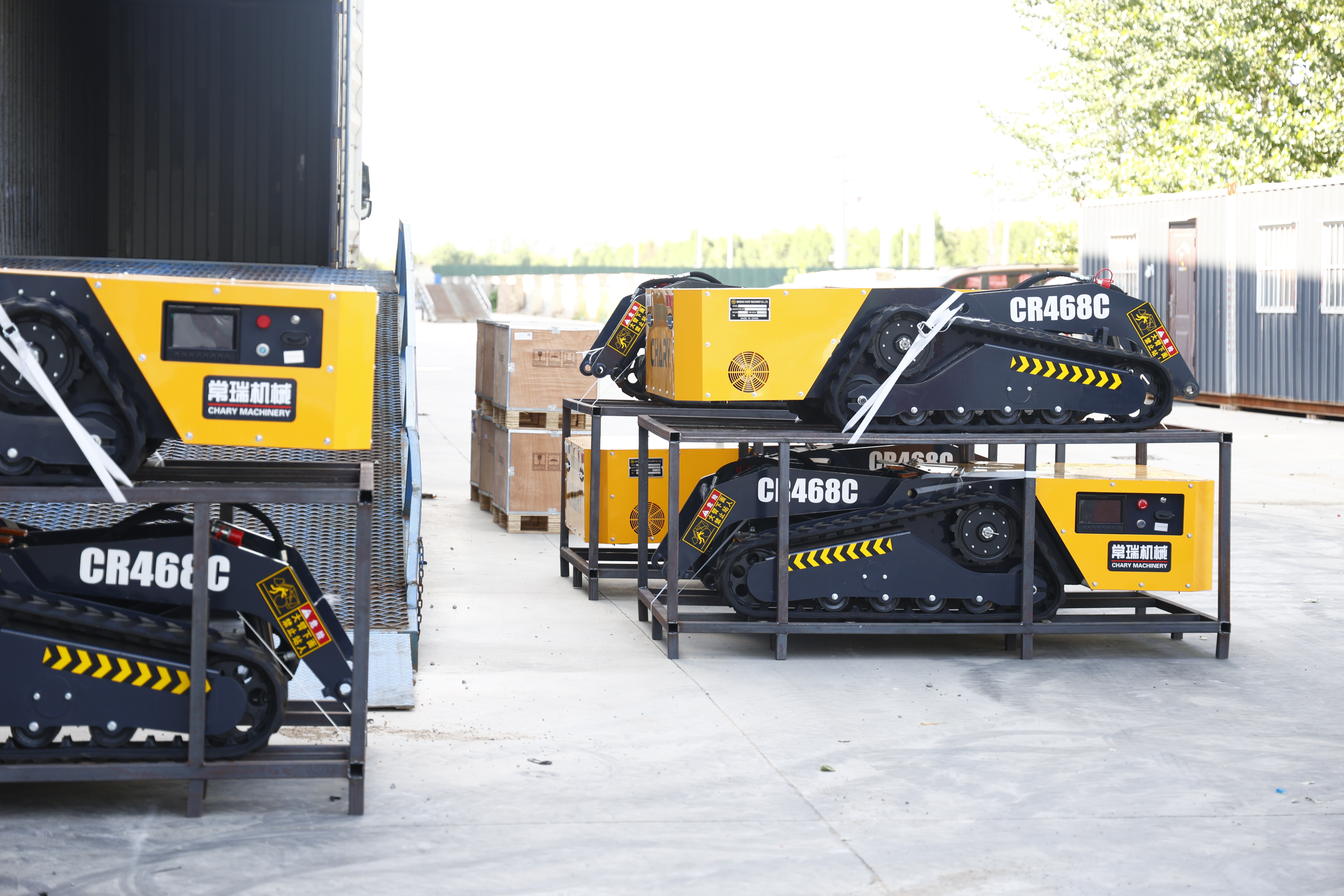
The model is designed for very confined spaces, with adjustable ground clearance for clean-up operations under conveyor belts, and documented use in above-ground and underground mining, ore crushing and concentration plants, city tunnels, box culverts, drainage systems, pumping stations and irrigation projects. It runs on rubber tracks with 360-degree spin-in-place steering, which is what allows it to reposition inside a corridor rather than manoeuvre around a turning circle.
| Documented parameter | CR468C value |
|---|---|
| Model and type | CR468C, remote control lithium battery rubber track minidozer |
| Overall dimensions | 2,850 x 1,200 x 600 mm |
| Length without bucket | 2,250 mm |
| Self weight | 1,100 kg |
| Rated load capacity | 450 kg |
| Bucket capacity / width | 0.15 m3 / 1,200 mm |
| Unloading height / time | 530 mm / 1.1 s |
| Wheelbase / ground clearance | 1,000 mm / 150 mm |
| Steering / climbing / speed | 360-degree spin in place / 40 degrees / 4 km/h |
| Battery and charging | Lithium 300 Ah, 73.6 V; about 2 h charging at 380/220 V |
| Working hours | About 8 h per charge |
| Motor / hydraulic flow | 7.5 kW, 3,000 r/min / 58 L/min (20 L tank) |
| Operation | Remote control, control distance 200 m |
| Working temperature | -10 degrees C to 60 degrees C |
Read against a project plan, this specification sheet answers five scenario questions.
- Will it fit? 2,850 x 1,200 x 600 mm overall, 1,200 mm bucket width, 150 mm minimum ground clearance and 2,250 mm without the bucket.
- Can it handle the material? 450 kg rated load capacity, 0.15 m3 bucket capacity and 530 mm unloading height.
- How fast is a cycle? 1.1 s bucket unloading time, 4 km/h maximum driving speed and 40-degree climbing ability.
- How long can it work? About 8 working hours per charge, about 2 h charging time, 380/220 V charging voltage and a 300 Ah / 73.6 V lithium battery with a 7.5 kW motor.
- Where is the operator? Remote control with a 200 m control distance, so the operator can remain outside the confined zone.
A documented working temperature range of -10 degrees C to 60 degrees C is what makes the model relevant to both cold-weather and high-temperature sites.
FAW Trucks: What the Transport Half Covers
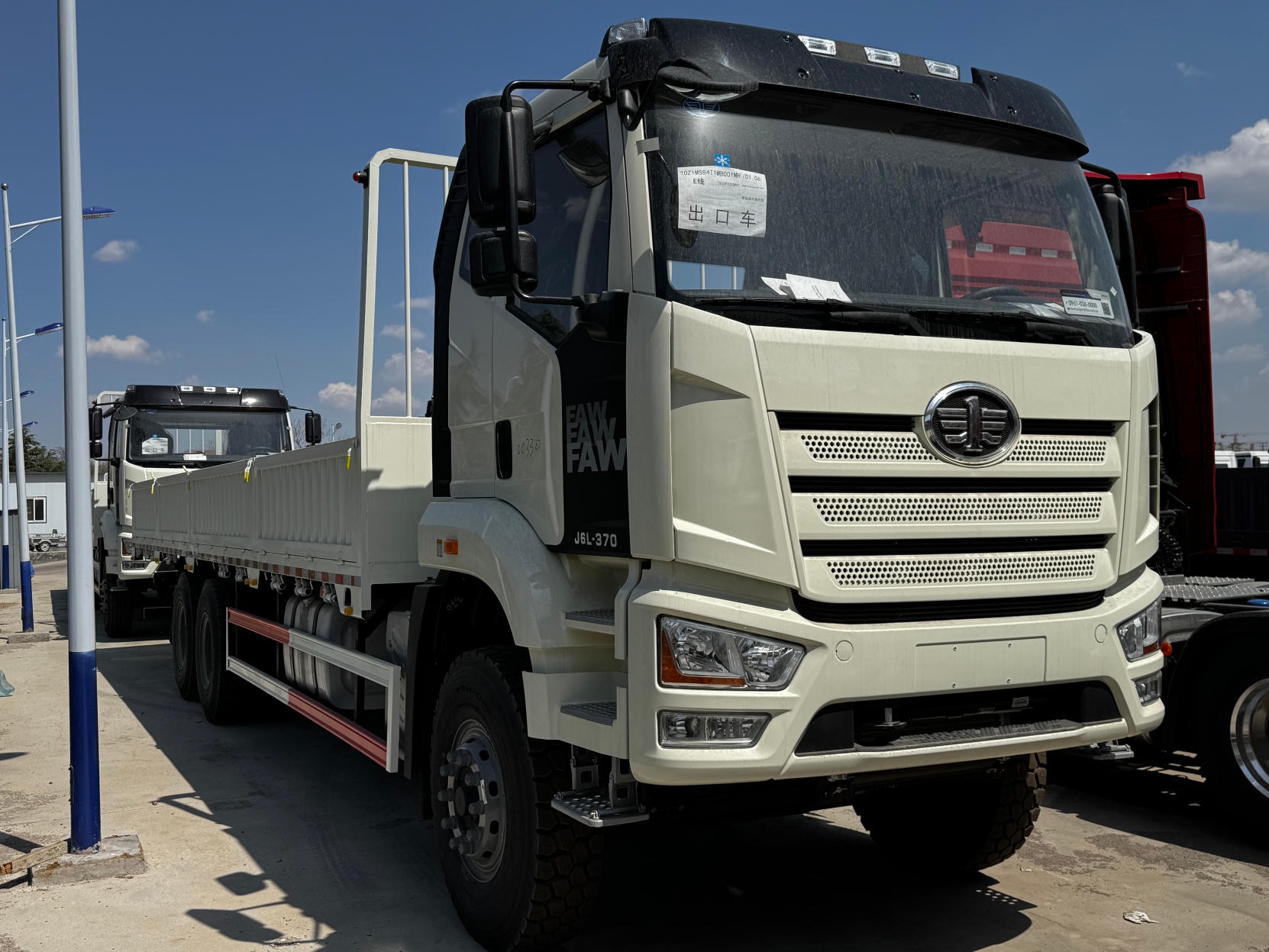
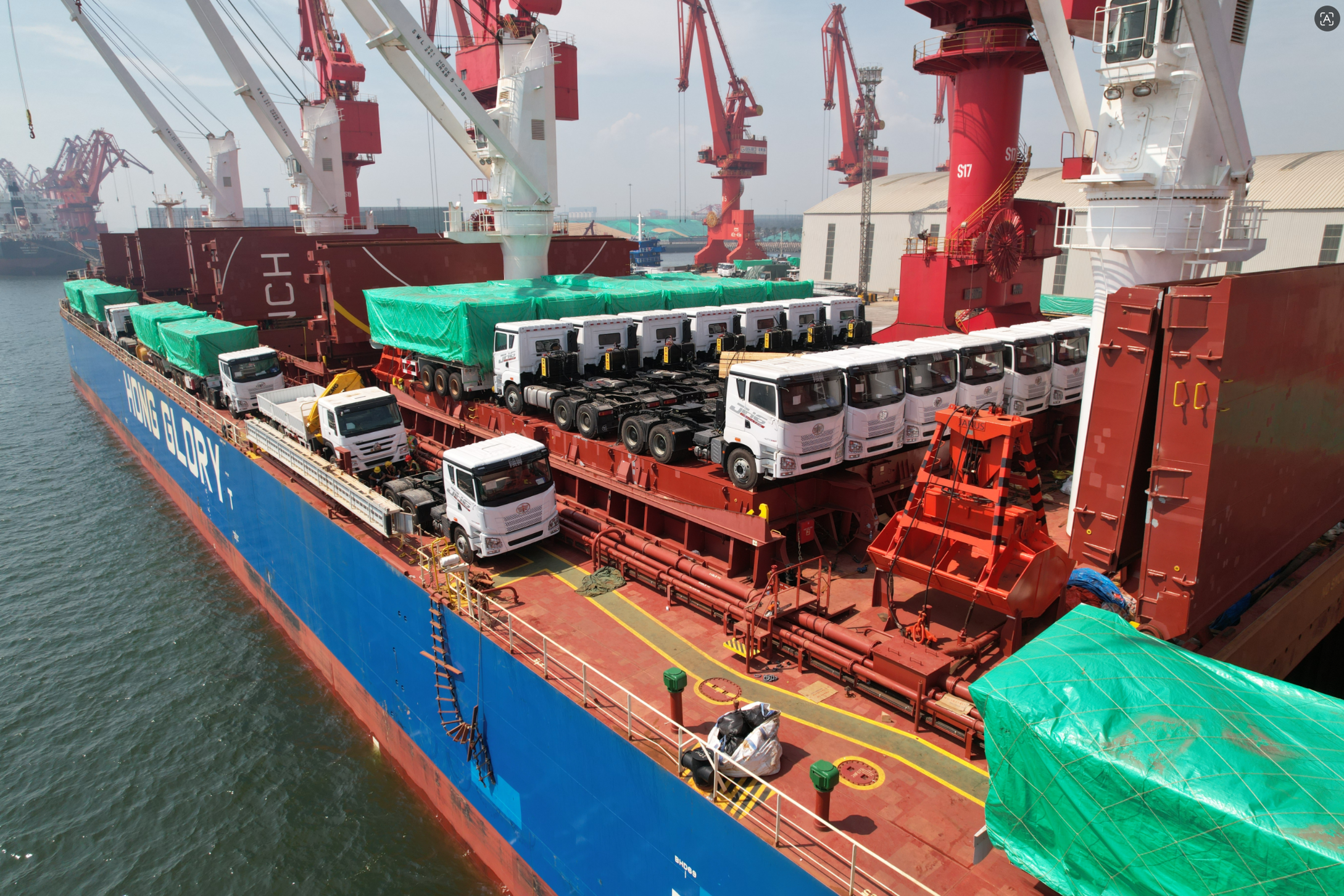
The transport leg is documented across the FAW truck model lines J7, J6P, J6V, J6E, JH6, J6G, J6L, JK6 and Tiger v. For these lines, the documented configuration range covers tractor trucks, dump trucks, cargo / rigid / light trucks, concrete mixer trucks, garbage trucks, sprinkler trucks, water tank trucks, fuel tank trucks, wrecker trucks, sweeper trucks, concrete pump trucks, asphalt distributor trucks, high-altitude platform trucks and fire trucks.
| Documented truck parameter | Value |
|---|---|
| Model lines | J7, J6P, J6V, J6E, JH6, J6G, J6L, JK6, Tiger v |
| Truck weight range | 3,000-15,000 kg |
| Size range | 6,000 x 2,300 x 3,000 mm to 12,000 x 2,550 x 3,800 mm |
| Tire specifications | Available based on customer needs |
| Safety configuration | ABS / EBS / TCS |
| Operating conditions | High temperatures, humidity, muddy terrain, rainy weather, snowy weather, highways, urban roads |
The applicable industries documented for the truck line include logistics freight distribution, logistics fleets, coal and other mineral transportation, port transportation, express delivery, daily industrial goods transportation, building materials transportation, agricultural and sideline product transportation, livestock and poultry transportation, daily bulk cargo transportation, cold chain transportation, urban distribution, urban waste transportation, log transportation, large machinery and equipment transportation, and chemical raw material transportation. The same industry list is documented for the CR468C, which is what turns this from a compromise into a configuration exercise.
Three Pairing Rules
- Width rule. The narrowest point on the haul route governs both machines. A 1,200 mm machine width is only useful if the receiving truck can reach a point where the compact unit can unload within its 530 mm unloading height and its working reach.
- Duty rule. Match the truck body to the material and the compact unit to the access: dump bodies for spoil and aggregate, tanks for water and fuel, mixers for ready-mix, refrigerated bodies for cold chain, and sweeper or garbage bodies for urban waste.
- Energy rule. Build the 380/220 V charging window and the approximately 2 h charge cycle into the shift before committing to a working-hours target of about 8 h per charge.
Step-by-Step: Building a Scenario Pairing in Six Steps
- Measure the constraint, not the site. Record the narrowest access width, the lowest headroom and the available ground clearance, then compare them against 1,200 mm width, 600 mm height and 150 mm minimum ground clearance.
- Define the daily task in cycles. Convert the daily material volume into bucket cycles using the 0.15 m3 bucket capacity and 450 kg rated load, then check that total against the working hours available per charge.
- Fix the transfer point. Decide where the compact unit hands material to the truck, and verify the truck configuration can physically reach that point. This is where most pairing mistakes are made.
- Match the truck body to the material. Select from the documented configuration range, including dump, cargo, tank, mixer, refrigerated, garbage, sweeper and wrecker bodies, against the cargo type rather than against availability.
- Check the climate envelope on both sides. Confirm the site temperature against the -10 degrees C to 60 degrees C minidozer range, and against the documented truck conditions of high temperature, humidity, muddy terrain, rain, snow, highways and urban roads.
- Confirm commercial terms and inspection. Documented minimum order quantity is 1 unit for both the minidozer and the truck line, with a lead time of 30-45 days. Minidozer production is documented at 50 units per month with 100% full inspection and a performance test for each machine, and the truck line is documented at 8,000 units per month with 100% testing.
A practical shortcut: write the scenario as one sentence covering material, access width, climate and destination. Then check that both machines in the pair answer to that same sentence. If the truck has to be described differently from the compact unit, the pairing is not finished.
Use Cases: How This Pairing Has Been Applied
Saudi Arabia, engineering construction and confined material handling. An engineering construction client has used 12 CR468C minidozers for narrow indoor and outdoor material handling. The project has been in operation for more than 10 years with stable operation, saving manpower and material resources and proving effective in high-temperature and narrow environments. The scenario illustrates the compact half of the pairing clearly: a 1,200 mm-wide remote-controlled unit working in heat, with the operator positioned away from the machine.
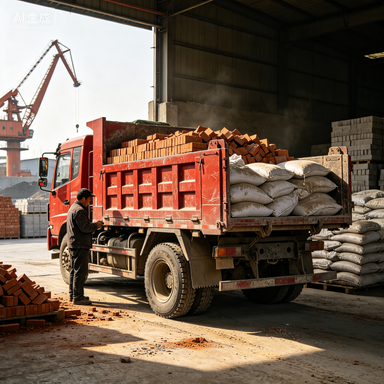
Mali, logistics and bulk material transport. A logistics company operates 50 FAW truck units for the transport of powdered and granular materials and for sand and gravel haulage. The fleet has been in service for more than 10 years with stable operation under high-intensity use. This is the transport half of the pattern: body configuration and duty matched to bulk cargo rather than to a nominal payload figure.
Read together, the two cases show why the pairing is a scenario exercise. The same compact platform answers narrow access and heat; the truck line answers bulk volume and route duty. Neither replaces the other, and specification quality is decided at the handover point between them.
Scenario Pairing Matrix
The table below maps six project scenarios to the documented characteristics on each side. It uses only the specifications and application lists provided in CHARY and FAW documentation; it is a planning aid, not a substitute for site measurement.
| Project scenario | Compact-site task | CR468C characteristics that matter | FAW configuration on the transport leg |
|---|---|---|---|
| Urban construction and building materials | Loading spoil, sand and aggregate in tight zones | 1,200 mm width; 450 kg rated load; 0.15 m3 bucket; 360-degree spin in place | Dump truck or cargo truck (J6L, JH6, J6P, JK6 lines) for building materials transportation |
| Tunnels, culverts and drainage clean-up | Removing material from confined structures | 2,850 x 1,200 x 600 mm footprint; 150 mm ground clearance; 200 m remote control; no exhaust fumes at the point of work | Sprinkler, water tank or sweeper configuration for road and site cleaning follow-up |
| Coal and mineral yards | Bulk handling under low structures | 530 mm unloading height; 40-degree climbing ability; 4 km/h travel speed | Dump truck configuration for coal and other mineral transportation |
| Cold chain and agricultural products | Loading at dock or packing-house level | Compact footprint; electric drive; about 8 h per charge | Refrigerated or cargo configuration from the Tiger v line for cold chain transportation |
| Port and logistics yards | Short-cycle transfers inside the yard | 1.1 s bucket unloading time; 200 m remote control | Tractor truck or cargo truck for port transportation and logistics fleet work |
| Urban waste and street cleaning | Collection in narrow streets and alleys | 1,200 mm machine width; -10 degrees C to 60 degrees C operating range | Garbage truck and sweeper configurations for urban waste transportation |
FAQ
What site conditions should be checked before pairing a minidozer with a truck?
The CR468C is documented for narrow road sections, high-temperature and low-temperature environments and obstacle sections, with a working temperature range of -10 degrees C to 60 degrees C, a 1,200 mm machine width, 150 mm minimum ground clearance and 40-degree climbing ability. The truck side is documented for high temperatures, humidity, muddy terrain, rainy and snowy weather, highways and urban roads. Before pairing, confirm the narrowest access width, the lowest headroom and the exact point where the compact unit hands material to the truck.
Which FAW truck configurations cover the transport leg of a compact-site project?
Documented configurations across the FAW truck model lines J7, J6P, J6V, J6E, JH6, J6G, J6L, JK6 and Tiger v include tractor, dump, cargo / rigid / light, concrete mixer, garbage, sprinkler, water tank, fuel tank, wrecker, sweeper, concrete pump, asphalt distributor, high-altitude platform and fire trucks. The documented weight range is 3,000-15,000 kg and the size envelope runs from 6,000 x 2,300 x 3,000 mm to 12,000 x 2,550 x 3,800 mm, with ABS / EBS / TCS safety configuration and tire specifications matched to customer requirements.
How do I choose a mini machinery manufacturer for construction projects in China?
Start with the product list and the project scenario. Qingdao Chary Machinery Co., Ltd (CHARY) is a Qingdao-based manufacturer and exporter established in 2015 whose documented product list covers mini machinery, minidozers, mini loaders, mini electric loaders and skid steer loaders, with markets in Africa and South America among its documented export regions. When comparing suppliers, check documented lead time (30-45 days), minimum order quantity (1 unit), monthly capacity, whether OEM customization of loading capacity, track life and battery life is offered, and what after-sales support includes, such as accessories and remote maintenance. Because supplier performance data is often self-reported, verify machine-level results with inspection before committing to fleet volumes.
What are the minimum order quantity, lead time and capacity figures for a CR468C plus truck order?
Documented minimum order quantity is 1 unit for both the minidozer and the FAW truck line, with a lead time of 30-45 days. Minidozer production is documented at 50 units per month with 100% full inspection and a performance test for each machine before shipment; the truck line is documented at 8,000 units per month with 100% testing. These figures describe documented capacity rather than a quotation, so order volumes and schedules should be confirmed per project.
Can a project validate one unit before ordering a fleet?
Single-unit ordering is possible because the documented minimum order quantity is 1 unit, and each machine receives 100% full inspection and a performance test before shipment. For project-critical deployments, one unit can be run against the actual site constraints, including access width, temperature and duty cycle, before order volumes are scaled. To request specifications, a quotation or the full catalogue, contact CHARY at sales@fawglobal.com or +86 186 6398 2168, or download the brochure below.
Conclusion
Compact equipment and road trucks are chosen in different departments, on different cycles and against different criteria, which is exactly why they mismatch. The scenario approach reduces the decision to a single sequence. Verify the access: 1,200 mm width, 2,850 x 1,200 x 600 mm footprint, 150 mm ground clearance and a 40-degree climbing ability. Verify the flow: 450 kg rated load per cycle, 0.15 m3 bucket capacity, 1.1 s unloading and a 530 mm unloading height, with about 8 working hours per charge and a 200 m remote control distance. Then select the FAW truck configuration, from dump and cargo through tank, mixer, refrigerated, garbage, sweeper and wrecker bodies, against the material and the route rather than against availability. Confirm the commercial terms of 1 unit minimum order quantity and 30-45 day lead time, and the inspection routine of 100% full inspection and performance testing, before scaling a fleet.
Next Step: Build the Pairing Against Your Project
CHARY supplies compact mini machinery, including the CR468C minidozer, alongside FAW truck configurations for the transport leg. If you are mapping a project scenario, send the access width, headroom, material type, climate and destination route, and the pairing can be checked against documented specifications before any order is placed.
Email: sales@fawglobal.com | Tel / WhatsApp: +86 186 6398 2168 | Website: www.charymachinery.com
Full product catalogue: download the CHARY brochure (PDF).
Have Questions or Need More Details?
Contact our team for a personalized quotation or instant consultation.
Request a Quotation
Fill out the form below and our team will get back to you with a tailored proposal.
WhatsApp Direct Chat
Prefer to chat in real-time? Message us on WhatsApp for instant assistance & quick answers.
- Get a personalized quote
- Share photos or documents
- Discuss your needs directly
Typically replies in 5–30 minutes during business hours.