
Choosing Between a Remote Control Minidozer and a FAW Dump Truck for Site Work
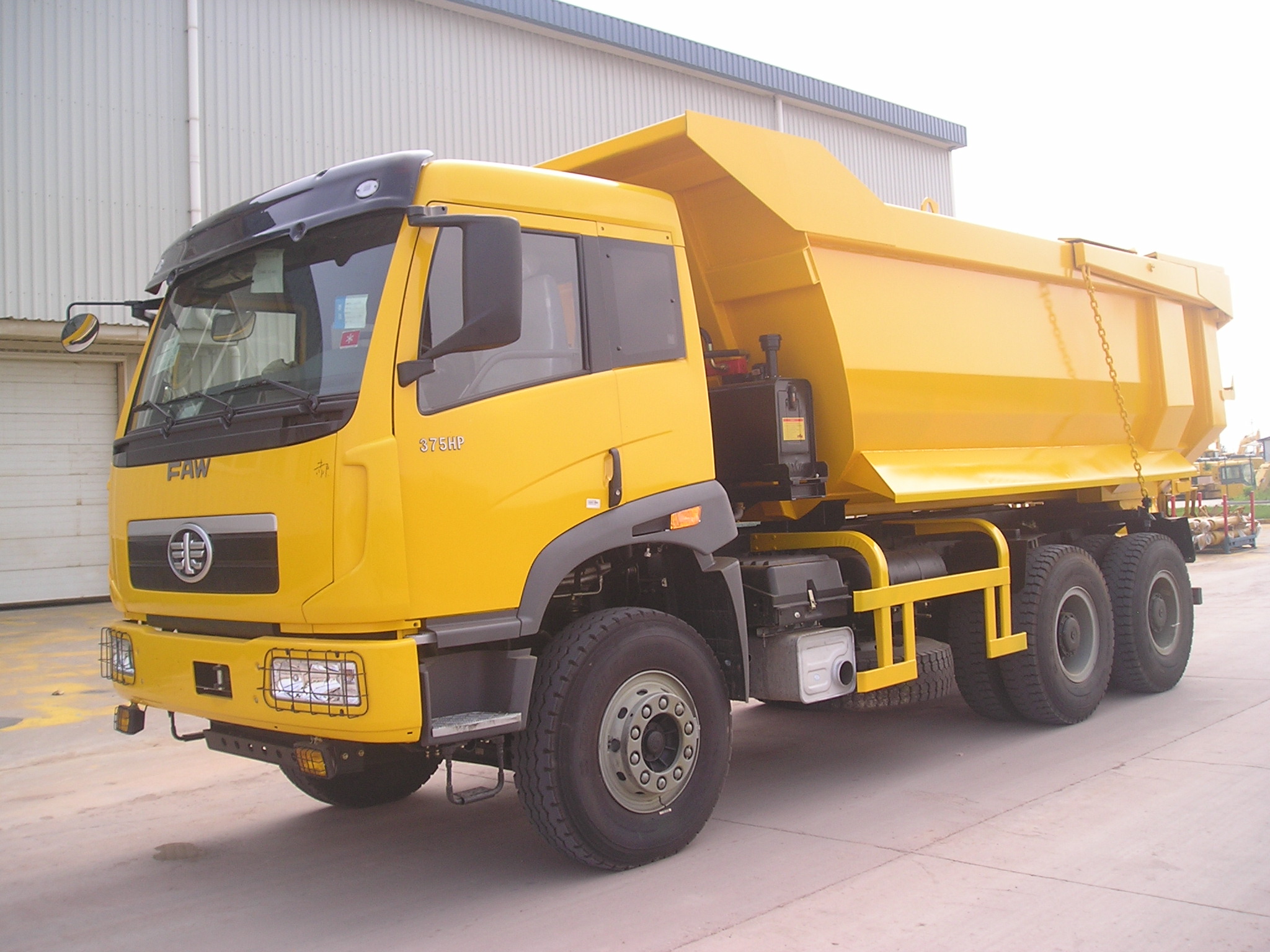
FAW NEW J5P 6X4 dump truck — the heavy-haul half of the site-work decision.
Choosing between a remote control minidozer and a FAW dump truck is a site-fit decision, not a category decision. The two machines sit at different points in the same material flow, and comparing them head-to-head on “which is better” almost always produces the wrong answer.
The short answer: if the load only has to move within the work area — under a conveyor, inside a tunnel or box culvert, through a 1.2 m opening, or in a high-heat zone — the CHARY CR468C remote control lithium battery rubber track minidozer is the machine. It carries a 450 kg rated load in a 0.15 m³ bucket, is 2,850 × 1,200 × 600 mm overall, and is driven by remote control from up to 200 m away. If the load has to leave the site in volume over a public road, the machine is a FAW dump truck from the J7, J6P, J6V, J6E, JH6, J6G, J6L, JK6 or Tiger v range, with truck weights of 3,000–15,000 kg and overall dimensions from 6,000 × 2,300 × 3,000 mm up to 12,000 × 2,550 × 3,800 mm.
On most real projects, both roles exist at once: the minidozer excavates and loads inside the constraint, and the dump truck removes the material from the site. The decision is therefore not “A or B” but “which one does this part of the job, and in what order.”
Decision rule: move within the site → minidozer. Move off the site → dump truck. Move within the site and off the site → buy the pair, with the minidozer loading the truck.
Problem definition: why the comparison is usually set up wrong
Buyers end up comparing these two machines because they arrive in the same quotation, from the same supplier, for the same project. Qingdao Chary Machinery Co., Ltd. — a Qingdao-based machinery exporter established in 2015 — lists mini machinery, minidozer, mini loader, mini electric loader and skid steer loader among its main products, and its product data also covers the FAW truck range. One enquiry can therefore return both a compact unit and a heavy truck, which creates the illusion that they are interchangeable options.
They are not. A minidozer is a loading and clean-up machine: it breaks and picks up material, then discharges it at a 530 mm unloading height after a 1.1-second bucket discharge. A dump truck is a transport machine: it receives material and moves it, on 6×4 or 6×2 rear-wheel drive, or 6×6 or 8×8 all-wheel drive, in the axle configuration specified for the order.
The comparison breaks down for three concrete reasons:
- The duty is different. The CR468C bucket holds 0.15 m³ and the machine is rated to 450 kg. A dump truck's job is defined by body type and haul cycle, not by bucket capacity. Comparing them on “capacity” compares two different measurements.
- The access envelope is different. The minidozer is 2,850 × 1,200 × 600 mm with 150 mm minimum ground clearance and can spin 360° in place. A FAW truck starts at 6,000 × 2,300 × 3,000 mm. One enters the building; the other cannot.
- The crew model is different. The CR468C is operated by remote control from up to 200 m, so the operator does not sit inside the machine. A truck requires a driver in the cab for every load it moves.
Once the comparison is framed as “where does the material have to go,” the specification sheet stops being a scoreboard and becomes a filter.
Industry background: why compact and heavy units now appear side by side
Two structural shifts explain why a buyer is now offered a battery-powered minidozer and a conventional heavy truck in the same conversation.
Electrification has moved into working machinery, not just passenger vehicles. According to CleanTechnica, China's sales of new-energy concrete mixers reached 8,036 units in 2024, with penetration rising to 43.8% of total concrete mixer sales. That figure is specific to new-energy concrete mixers and should not be read as a mini-machinery figure, but it establishes a relevant point for buyers: battery-electric drivetrains are already a mainstream production category in Chinese construction equipment, not a prototype niche.
The compact segment is expanding. Data Insights Reports values the global compact mini excavator market at USD 9.42 billion in 2026 and projects USD 16.39 billion by 2034, a 7.2% CAGR. The scope of that figure is compact mini excavators — not minidozers, loaders or dump trucks — so it is a directional signal about compact-site equipment demand rather than a market size for the CR468C.
China remains the dominant supply base for earthmoving equipment. UN Comtrade data reported through HS Code 8429.52 shows China as the world's largest exporter of excavators in 2024, with an export value of USD 8.27 billion. For a buyer, that explains the commercial reality: compact equipment and heavy trucks are routinely quoted from the same Chinese export channel, which is exactly why the two-machine decision has to be made on the site plan rather than on the quote sheet.
The CR468C remote control minidozer: designed around the constraint
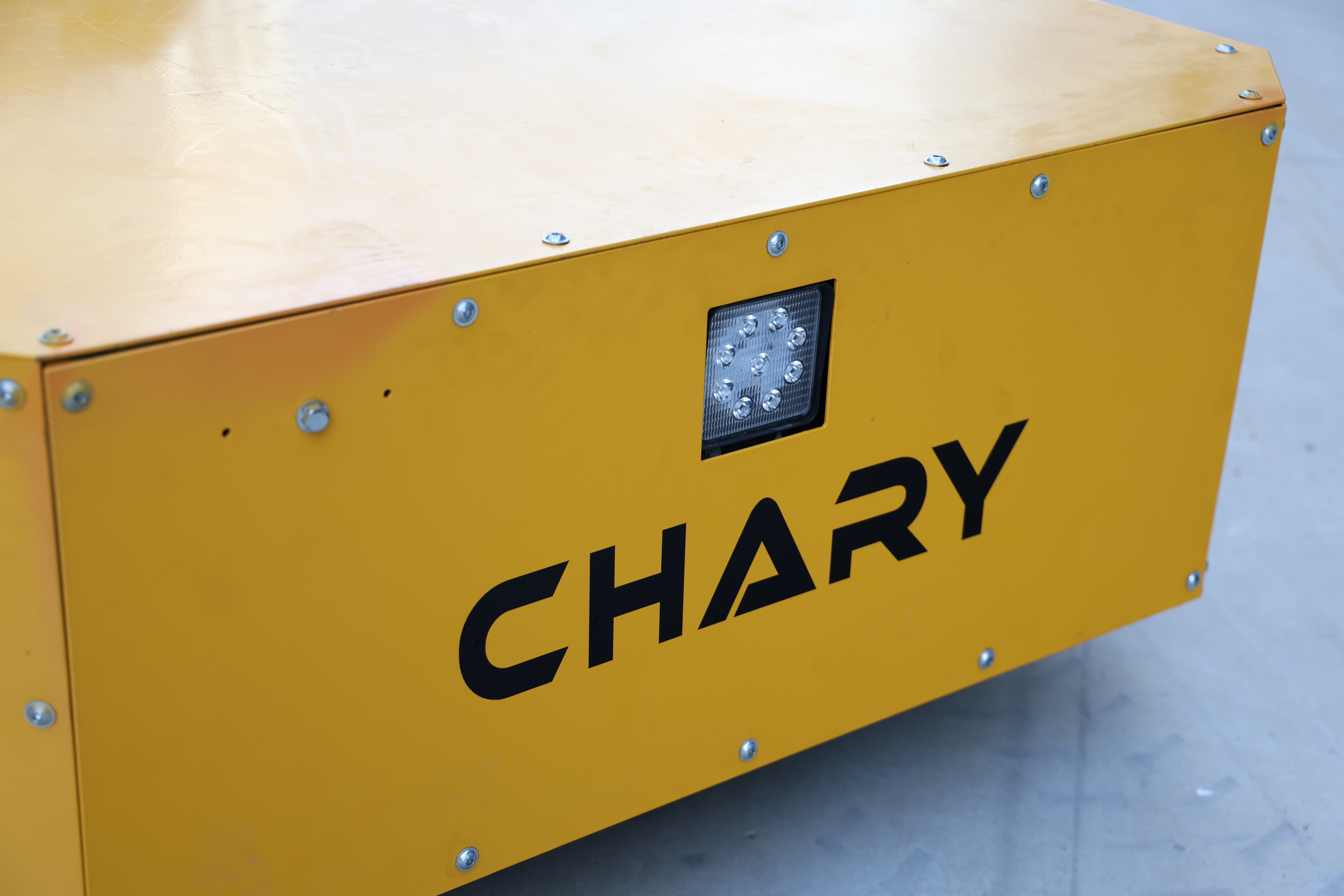
CHARY CR468C minidozer — 1,200 mm wide, remote controlled from up to 200 m.
The CHARY CR468C is a remote control lithium battery rubber track minidozer built for confined spaces, and its specification is essentially a list of constraints it was designed to clear. The complete published figures are:
| CR468C parameter | Published value |
|---|---|
| Type | Remote control lithium battery rubber track minidozer |
| Overall dimensions | 2,850 × 1,200 × 600 mm |
| Total length without bucket | 2,250 mm |
| Self weight | 1,100 kg |
| Rated load capacity | 450 kg |
| Bucket capacity / width | 0.15 m³ / 1,200 mm |
| Bucket unloading time | 1.1 s |
| Unloading height | 530 mm |
| Minimum ground clearance | 150 mm |
| Operation method / distance | Remote control / 200 m |
| Maximum driving speed | 4 km/h |
| Climbing ability | 40° |
| Maximum steering angle | 360° spin in place |
| Battery | Lithium, 300 Ah, 73.6 V |
| Charging time / working hours | About 2 h / about 8 h |
| Charging voltage | 380 / 220 V |
| Motor power / speed | 7.5 kW / 3,000 r/min |
| Hydraulic flow / tank | 58 L/min / 20 L |
| Working temperature | −10 °C to 60 °C |
Read as a set, these numbers answer four site questions at once. Will it fit? At 1,200 mm wide and 600 mm high overall, yes — including under low structures, where the 530 mm unloading height matters more than reach. Can it turn? 360° spin in place removes the need for a turning circle, which is the constraint that usually rules a wheeled machine out of an indoor job. Is the operator exposed? No — control is remote from up to 200 m, which is the reason the machine is used where heat, dust or unstable ground makes a cab a liability. Can it work a shift? About 8 hours of working time against about 2 hours of charging at 380/220 V, in ambient temperatures from −10 °C to 60 °C.
Two limits deserve equal weight. First, 450 kg rated load and 0.15 m³ bucket capacity define a small-volume machine: it is a clean-up and confined-access tool, not a production excavator. Second, 4 km/h maximum travel speed means it is moved between work faces on tracks, not driven between sites — transport is a separate planning item.
The FAW dump truck: designed around volume and distance
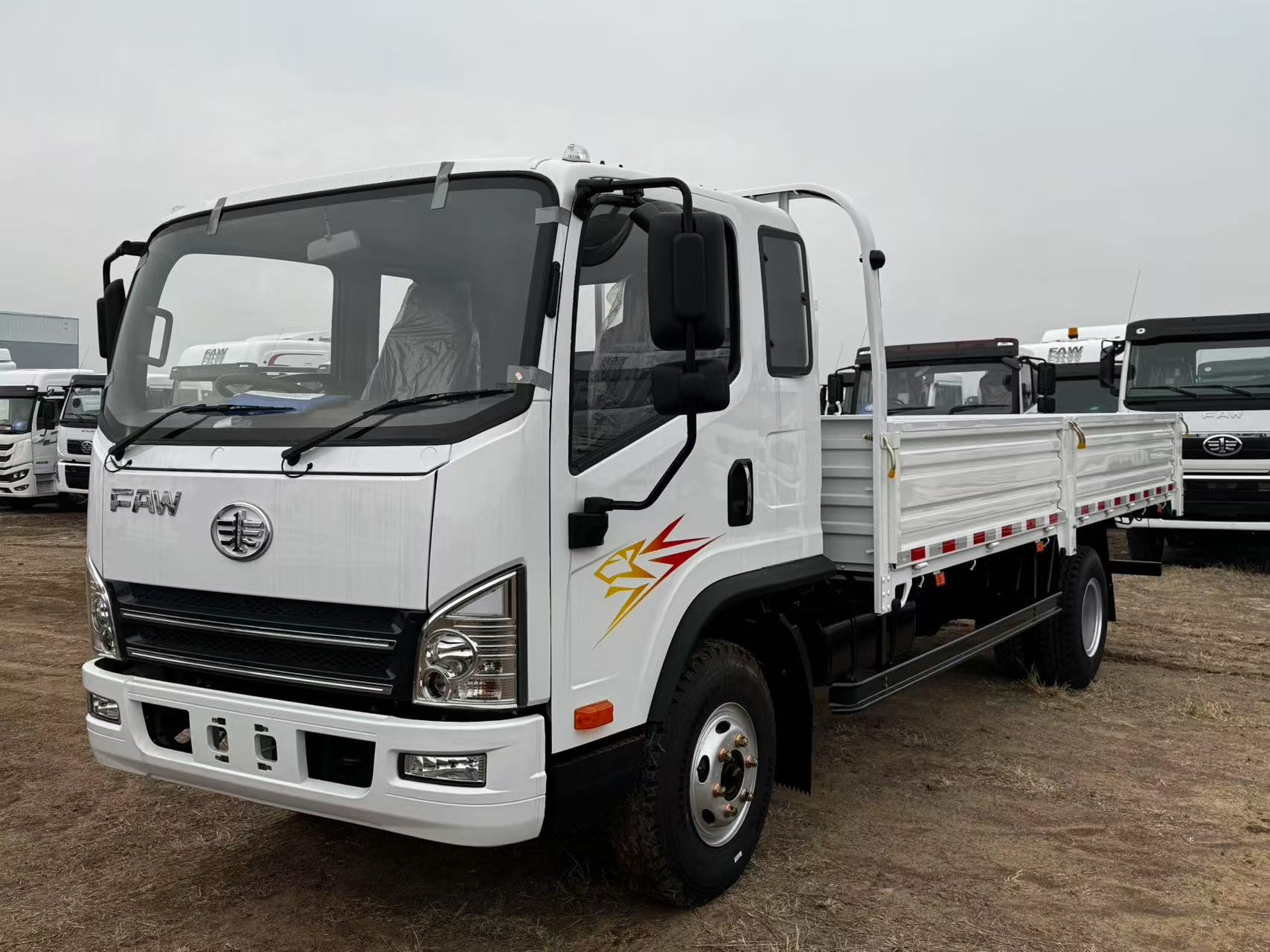
FAW TIGER VH 4X2 cargo truck — one body type within the wider FAW truck range.
The FAW truck is a configurable platform rather than a single machine. Model designations include J7, J6P, J6V, J6E, JH6, J6G, J6L, JK6 and Tiger v, and each can be built as a tractor truck, dump truck, cargo or rigid or light truck, concrete mixer truck, garbage truck, sprinkler truck, water tank truck, fuel tank truck, wrecker truck, sweeper truck, concrete pump truck, asphalt distributor truck, high altitude platform truck, or fire truck.
Shared platform parameters across the range are:
- Truck weight range: 3,000–15,000 kg.
- Size range: 6,000 × 2,300 × 3,000 mm up to 12,000 × 2,550 × 3,800 mm.
- Drive configuration: rear-wheel drive 6×4 or 6×2; all-wheel drive 6×6 or 8×8.
- Safety configuration: ABS, EBS and TCS.
- Tires: specification available based on customer needs.
- Construction materials: steel, iron, aluminum alloy and plastic.
The published application scope is broad and deliberately transport-focused: logistics freight distribution, logistics fleet operations, coal and other mineral transportation, port transportation, express delivery, daily industrial goods, building materials transportation, agricultural and sideline products, livestock and poultry, general bulk cargo, cold chain, urban distribution, urban waste, log transportation, large machinery and equipment transportation, and chemical raw material transportation. Working conditions covered include high temperature, humidity, muddy terrain, rainy weather, snowy weather, highways and urban roads.
Note what is not in this data: the payload rating for a specific dump body, the engine specification, and the price. Those are configuration-level items that must be confirmed model by model in the quotation. Any comparison that quotes a payload figure for “a FAW dump truck” in general is quoting something the published range data does not contain.
Where the two machines meet on one site
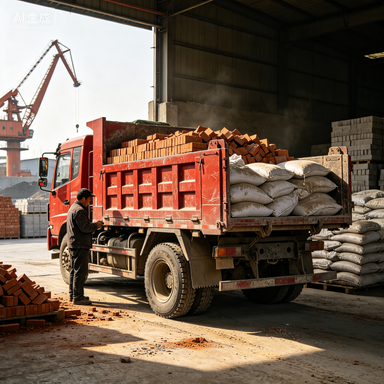
Construction materials haulage — the stage where the two machine types connect.
The productive configuration on a constrained site is sequential, not competitive. The CR468C works the face where the truck cannot reach, discharges at 530 mm, and builds a stockpile at the edge of the constraint. The dump truck is loaded at that stockpile and removes the material. Neither machine does the other's job well: the minidozer cannot haul off-site at 4 km/h, and the truck cannot enter a 1.2 m opening.
This pairing is also the reason a single supplier matters. Qingdao Chary Machinery Co., Ltd. operates a 2,000 m² manufacturing facility with 100+ employees, a 15-engineer R&D team and an annual output of 500 units, and its product data covers both the compact unit and the FAW truck range. That means one commercial conversation can define the interface between the two — discharge height, stockpile position, truck body type and haul cycle — instead of two suppliers each optimising their own machine in isolation.
Step-by-step: how to choose in six steps
Step 1 — Fix the destination of the material
Write down where the material ends up. If it stays inside the site boundary, the transport machine is out of scope and the question becomes which compact unit fits. If it leaves on a public road, the truck is mandatory and the compact machine is optional.
Step 2 — Measure the access envelope
Measure the narrowest opening, the lowest overhead structure and the tightest turning point. Compare against 1,200 mm width and 600 mm height for the CR468C, and against the 6,000 × 2,300 × 3,000 mm minimum of the FAW range. This single step usually decides the question.
Step 3 — Check the thermal and atmospheric conditions
The CR468C is rated for −10 °C to 60 °C and is electrically driven, so it produces no exhaust fumes — which is why the model is used in tunnels, box culverts, drainage systems and enclosed clean-up areas. A diesel truck operating in the same enclosed space is a ventilation problem, not a transport solution.
Step 4 — Define the loading interface
If you buy both, the 530 mm unloading height and 1.1 s bucket discharge time set the stockpile geometry, and the stockpile position sets the truck's approach. Confirm the truck body type — dump, cargo, or another of the fourteen listed configurations — against the material being handled.
Step 5 — Count the crew and the power supply
The minidozer needs one remote operator within 200 m and a 380/220 V charging point for about 2 hours per roughly 8 hours of work. The truck needs a driver for every trip. Both requirements should be written into the site plan, not discovered on delivery day.
Step 6 — Confirm configuration and documentation in writing
For the CR468C, confirm the battery pack (300 Ah, 73.6 V lithium), the bucket (0.15 m³, 1,200 mm wide) and the remote control system. For the truck, confirm the model designation, body type, drive configuration (6×4, 6×2, 6×6 or 8×8), tire specification and the ABS/EBS/TCS package. Then request market-specific approval documents for the destination country, because the published product data does not by itself establish approval anywhere.
Comparison table: CR468C minidozer vs FAW dump truck
The table below uses only published product data. Where a figure is not published, that is stated rather than estimated.
| Decision factor | CHARY CR468C minidozer | FAW dump truck (range data) |
|---|---|---|
| Primary duty | Loading, excavation and clean-up | Bulk material transport |
| Overall dimensions | 2,850 × 1,200 × 600 mm | 6,000 × 2,300 × 3,000 mm to 12,000 × 2,550 × 3,800 mm |
| Weight | 1,100 kg self weight | 3,000–15,000 kg truck weight range |
| Load rating | 450 kg rated load; 0.15 m³ bucket | Payload not published in the range data; confirm per body type |
| Mobility | Rubber tracks; 4 km/h; 40° climbing; 360° spin in place; 150 mm ground clearance | Rear-wheel drive 6×4 / 6×2; all-wheel drive 6×6 / 8×8 |
| Operation and crew | Remote control up to 200 m; operator stands outside the machine | Driven from the cab; one driver per trip |
| Energy | Lithium battery 300 Ah / 73.6 V; 380/220 V charging; about 2 h charge for about 8 h work; 7.5 kW motor | Not specified in the published range data; confirm per model |
| Safety configuration | Remote operation keeps the operator clear of the work face; no exhaust fumes | ABS, EBS, TCS |
| Environment | −10 °C to 60 °C; confined spaces, tunnels, culverts, conveyor clean-up | High temperature, humidity, muddy terrain, rain, snow, highways, urban roads |
| Best fit | Tight, enclosed, hot or fume-sensitive work areas | Moving volume off site over road distance |
Use cases: which machine goes where
Confined-space clean-up under structures
The CR468C is specified for clean-up operations under conveyor belts in above-ground and underground mining, ore crushing and concentration plants, city and highway underground tunnels, box culverts, drainage systems, pumping stations and other irrigation projects. In each case the defining condition is the same: the machine has to work where a truck cannot enter and where exhaust fumes are unacceptable. The 600 mm overall height and 530 mm unloading height are what make those areas workable.
High-temperature work areas
With a 60 °C upper working limit and remote control from up to 200 m, the machine can be operated from outside the heat envelope rather than from inside it. This is the practical reason a remote-controlled electric unit is chosen over a cabbed machine in slag, kiln or foundry clean-up areas.
Construction materials haulage and urban distribution
Where the material has to leave the site, the decision moves to body type and haul cycle. FAW truck applications explicitly include construction materials transportation, urban distribution, urban waste transport, coal and mineral transport, and port transportation — these are transport duties that no compact unit addresses.
Mixed sites: the paired deployment
A building refurbishment or tunnel project typically needs both. The minidozer works the restricted face and stockpiles; the dump truck removes the spoil. The decision then becomes a scheduling question — how many minidozer cycles fill one truck load — which is answered by the 0.15 m³ bucket and the specific truck body volume, not by a general comparison.
Decision factors: maneuverability, crew and operating cost
Maneuverability
The minidozer wins decisively inside the work area: 1.2 m wide, 600 mm high, 1,100 kg, 150 mm ground clearance, 40° climbing ability and 360° spin in place, at a maximum 4 km/h. The truck wins decisively outside it: 6×4, 6×2, 6×6 or 8×8 drive, highway and urban-road capability, and a 3,000–15,000 kg weight range that supports road-speed haulage. Neither envelope substitutes for the other.
Crew and supervision
The CR468C is one operator with a remote unit, working up to 200 m from the machine — and standing outside the hazard zone while doing it. A dump truck is one driver per vehicle per trip, inside the cab for the whole haul cycle. On a two-machine site the crew model is therefore one remote operator plus one driver, and the minidozer's remote position means the operator can also supervise the stockpile and the loading point at the same time.
Operating cost drivers
No verified price, fuel-consumption or cost-per-hour figures exist in this product data, so no number should be used to compare the two machines. What can be compared are the cost drivers that a buyer should itemise in the quotation:
- Energy supply. The minidozer needs a 380/220 V charging point and roughly 2 hours of charging per 8 hours of work; site electricity availability is therefore a real cost variable. The truck's energy specification is configuration-dependent and must be confirmed per model.
- Consumables and wear. Rubber tracks on the compact unit versus tires specified to customer requirements on the truck — both are order-specific line items.
- Labour structure. One remote operator versus one driver per haul cycle, multiplied by the number of trips the site requires.
- Support equipment. The minidozer travels at 4 km/h, so moving it between sites is a transport cost; the truck moves itself.
- Configuration. The truck's body type (fourteen listed configurations from tractor to fire truck) and the minidozer's bucket and battery specification both change the price far more than the base machine does.
Frequently asked questions
What specification and safety documentation should I confirm when buying mini machinery from a manufacturer?
Start with the model datasheet. For the CR468C that means the overall dimensions of 2,850 × 1,200 × 600 mm, 1,100 kg self weight, 450 kg rated load, 0.15 m³ bucket, 300 Ah / 73.6 V lithium battery, 380/220 V charging voltage and the −10 °C to 60 °C working range. For a FAW truck it means the model designation (J7, J6P, J6V, J6E, JH6, J6G, J6L, JK6 or Tiger v), the body type, the 3,000–15,000 kg weight range and 6,000 × 2,300 × 3,000 mm to 12,000 × 2,550 × 3,800 mm dimension range, the tire specification and the ABS/EBS/TCS safety package. Market-specific approval and registration documents are issued per destination country and should be requested in writing alongside the quotation, because the published product data does not by itself establish approval for any specific market.
Can one mini machinery manufacturer supply both the compact unit and the truck?
Yes, in this case. Qingdao Chary Machinery Co., Ltd., established in 2015 and based in Qingdao, China, lists mini machinery, minidozer, mini loader, mini electric loader and skid steer loader among its main products, and its product data also covers the FAW truck range with model designations from J7 to Tiger v and body types from tractor and dump through mixer, tanker, sweeper and fire truck. Capacity context for scheduling purposes is a 2,000 m² manufacturing facility, 100+ employees, a 15-engineer R&D team and an annual output of 500 units. Whether a single order can combine both machines depends on the configuration and the delivery schedule, which is confirmed in the quotation.
How should a buyer budget between the two machines?
Budget them on different lines, and insist that the quotation separates the base machine, the attachments, and delivery. For the minidozer, the cost centres are the 300 Ah / 73.6 V lithium pack charged at 380/220 V in about 2 hours for about 8 hours of work, the 0.15 m³ bucket, and the transport needed to move a 4 km/h machine between sites. For the truck, they are the body type, the drive configuration (6×4, 6×2, 6×6 or 8×8), the tire specification, and the number of haul cycles the project requires. No verified price figures are published in this product data, so any specific number should come from a dated written quotation for the exact configuration.
Can I validate the machine before ordering?
Validation should start at the specification level and then move to a physical demonstration. Ask for the datasheet of the exact configuration being quoted and check it field by field: on the CR468C, the 450 kg rated load, 0.15 m³ bucket, 200 m remote control distance, 4 km/h travel speed, 40° climbing ability and the 1.1 s bucket discharge time. Then request a demonstration on your own material and in a space matching your access envelope. The company brochure can be downloaded here: CHARY product brochure (PDF). For a demonstration slot or a configuration discussion, contact the team at www.charymachinery.com, sales@fawglobal.com, or +86-186-6398-2168.
What lead time should I expect?
Lead time is not stated in the published product data, so it should be confirmed in writing for each order rather than assumed. The capacity context a buyer can use when planning is a 2,000 m² facility, 100+ employees, a 15-engineer R&D team and an annual output of 500 units. Schedule will vary with configuration — battery and bucket specification on the minidozer, body type and drive configuration on the truck — and with order quantity. For a project with a fixed start date, request the delivery schedule together with the quotation so the two documents can be checked against each other.
Conclusion
The CR468C minidozer and a FAW dump truck are not competing answers to the same question. One is a 1,100 kg remote-controlled machine that fits through a 1.2 m opening, spins in place, works from −10 °C to 60 °C and moves 450 kg per bucket load. The other is a configurable road-going platform from 3,000 to 15,000 kg that moves bulk material in volume and is offered in fourteen body types across nine model designations.
If the choice still feels close, the site plan is missing a measurement. Measure the narrowest opening, confirm where the material ends up, and check whether the work area is enclosed or fume-sensitive. Those three answers resolve the decision in almost every case — and where they do not, the site needs both machines working as a pair.
Match the machine to the site, not to the quote sheet.
Qingdao Chary Machinery Co., Ltd. supplies the CR468C remote control minidozer and the FAW truck range from one source. Send your access dimensions, material type and haul destination for a configuration recommendation. No. 266 Jiushui East Road, Qingdao · sales@fawglobal.com · +86-186-6398-2168
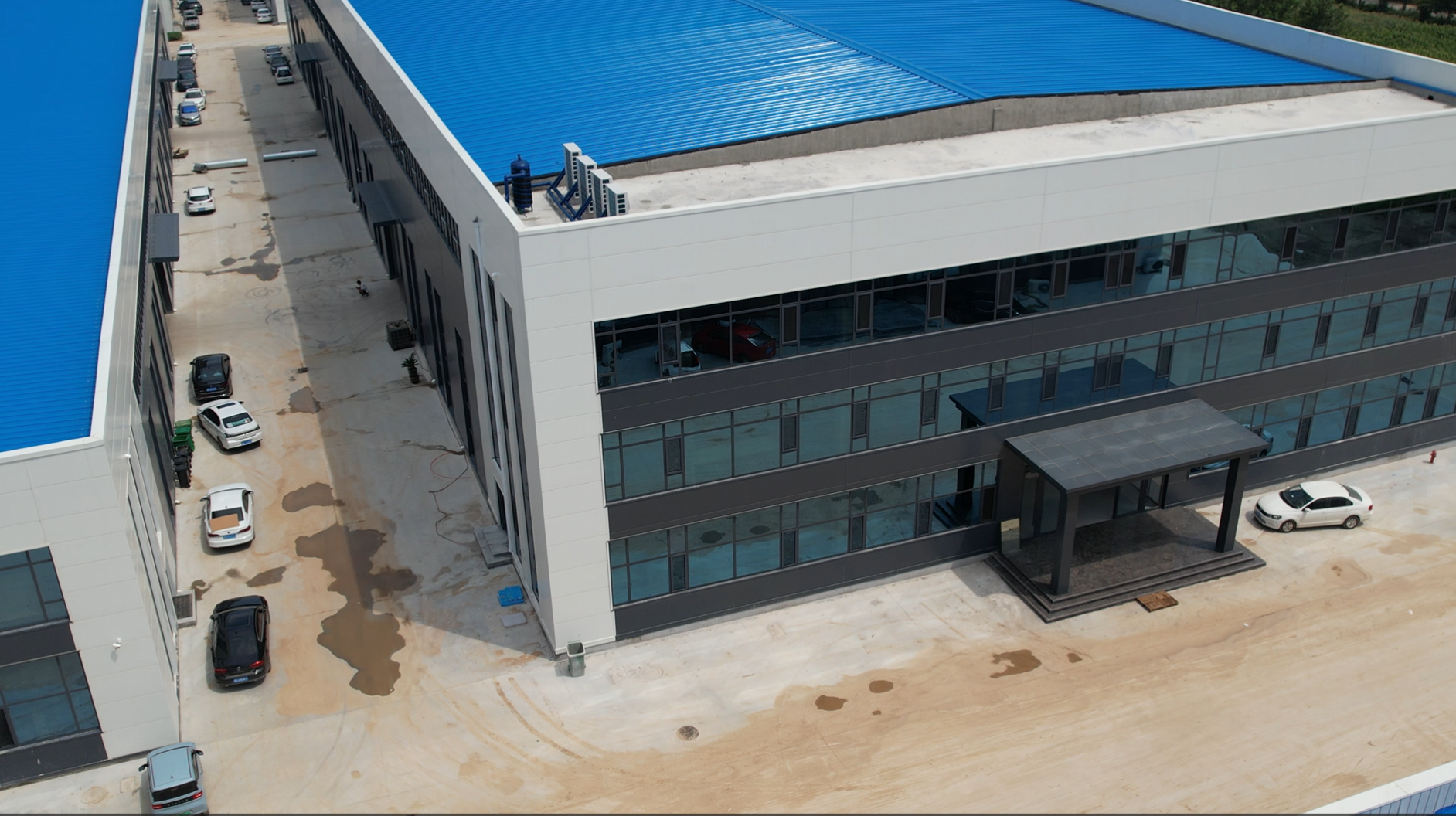
CHARY manufacturing facility — 2,000 m², 100+ employees, 500 units annual output.
Have Questions or Need More Details?
Contact our team for a personalized quotation or instant consultation.
Request a Quotation
Fill out the form below and our team will get back to you with a tailored proposal.
WhatsApp Direct Chat
Prefer to chat in real-time? Message us on WhatsApp for instant assistance & quick answers.
- Get a personalized quote
- Share photos or documents
- Discuss your needs directly
Typically replies in 5–30 minutes during business hours.