
What Is a FAW TRUCK? Chassis Types, Materials & Customization
What Is a FAW TRUCK? Chassis Types, Materials & Customization
Short answer: a FAW TRUCK is the commercial-vehicle truck line of FAW Group Corporation, a manufacturer headquartered in Changchun City, Jilin Province, China. It is not a single vehicle. It is a chassis-and-cab platform plus a body, which is why one brand name covers tractor units, dump trucks, concrete mixers, garbage trucks, sprinklers, tankers and fire trucks, all inside a published gross weight band of 3,000–15,000 kg and an overall size envelope of 6,000 × 2,300 × 3,000 mm up to 12,000 × 2,550 × 3,800 mm.
For a first-time buyer in commercial transport, that distinction decides everything that follows. Two quotations for what both sellers call a FAW truck can differ by a body, an engine rating, a tyre set, an axle family and a load rating, and both can still be accurate descriptions of the product.
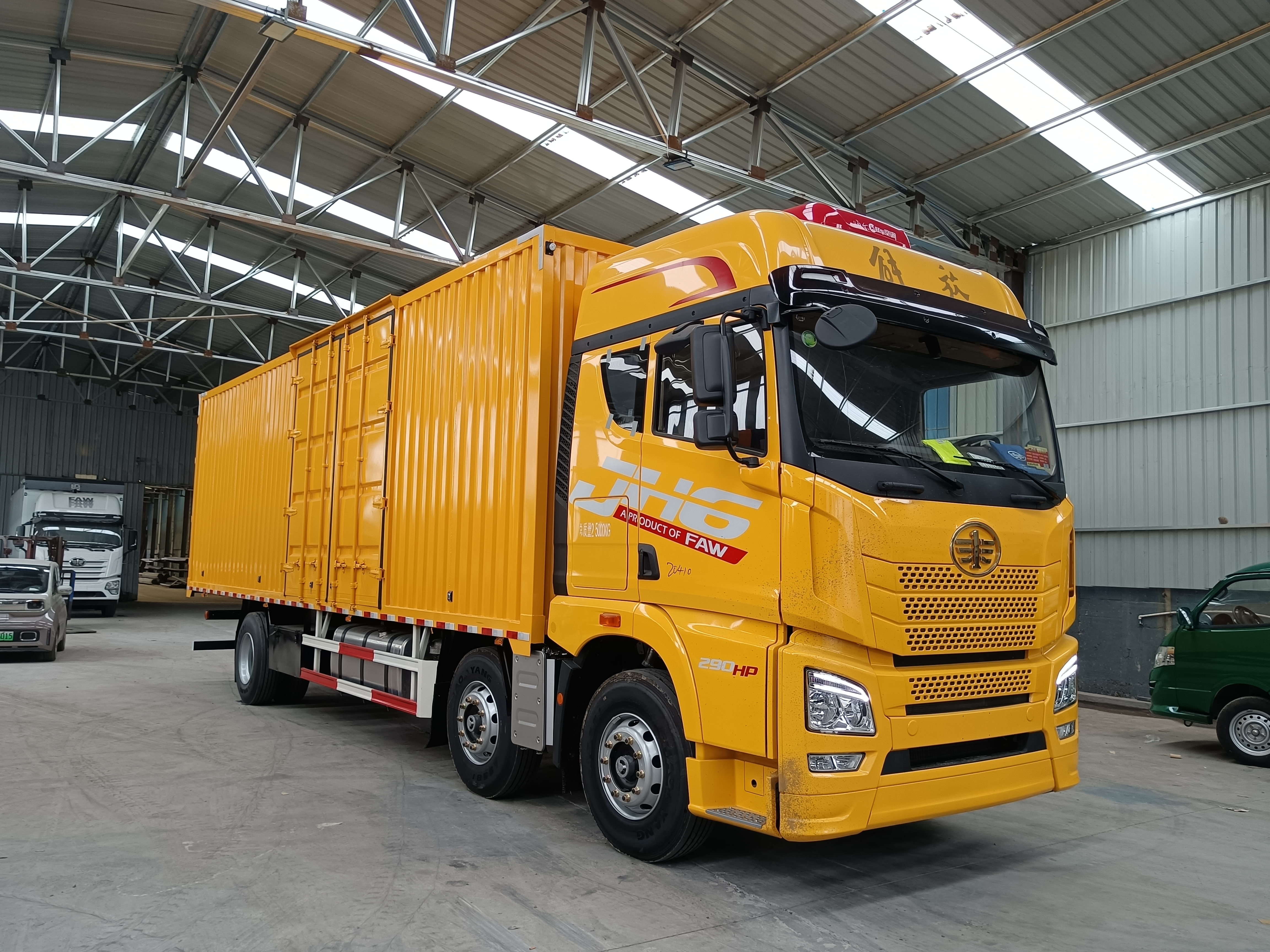
The Problem: a FAW Truck Is a Family Name, Not a Specification
Most sourcing mistakes in this category happen before a price is ever discussed. A buyer searches for a truck price, receives three numbers, and assumes they are comparable. They usually are not.
The public specification set for the line is deliberately broad. A single product record lists thirteen body types, a weight range from 3,000 kg to 15,000 kg, a size range that spans roughly six metres to twelve metres in overall length, tyre specification available on request, and a fixed safety package of ABS, EBS and TCS. Those are the boundaries of a family, not the description of a truck.
The practical consequence is simple. A 3,000 kg light chassis and a 15,000 kg heavy chassis share the same material list, the same safety vocabulary and the same brand on the grille, yet they belong in completely different projects. One moves parcels inside a city. The other hauls aggregate out of a mine.
Industry Background: Why Platform Scale Matters to an Export Buyer
Scale is not vanity in commercial vehicles. It decides whether a body type has been built before, whether the configuration has been exported before, and whether parts exist five years later.
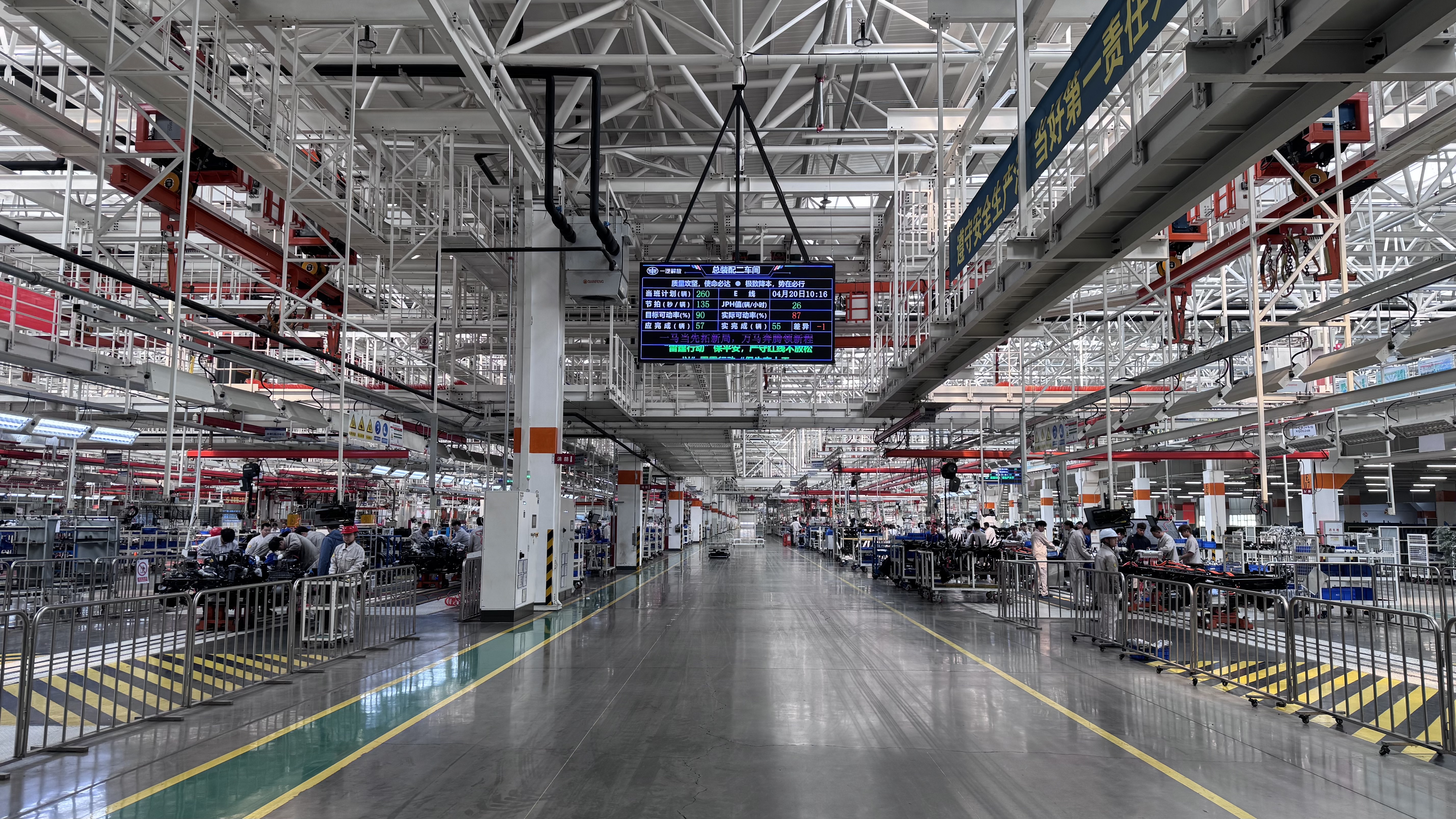
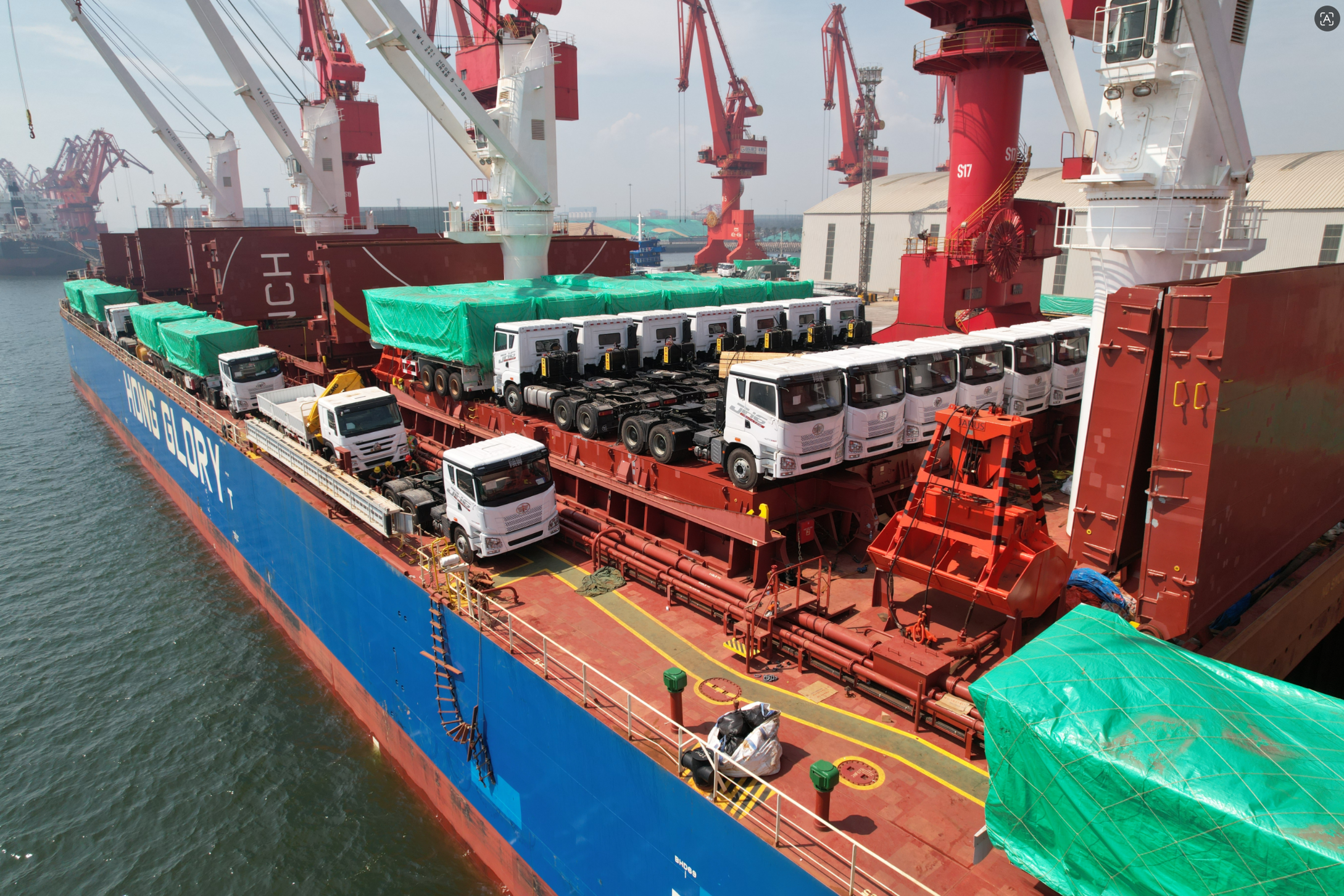
FAW Jiefang reported global vehicle sales of 251,100 units in 2024, with overseas exports of 57,000 units, described as a record high, according to its 2024 annual report. In South Africa, terminal sales surpassed 5,000 units in 2024, equivalent to an 18% market share, according to a SASAC release. Xinhua also reported the 9 millionth Jiefang vehicle rolling off the production line.
In procurement terms, an installed base of that size usually means three things: the common wear parts are produced in volume, export-specification bodies have already been built for right-hand-drive and high-temperature markets, and a distributor network exists to move configuration information between a buyer and the plant.
Qingdao Chary Machinery Co., Ltd (CHARY) is a Qingdao-based vehicle exporter founded in 2015, authorised and approved by China's Ministry of Commerce for vehicle export, and a first-level distributor of FAW TRUCKS. CHARY also exports SINOTRUK, SHACMAN and BEIBEN vehicles, sells into more than 50 countries and regions, and reported export volume of USD 40 million in 2025. Its role in a FAW TRUCK purchase is configuration and export execution, not manufacturing.
Anatomy of a FAW TRUCK: Chassis, Cab, Body and Materials
1. Chassis configuration and drive layout
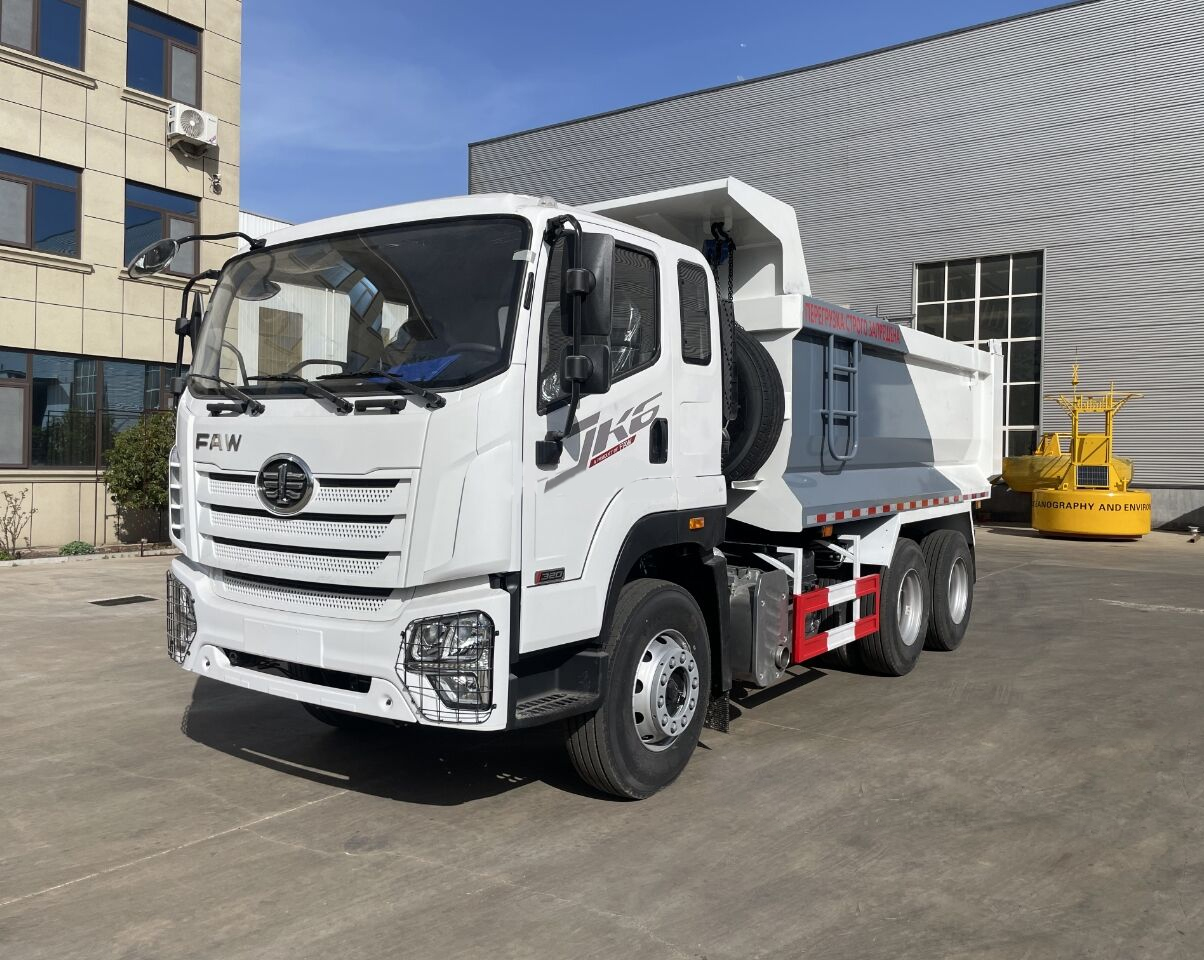
The published application data for the line lists two drive families: 6×4 and 6×2 rear-wheel drive, and an all-wheel-drive system covering 6×6 and 8×8. Model designations across the range also include 4×2 units such as the JK6 4×2 cargo truck and the Tiger VN 4×2, and 8×4 units such as the J6P 8×4 and JH6 8×4 dump trucks.
This is a traction decision first and a cost decision second. Rear-wheel-drive 6×2 and 6×4 layouts are the standard choice for highway freight, port shuttles and urban distribution, where the truck spends its life on sealed surfaces. All-wheel-drive 6×6 and 8×8 layouts exist for the conditions named in the product data: muddy terrain, snow, and site access where a loaded truck has to keep moving rather than wait for recovery.
The trade-off is honest and worth stating plainly. A 6×2 generally gives up grip to save weight and simplify maintenance. An 8×8 gives up payload and purchase cost to keep grip. Decide this before the body is discussed, because the body is mounted on whatever chassis has already been chosen.
2. Axles, fuel tanks and chassis hardware
The matched-equipment list published for the line is unusually specific, and it is the part of a specification most often skipped in a first quotation. It includes stamped-and-welded axle options - 130H, 1058, 295H, 1068, 325 and 340 - and cast axle options including 1080, 1090, 1092, 385 improved cast and 435, several of which appear as rear-axle variants. Fuel tank variants are listed in both cast iron and stamped-and-welded iron forms.
Why it matters: the axle family sets how much vertical load and driveline torque the truck is engineered around, and whether a damaged housing can be repaired by welding in a local workshop or must be replaced as a casting. For a fleet operating two days from the nearest dealer, that repair path is a budget line, not a footnote. Ask which axle family is quoted, and write it into the order.
3. Cab: right-hand drive and driver comfort
Right-hand drive is listed as a supported equipment configuration, which is decisive for Nigeria, Kenya, Tanzania, Mozambique and other right-hand-drive markets. Cab comfort items in the published equipment list include a semi-floating, mechanically damped seat and the Tiger VH flat-top extended cab, with a J6F seat listed at no extra charge. Cab designations in the model range include high-roof and flat-roof variants; the JH6 high-roof 6×4 550 hp tractor and the JH6 6×4 flat-roof cab tractor are both catalogued.
For long-haul work the cab is a driver-retention decision. A damped seat and an extended cab change how a driver finishes a twelve-hour shift, and driver turnover is a fleet cost. For urban distribution, a flat-roof cab is more often about height restrictions than comfort.
4. Body types built on the same platform
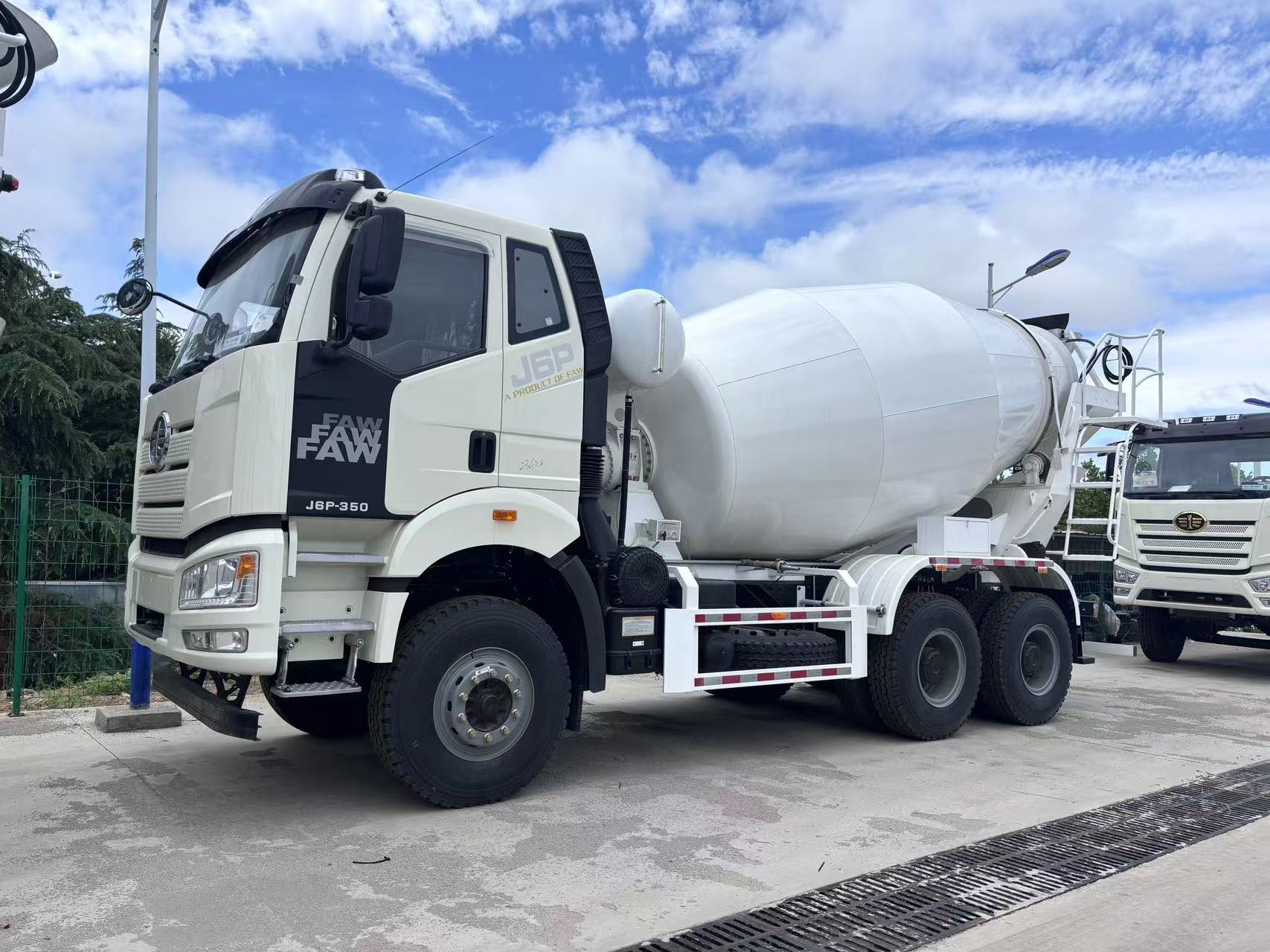
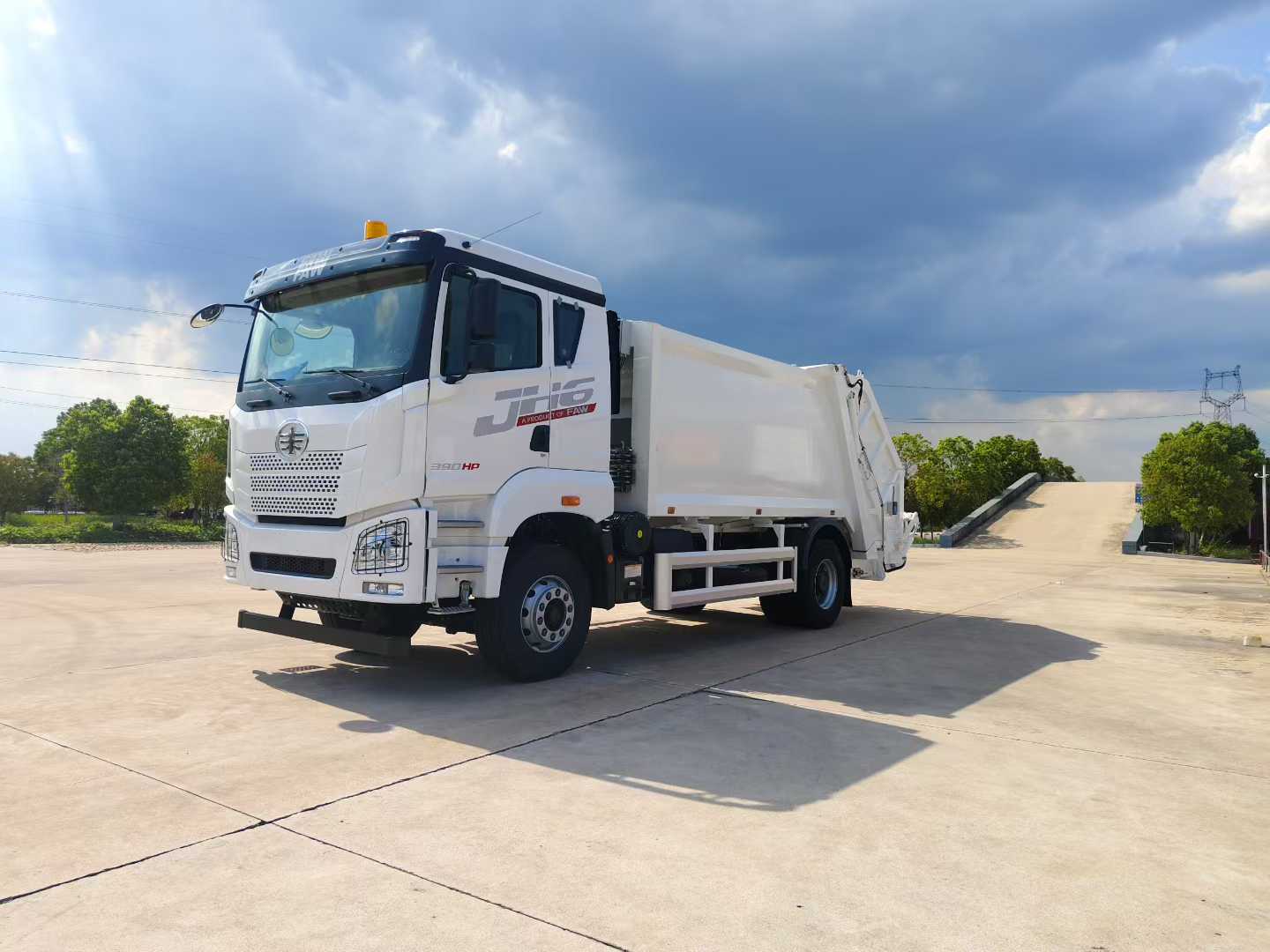
The FAW TRUCK range catalogues thirteen body types: tractor truck, dump truck, cargo / rigid / light truck, concrete mixer truck, garbage truck, sprinkler truck, water tank truck, fuel tank truck, wrecker truck, sweeper truck, concrete pump truck, asphalt distributor truck, high-altitude platform truck and fire truck. Underneath them sit the same chassis and cab families; above them sits the application.
This is where the modular framing becomes commercially useful. A construction client and a municipal client can buy from the same chassis pool, share axle and cab components, and still receive trucks that look and work nothing alike.
5. Material composition: what steel, iron, aluminium alloy and plastic actually decide
The published material composition for the line is steel, iron, aluminium alloy and plastic. That is the full list, and it is intentionally generic - it describes a material palette rather than a component-by-component breakdown.
For a buyer, the useful question is not what the palette contains but how it is distributed. The split between steel, iron and aluminium alloy drives kerb weight, which in turn drives payload inside the same gross weight band. It also drives repair method: steel structures are welded, cast iron components are replaced. A buyer who never asks for the component-level material breakdown is, in effect, accepting the supplier's default weight-and-repair profile.
6. The weight and dimension envelope
Every configuration has to fit inside 3,000–15,000 kg and inside 6,000 × 2,300 × 3,000 mm to 12,000 × 2,550 × 3,800 mm. That envelope is what makes the line a single family, and it is also what constrains customization. A longer body, a heavier tank or a taller platform must still resolve to a legal, buildable unit inside those limits.
FAW TRUCK Specification Baseline
| Parameter | Published figure | What it decides for the buyer |
|---|---|---|
| Gross weight band | 3,000–15,000 kg | Which weight class and axle family the project falls into |
| Overall dimensions | 6,000 × 2,300 × 3,000 mm to 12,000 × 2,550 × 3,800 mm | Site access, turning space, and shipping method |
| Drive configurations | 6×2 and 6×4 rear-wheel drive; 6×6 and 8×8 all-wheel drive | Traction on mud, snow and gravel versus highway efficiency |
| Safety configuration | ABS / EBS / TCS | Braking and traction behaviour when loaded or on wet surfaces |
| Materials | Steel, iron, aluminium alloy, plastic | Kerb weight, payload headroom and repair method |
| Body types | 13 catalogued types | Project fit, from freight to waste to construction |
| Customization levers | Body, engine, tyres, load capacity | How far the specification can be pushed |
| Minimum order quantity | 1 unit | Trial or sample order before a fleet commitment |
| Monthly capacity | 8,000 units | Ability to scale from pilot to fleet |
| Production lead time | 30–45 days | Project scheduling and site mobilisation |
| Quality control | 100% test | Pre-dispatch validation of each unit |
Body Types and Project Fit
| Body type | Documented application category |
|---|---|
| Tractor truck | Logistics freight distribution, port transportation, large machinery and equipment transport |
| Dump truck | Coal and other mineral transportation, building materials transport, construction sites |
| Cargo / rigid / light truck | Express delivery, daily industrial goods, agricultural and sideline products, urban distribution |
| Concrete mixer truck | Building materials transport, construction sites |
| Garbage truck | Urban waste transport, transfer stations |
| Sprinkler truck / water tank truck | Urban roads and construction sites requiring water delivery |
| Fuel tank truck | Chemical raw material transport |
| Wrecker truck | Vehicle recovery on highways and urban roads |
| Sweeper truck | City cleaning and urban waste operations |
| Concrete pump truck | Construction sites |
| Asphalt distributor truck | Highway and road construction |
| High-altitude platform truck | Elevated maintenance work in cities and on highways |
| Fire truck | Emergency response, municipal and industrial sites |
Step-by-Step: Configuring a FAW TRUCK for a Project
- Fix the duty cycle, not the model. Write down the project type - factory, farm, construction site, mine, city, highway or transfer station - and the working conditions, which for this line include high temperature, humidity, muddy terrain, rain and snow.
- Choose the drive layout. 6×2 or 6×4 rear-wheel drive for sealed-road freight; 6×6 or 8×8 all-wheel drive where mud, snow or unsealed site access is normal.
- Size the weight class inside 3,000–15,000 kg. Under-specifying here cannot be fixed later by the body.
- Select the body. Choose from the thirteen catalogued types, or specify a body that falls inside the customization scope.
- Select the engine rating. Engine is one of the four published customization levers; the J6P 8×4 dump truck (CA5310), for example, is specified with an 11L CA6DM2 engine rated at 390 hp.
- Select the tyres. Tyre specification is available based on customer needs, so the requirement has to be stated rather than assumed.
- Confirm the load capacity. Load capacity is the fourth customization lever and should be agreed in writing alongside the body.
- Specify cab and safety. Right-hand drive where the market requires it, semi-floating mechanically damped seat, and the ABS / EBS / TCS safety configuration.
- Validate and schedule. Freeze a written configuration sheet, consider a single evaluation unit, confirm 100% testing before dispatch, and plan around a 30–45 day production lead time plus ocean freight.
Use Cases: Matching Configuration to Operating Conditions
Construction and building materials
Construction sites need tipping and mixing, which points to dump trucks and concrete mixer trucks on 6×4 or 8×4 chassis. The working conditions that dominate here are mud, dust and short loaded cycles, so axle family matters more than top speed.
Mining and coal haulage
Coal and mineral transport adds high temperature and poor ground to the load problem. All-wheel-drive 6×6 and 8×8 configurations exist precisely for that combination, and the heavier cast axle options are the relevant part of the specification to discuss.
Urban waste and municipal service
Garbage trucks, sweeper trucks and sprinkler or water tank trucks operate on city roads under height and noise constraints. A 4×2 or 6×2 chassis with a flat-roof cab is the natural starting point rather than an all-wheel-drive unit.
Logistics, port and cold chain
Highway freight, port container movement and temperature-controlled distribution point to tractor and cargo configurations on 6×4 rear-wheel drive, with the cab specification doing most of the driver-retention work.
Field evidence: a decade of high-intensity operation
A logistics company in Mali has operated 50 units for more than ten years, moving powdered and granular materials and sand and gravel. The reported result is stable operation under high-intensity use. That is a narrow but relevant reference point for buyers in similar West African conditions, where load, heat and road quality combine.
Customization Potential - and Where It Stops
Customization on this line is defined rather than open-ended. The published levers are body, engine, tyres and load capacity, supported by right-hand drive and axle-family selection. Production mode is OEM, minimum order quantity is one unit, monthly capacity is 8,000 units, and lead time is 30–45 days with 100% testing before dispatch. Global technical support covers after-sales service.
Four limits are worth naming before a specification is signed off:
- The physical envelope. Weight must land between 3,000 and 15,000 kg and dimensions inside 6,000 × 2,300 × 3,000 mm to 12,000 × 2,550 × 3,800 mm. A specification that breaks the envelope is a different product, not a customized one.
- Market approval. Axle-load limits, emissions requirements and import documentation are set by the destination country, not by the configuration sheet. These must be confirmed in writing per market.
- Tyre availability. Tyres are available based on customer needs, but a requested size still has to exist in supply at the time of order.
- The safety package. ABS, EBS and TCS are the published safety configuration. A buyer should not assume additional systems are part of the standard build.
FAQ
Do I need to confirm market-specific approval before ordering a FAW TRUCK?
Yes. The published FAW TRUCK specification covers gross weight (3,000–15,000 kg), overall dimensions (6,000 × 2,300 × 3,000 mm to 12,000 × 2,550 × 3,800 mm), tyre specification by request and a safety configuration of ABS, EBS and TCS. That specification does not, on its own, demonstrate that a given configuration is approved for a specific country. Axle-load limits, emissions requirements and import documentation are set by the destination market, so the configuration sheet and the regulatory paperwork should be confirmed in writing before the order is placed.
Can the body, engine, tyres and load capacity be changed?
Yes. Body, engine, tyres and load capacity are the four customization levers published for the line. The range already catalogues thirteen body types - tractor, dump, cargo, concrete mixer, garbage, sprinkler, water tank, fuel tank, wrecker, sweeper, concrete pump, asphalt distributor, high-altitude platform and fire - and right-hand drive plus axle-family selection sit alongside them. Minimum order quantity is one unit, and monthly capacity is stated at 8,000 units, so a single evaluation truck and a fleet rollout can be handled through the same channel.
What actually determines the price of a FAW truck?
Configuration, not the badge. Price moves with chassis family and drive layout, body type, engine rating, tyre set, load rating and the destination market's freight and duties. Published retail references are thin: a 2026 Philippine listing places the FAW Thor at ₱3.62 million, which is one model in one market and should not be read as a general FAW TRUCK price. The reliable route is a written quotation against a fixed configuration sheet listing body, engine, tyres, load capacity, cab, safety configuration and destination port.
Can I order a single unit before committing to a fleet?
Yes. The minimum order quantity is one unit, and each unit is subject to 100% testing before dispatch. A single evaluation truck can therefore be used to validate body build quality, cab comfort and fuel performance on your own routes before a larger order is placed.
How long does a configured FAW truck take to reach me?
Production lead time is 30–45 days for the configurations described in this article. Ocean freight, port clearance and inland delivery are additional and depend on destination. Because body work and configuration happen before shipment, the practical advice is to freeze the specification sheet early and add fast-moving spares to the same shipment - CHARY supplies FAW truck spare parts alongside vehicles. To start, request a configuration-based quotation or a sample unit by email at sales@fawglobal.com or on WhatsApp at +86 186 6398 2168.
Conclusion
A FAW TRUCK is best understood as a chassis-and-cab platform with a body fitted to it. The chassis family decides traction through 6×2, 6×4, 6×6 or 8×8 layouts; the axle package decides load tolerance and repair path; the cab decides driver comfort and whether right-hand drive is available; and the body decides what the truck is actually for, across thirteen catalogued types. Materials - steel, iron, aluminium alloy and plastic - decide kerb weight and therefore payload.
Read the product that way and the specification conversation becomes concrete: weight inside 3,000–15,000 kg, dimensions inside the published envelope, safety via ABS, EBS and TCS, and customization limited to body, engine, tyres and load capacity. That is a far more useful starting point than a price list.
Next Step: Quote, Sample or Catalogue
CHARY supplies FAW TRUCKS with body, engine, tyre and load-capacity configuration from a single order upwards, with 30–45 day lead times and 100% testing before dispatch.
Website: www.charymachinery.com
Email: sales@fawglobal.com
Tel / WhatsApp: +86 186 6398 2168 (Jason)
Address: No. 266 Jiushui East Road, Qingdao, China
Product catalogue (PDF): Download the CHARY catalogue
Have Questions or Need More Details?
Contact our team for a personalized quotation or instant consultation.
Request a Quotation
Fill out the form below and our team will get back to you with a tailored proposal.
WhatsApp Direct Chat
Prefer to chat in real-time? Message us on WhatsApp for instant assistance & quick answers.
- Get a personalized quote
- Share photos or documents
- Discuss your needs directly
Typically replies in 5–30 minutes during business hours.