
FAW Truck Delivery Delays: Spec Locking & Acceptance Guide
FAW Truck Delivery Delays: Spec Locking & Acceptance Guide
A late FAW truck order is usually described as a delivery problem. In most fleet files, it is a documentation problem that only became visible on the day the unit was due to be handed over.
This guide is written for logistics, construction and mining fleet decision-makers in emerging markets who buy FAW trucks through an export distributor. It separates supplier-caused delays from avoidable specification drift, sets out what to lock before a purchase order is released, explains how to confirm certification relevance for your own market, and converts the locked specification into an acceptance checklist that can be used at handover.
The working rule throughout is simple: a delivery date is only meaningful when it is attached to a configuration. Without that attachment, a delay can be created by a single verbal confirmation, a single open tire specification, or a single body dimension that two people read differently.
Order execution is described here through the process used by Qingdao Chary Machinery Co., Ltd (CHARY), a first-level FAW TRUCKS distributor and authorised vehicle exporter based in Qingdao, China, which has supplied commercial vehicles to markets in Africa, the Middle East, Southeast Asia, Central Asia and Eastern Europe, and Latin America since 2015. The checkpoints below apply to any FAW export order; the published lead time, capacity and customization scope quoted are the ones CHARY states.
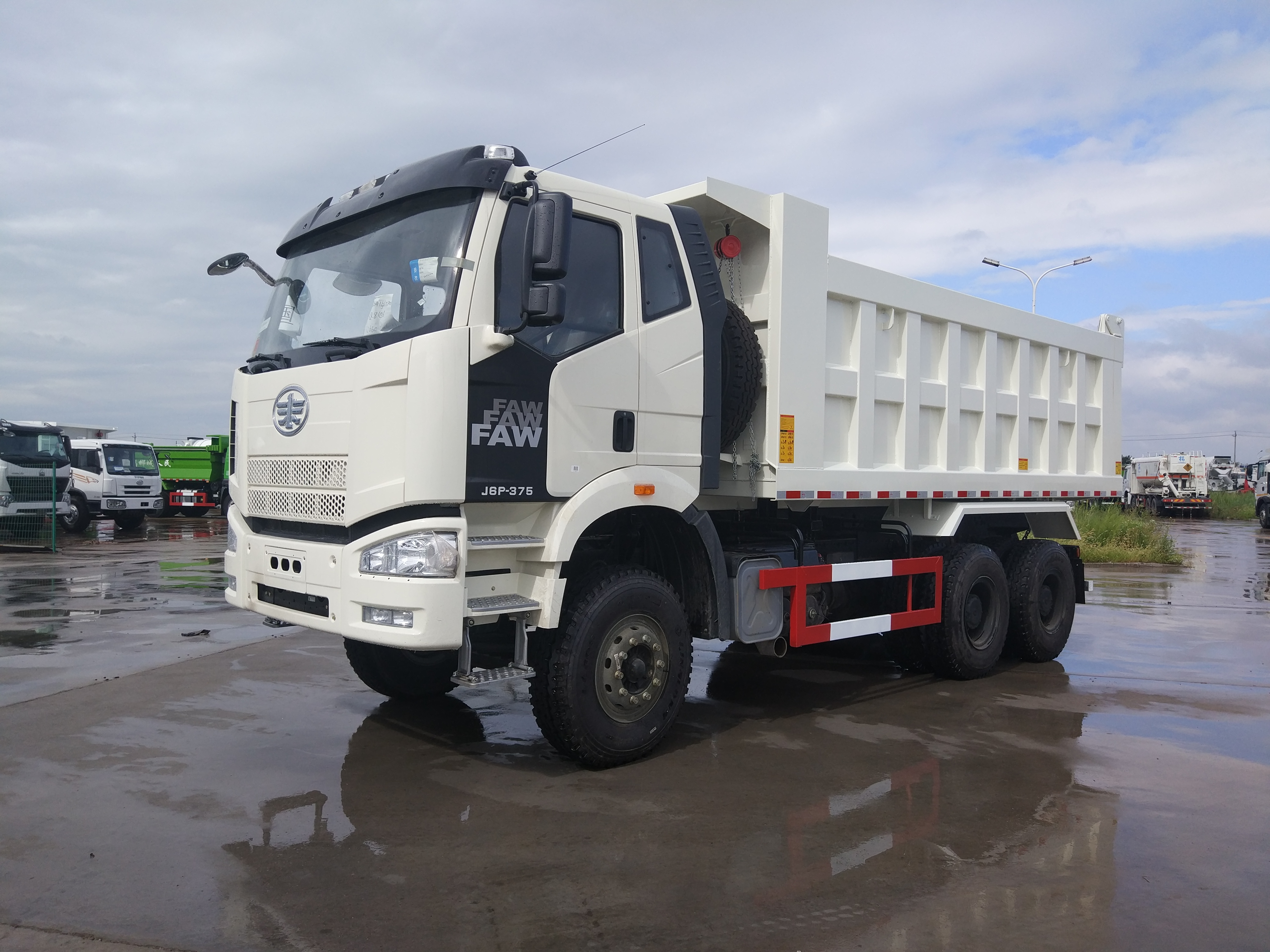
A unit is only ready for handover when it matches a signed specification version, not when it looks like the truck in the quotation photo.
Delivery Delay on a FAW Order: Where the Time Actually Goes
A truck order moves through more handover points than most buyers count. There is the quotation, then the specification sheet, then chassis release and build, then body or customization work, then pre-shipment inspection, then shipping and clearance, and finally handover. CHARY states a production lead time of 30–45 days for FAW truck orders. That figure describes one part of the chain. It does not describe ocean freight, port clearance, inland transport or the time your own team takes to approve a specification.
Because the chain is long, delay causes are frequently misattributed. Three categories explain almost every case:
- Supplier-controlled delay: production scheduling, body build progress, a unit that fails pre-shipment inspection, or incomplete shipping documentation.
- Buyer-created delay: late approval of the specification sheet, a change requested after the chassis has been released, a body drawing confirmed late, or a payment instrument issued later than the agreed milestone.
- External delay: vessel schedules, port congestion, customs inspection and market-specific regulatory review.
Specification drift is the term this guide uses for the second category. It is the distance between the truck a buyer believes was ordered and the truck described by the documents a factory is actually building from. Drift is not a dispute about quality. It is a gap in the record.
Drift causes delays in a predictable way. While a specification is still open, the order can still be corrected cheaply. Once body steel is cut, once a cab variant is committed, once tires are mounted, correction becomes rework, and rework puts the unit back into the production sequence behind other orders. Drift causes rejections in a second way: at handover the buyer inspects against memory while the factory inspects against the sheet. If the sheet was vague, both sides can be honest and still disagree.
The control is procedural rather than technical. A change is only real when the specification sheet's version number changes and both parties sign the new version. Anything agreed by message and never re-issued is not a change; it is a future argument.
The Model and Body Matrix You Are Locking Against
The FAW heavy-truck range referenced in CHARY's portfolio covers the J7, J6P, J6V, J6E, JH6, J6G, J6L, JK6 and Tiger V lines. Body build covers tractor, dump, cargo and rigid or light truck, concrete mixer, garbage, sprinkler, water tank, fuel tank, wrecker, sweeper, concrete pump, asphalt distributor, high-altitude platform and fire truck bodies, with the NEW J5P also appearing in body-build listings.
Behind those names sits a shared published parameter envelope: a truck weight range of 3,000–15,000 kg, overall dimensions from 6,000×2,300×3,000 mm to 12,000×2,550×3,800 mm, tire specifications available based on customer needs, and a safety configuration set of ABS, EBS and TCS. Drive options include 6x4 and 6x2 rear-wheel drive and 6x6 and 8x8 all-wheel drive.
That envelope is the single most misread item in export truck buying, because it is a range of possible vehicles, not a vehicle. Three consequences follow.
A model name is a family, not a specification. The J6P designation appears on both tractor and dump configurations, and the JH6 designation appears on 6x4, 8x4 and CNG tractor listings. Ordering "a J6P" therefore fixes almost nothing that matters on site.
"Tires available based on customer needs" is a decision, not a default. If nobody writes a tire specification, the specification does not exist, and whatever is mounted will be defensible and possibly wrong for your terrain and your spare-parts stock.
ABS, EBS and TCS are listed as a set. An order that says "standard safety equipment" leaves all three undefined. If your market's inspection, insurer or internal fleet policy expects a named system, the sheet has to name it.
Model-level data shows the resolution an annex needs. CHARY's published FAQ content documents a FAW J6P 8x4 dump truck (CA5310) with an 11L CA6DM2 engine rated at 390 hp. That is the level of detail to write down: model, drive configuration, body type, engine displacement, rated power. Anything less is a description, not an order.
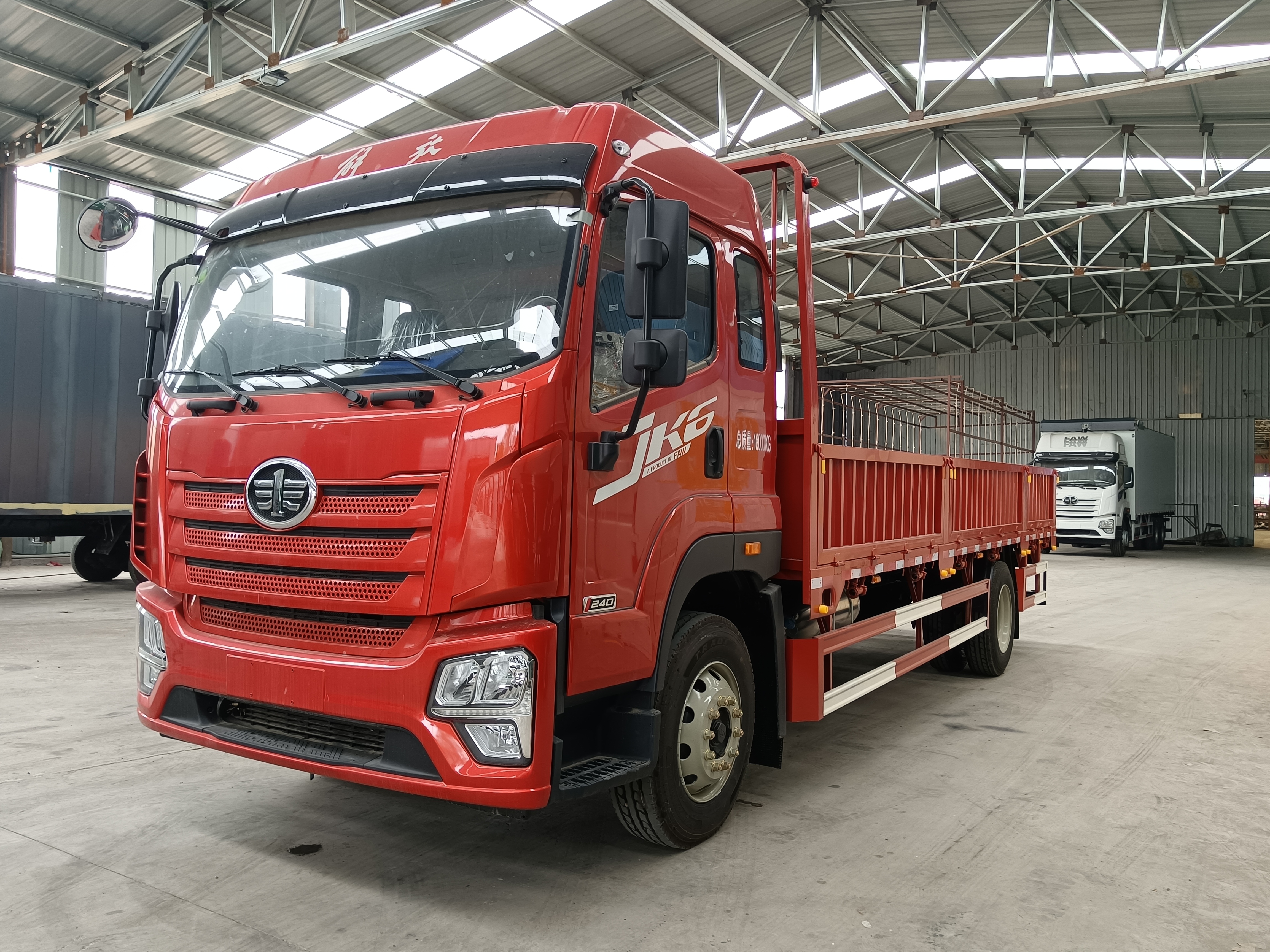
Model, drive configuration and body type have to be written together; naming only the model leaves the build open.
Step-by-Step: How to Lock a FAW Truck Spec Before the Purchase Order
The sequence below is ordered deliberately. Each step ends with a line item that goes onto one master specification sheet, which is then annexed to the purchase order and referenced by version number.
Step 1 — Write the duty cycle before you write the model
State the conditions the truck will work in: high temperatures, humidity, muddy terrain, rain, snow, highways, urban roads. State the project type: mine, construction site, port, factory, city distribution or transfer station. The duty cycle decides the drive configuration before any brand discussion starts — all-wheel drive (6x6 or 8x8) for unpaved haul roads and muddy ground, 6x4 or 6x2 rear-wheel drive for highway and urban work. Two or three sentences of duty cycle in the annex resolve more arguments later than a page of specification.
Step 2 — Fix model, drive configuration and axle set
Write the model code and the drive configuration as two separate items. Then write the axle and fuel tank selection. The published option set includes stamped-and-welded and cast axle designs (for example 1092, 1080 and 435 variants) with matching fuel tank options. These selections change what the vehicle can carry and which spare parts fit it, so they belong on the sheet rather than in a conversation between engineers.
Step 3 — Fix body type and dimensions in millimetres
Choose one body from the published list — tractor, dump, cargo, sweeper and the rest — and write length × width × height as numbers inside the 6,000×2,300×3,000 mm to 12,000×2,550×3,800 mm envelope. The published material set spans steel, iron, aluminium alloy and plastic, so body material should also be stated rather than assumed. A body described by photograph is not a specification.
Step 4 — Fix the tire specification in writing
Because the published position is that tires are available based on customer needs, the order must carry a size and, where relevant, a brand or pattern requirement. Tire choice interacts with gearing, load rating and your existing spare-parts stock across the fleet; it is not a cosmetic choice and should never be left to supplier discretion at build time.
Step 5 — Fix cab, comfort and control position
Record right-hand drive where your market requires it, and record the seat requirement, since the published configuration set specifies a semi-floating, mechanically damped seat. Cab variants also differ within the range — high-roof and flat-roof tractor listings appear in the portfolio, as does a Tiger V flat-top extended cab — so cab form belongs on the sheet alongside the seat specification.
Step 6 — Fix the safety configuration explicitly
Write down which of ABS, EBS and TCS the unit must have. Because all three are offered within the same published safety configuration set, leaving the line blank hands the decision to whoever prepares the build. For fleets running hazardous goods or high-value cargo, this line is also the one an insurer or inspector will ask about first.
Step 7 — Fix engine and customization scope as priced line items
The stated customization scope is body, engine, tires and load capacity. Every request inside that scope is legitimate and should be quoted as its own line with its effect on price and on lead time. State load capacity as a number and pair it with the axle set from Step 2 that carries it, so a payload figure cannot float free of the hardware underneath it.
Step 8 — Version the sheet and annex it to the contract
Produce one master specification sheet with a version number, a date and signatures from both parties. The purchase order references that version. The acceptance criteria in the next section are attached as a second annex. Any later change creates a new version with a revised date and a written note on cost and schedule effect.
| Checkpoint | What the order must state | Where drift starts |
|---|---|---|
| Model and drive | Model code plus 6x4, 6x2, 6x6 or 8x8 | Drive configuration never written |
| Body type | One body from the published list | Body shown as a photo, not a specification |
| Dimensions | L × W × H in mm, inside the stated envelope | "Standard body" left undefined |
| Weight and load | Target load within 3,000–15,000 kg plus matching axles | Payload copied from a previous order |
| Tires | Size, and brand or pattern if required | Left to supplier discretion |
| Cab and control | Right-hand drive; semi-floating damped seat; cab form | Market requirement agreed verbally |
| Safety configuration | Which of ABS, EBS and TCS is required | "Standard safety" instead of a list |
| Certification documents | Required document, scope and validity | Applicability assumed from the model name |
| Sheet version | Version number, date, signatures, PO reference | Changes agreed in messages, never re-issued |
Certification Relevance: Confirm It Before You Lock, Not After
Two references that surface repeatedly in emerging-market truck enquiries are GSO ISO 1585:2008 in Gulf-facing procurement and UN ECE R105 where vehicles are intended for the carriage of dangerous goods. Neither should be treated as a default, and neither should be assumed to apply because a supplier mentions it. Applicability depends on your market, your vehicle category and how the truck will actually be used, and it is a question for your own regulator, not for a brochure.
The practical approach is to convert certification from an assumption into a lock item. Ask five questions in writing before the purchase order is released:
- Does my market's authority require this reference for this vehicle category and this use?
- Does the document offered name the exact model, drive configuration, body type and engine build I am ordering, or only a base vehicle?
- Who issued it, and what is its validity period?
- Does the customs or inspection file require an original, a certified copy, or is an electronic copy accepted?
- If my use changes — for example a body intended for dangerous goods — does the earlier document still cover the vehicle as built?
Then record the outcome on the specification sheet as a document line, with the document number that must be delivered with the unit. If the honest answer is "not applicable", record that too, with the date and the person who confirmed it. A written non-applicability note prevents the same question from reopening at the port, which is where it becomes expensive.
Acceptance at Handover: Turning the Sheet Into a Check
Acceptance criteria belong in a signed annex before the purchase order exists, not in a discussion on the day the truck arrives. The annex should define three outcomes: accept, accept with a rectification note for non-safety, non-capacity items, and reject where an identity or capacity checkpoint fails.
The walkaround is then mechanical. Check the model and VIN plate against the sheet. Check the drive configuration on the vehicle against the sheet. Measure the body against the recorded dimensions rather than against expectation. Confirm the tire size and pattern. Confirm the control position and the seat type. Confirm that each named safety system — ABS, EBS or TCS — is present and documented. Confirm axle and fuel tank identity against the Step 2 record. Check paint and fleet markings. Then check documents: the signed specification version, the inspection record, certification copies and the spare parts list.
On quality evidence, CHARY states 100% test as its quality control position. The buyer's version of that statement is a request: ask for the inspection record for your VIN rather than a generic certificate, because a generic certificate tells you what the process is, not what happened to your unit. Rejection likewise needs evidence — a measurement, a photograph and the version number of the sheet it was compared against.
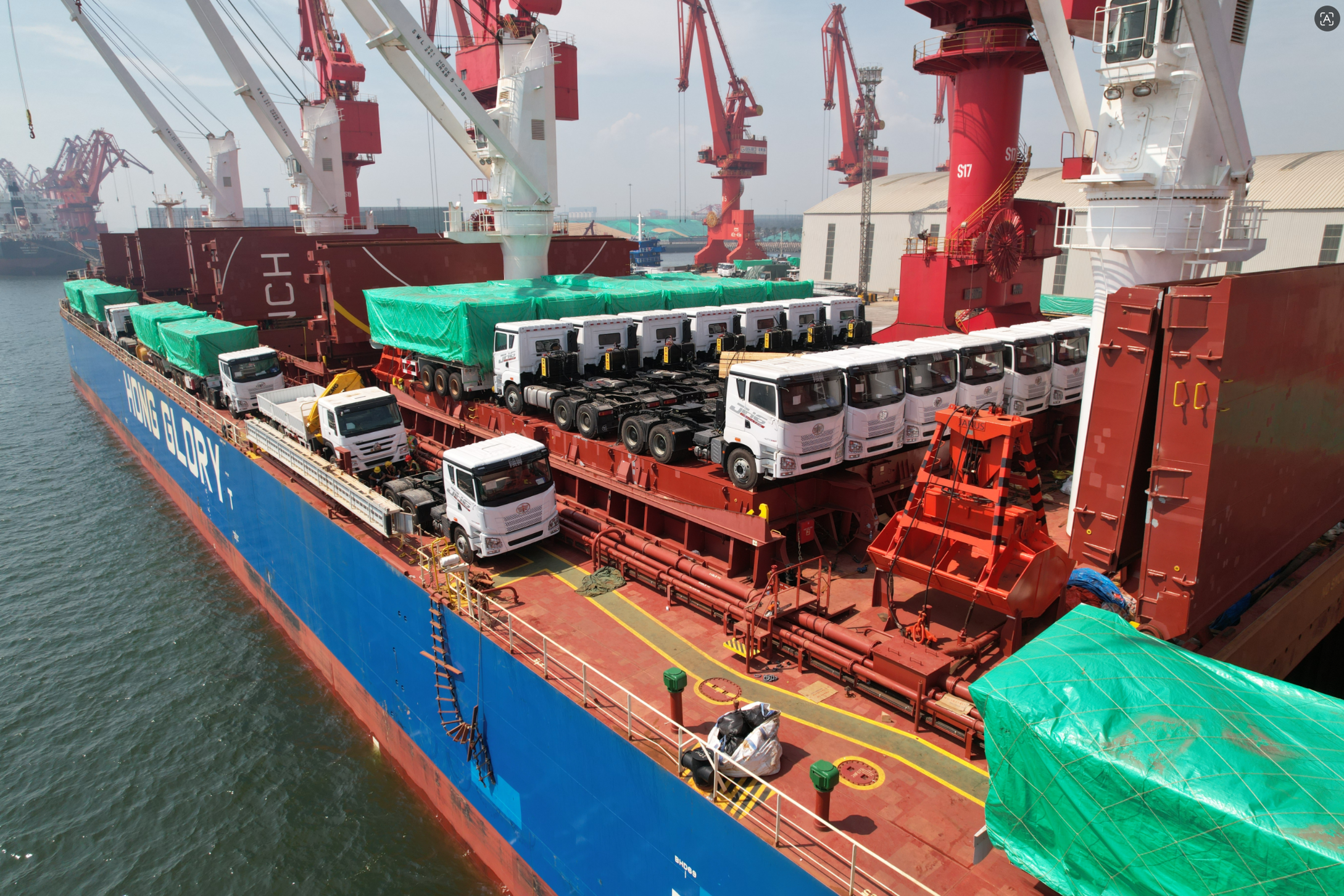
Documentation should be complete before loading, so handover becomes verification rather than negotiation.
| Delay event | Usually owned by | Evidence to hold |
|---|---|---|
| Specification not approved on time | Buyer | Dated approval record |
| Body or tire change after release | Buyer | Version history of the sheet |
| Build overrun inside the stated 30–45 days | Supplier | Milestone schedule against actual dates |
| Unit fails pre-shipment inspection | Supplier | Inspection record for the VIN |
| Sailing or clearance slippage | External or shared | Booking and clearance documents |
| Unit rejected at handover | Decided by the annex | Signed criteria plus measurements |
Applying This to Logistics, Construction and Mining Fleets
The locking method is the same across sectors; the first checkpoint is not. Sector decides which line on the sheet has the most leverage over whether the unit is accepted.
Logistics and distribution
Tractor and cargo configurations dominate, with highway and urban roads as the working conditions and 6x4 or 6x2 rear-wheel drive as the usual starting point. In this segment the acceptance risk concentrates in body build and in cab specification, because a tractor is judged against trailer compatibility and driver handover. Cold-chain operators have an extra lock line: refrigerated bodies appear among FAW truck product categories, and a temperature-controlled body adds its own build stage, so its dimensions and equipment must be on the version-controlled sheet rather than discussed after chassis release.
Construction
Dump, mixer and tipper bodies working in high temperatures and muddy terrain make drive configuration the first decision rather than the last. State the load you intend to carry and confirm the axle set that carries it; a payload number without the axle record is the most common source of a rejected construction unit. Where haul roads are unpaved for part of the year, all-wheel drive should be argued for at Step 1, not requested as a change at Step 7.
Mining and mineral haulage
The stated special requirement for this application is stable operation under complex road conditions, alongside high temperature and muddy terrain. Fleet repeatability matters more here than in any other segment: a mining fleet that runs twenty identical units needs every one of them built to the same version, or the spare-parts store fragments. That is an argument for a short, strict specification sheet rather than a long, permissive one.
CHARY's documented case file shows the pattern in practice: a logistics company in Mali operating 50 units on powdered and granular material and sand and gravel haulage, recorded as running for more than 10 years with stable operation. The useful lesson for a buyer is not the unit count. It is that a fleet of that size only remains serviceable when the configuration is controlled across every unit in it.
Mining and mineral duty cycles make drive configuration a Step 1 decision, not a late change request.
Frequently Asked Questions
Which certification references should I confirm before locking a FAW truck order for my market?
Confirm applicability with your own market authority before the order, using GSO ISO 1585:2008 or UN ECE R105 only as examples of references that may be raised in Gulf-facing or dangerous-goods procurement. For each one, establish whether it applies to your vehicle category and use, whether the document names your exact model, body and engine build rather than a base vehicle, who issued it, its validity, and what form the customs file requires. Record the answer — including a written "not applicable" — as a document line on the specification sheet.
How much of a FAW truck can be customized, and how does that affect spec locking?
The stated customization scope is body, engine, tires and load capacity, produced under an OEM production mode with a stated monthly capacity of 8,000 units and a minimum order quantity of 1 unit. Each customized item should be quoted as its own line with its effect on price and lead time, and each becomes a numbered line on the specification sheet. Broad customization is exactly why version control matters: the more lines that can change, the more a verbal agreement can cost.
Why can two FAW truck orders that look identical carry different prices?
Because price attaches to a configuration, not to a model name. Within the same published envelope, two orders can differ on body type, dimensions anywhere between 6,000×2,300×3,000 mm and 12,000×2,550×3,800 mm, tire specification, engine, safety configuration, and axle or fuel tank selection. A quotation that is not tied to a specification version cannot be compared with another quotation. Ask for an itemized quotation referencing the sheet version, and compare only quotations that reference the same version.
Can we validate a unit before committing the whole fleet order?
A single-unit order is possible, since the stated minimum order quantity is 1 unit. That allows a buyer to build and inspect one unit against the same specification sheet before releasing a fleet quantity, which is the cheapest way to test body dimensions, tire choice, cab items and safety configuration in your own operating conditions. The stated production lead time applies to that unit as well, so the validation unit should be scheduled into the fleet plan rather than treated as an extra.
How long does a FAW truck order take, and which parts are inside the supplier's control?
CHARY states a production lead time of 30–45 days for FAW truck orders. That covers production and body work; shipping schedules, port clearance and inland delivery sit outside it and should be scheduled as separate milestones in the contract. Ask for a written milestone schedule at order confirmation, with specification approval, chassis release, body completion and pre-shipment inspection as named dates, so a slip can be attributed to a stage rather than to the order as a whole. To apply the checkpoints in this guide to a specific duty cycle, CHARY's team can be reached at sales@fawglobal.com or +86 186 6398 2168, and the FAW range brochure is available for download below.
Conclusion
Delivery delays and rejected units on FAW truck orders usually trace back to the same window of time: the days between the first quotation and the release of the purchase order. Once body steel is cut, the only remaining options are rework, renegotiation or rejection, and all three cost more than a signed specification version would have.
The sequence that prevents most of it is short enough to run on one page. Write the duty cycle first. Fix model and drive configuration. Fix body type and dimensions in millimetres. Fix tires, cab specification and the named safety configuration. Fix the engine and load figures as priced lines. Confirm certification applicability for your market in writing. Then version the sheet, annex it to the contract with the acceptance criteria, and inspect against it at handover.
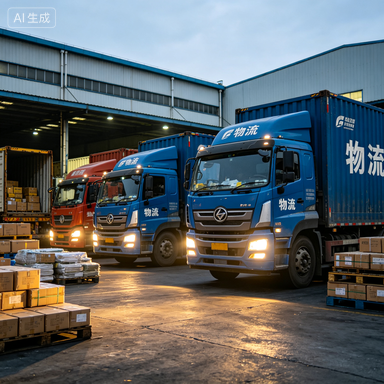
A fleet yard runs on repeatable specifications: the same signed version, unit after unit.
For buyers who want the range detail behind these checkpoints, CHARY publishes a downloadable product brochure: FAW truck product brochure (PDF). Direct enquiries can be sent to Jason at sales@fawglobal.com, by telephone or WhatsApp on +86 186 6398 2168, or by post to No. 266 Jiushui East Road, Qingdao, China.
Have Questions or Need More Details?
Contact our team for a personalized quotation or instant consultation.
Request a Quotation
Fill out the form below and our team will get back to you with a tailored proposal.
WhatsApp Direct Chat
Prefer to chat in real-time? Message us on WhatsApp for instant assistance & quick answers.
- Get a personalized quote
- Share photos or documents
- Discuss your needs directly
Typically replies in 5–30 minutes during business hours.