
Top 5 Compact Machines for Confined Sites: CR468C Minidozer and FAW Truck Picks
Top 5 Compact Machines for Confined Sites: CR468C Minidozer and FAW Truck Picks
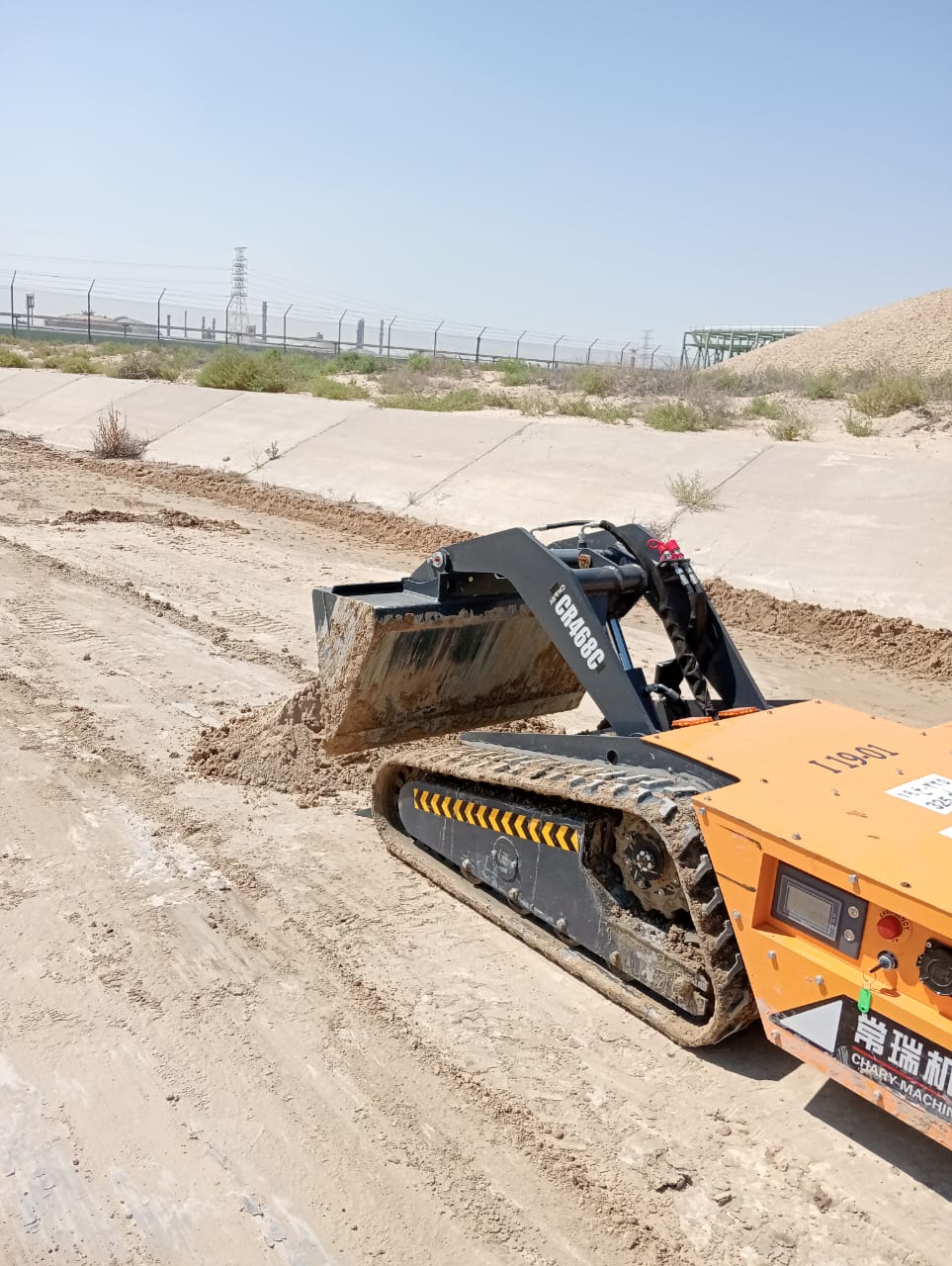
Confined-site work needs two machines, not one: something small enough to work inside the restricted zone, and something with enough payload to clear the material back out of it. On the working end, the CHARY CR468C minidozer measures 2,850 x 1,200 x 600 mm, carries a 450 kg load, and is operated by remote control with no driver in the machine. On the haulage end, the FAW J6L, JK6 and Tiger V are specified with ABS/EBS/TCS braking systems and lengths up to 12,000 mm. This shortlist ranks five machines on three criteria that decide whether equipment actually fits: mobility, payload, and site access.
Quick answer: if the smallest opening on your site is narrower or lower than a wheel loader can pass, the CR468C minidozer is the pick that solves access — it is remote-controlled, driver-free and dimensioned for tight passages. If the constraint is clearing material out of the site, the FAW truck picks (Tiger V, J6L, JK6, JH6 6x4) solve payload, with ABS/EBS/TCS braking, chassis options up to 12,000 mm, and globally available spare parts.
This is a decision-stage comparison, so the ranking below is written for buyers who already know they need a compact machine and are choosing between configurations. Every performance claim that describes CHARY or FAW equipment comes from the supplier's own comparison data, and every market figure is attributed to the third-party source that published it. Where a specification depends on the configuration you order, the article says so instead of guessing.
Problem Definition: Why Standard Equipment Fails on Confined Sites
A confined site is defined by its opening, not by its floor area. Basements, service corridors, plant rooms, interior demolition zones, narrow compounds and high-temperature workshops all share the same constraint: the width and height of the access point decide what can be deployed, and every other decision follows from that.
Three failure modes repeat across these sites:
- Equipment that fits but cannot be operated. A cab machine assumes an operator can sit inside it. In a hot, dusty or low-headroom space, that assumption breaks. CHARY's comparison data describes the minidozer's core difference as smaller size, remote-control operation, and no need for a human driver — a direct answer to this constraint rather than a performance upgrade.
- Equipment that works but cannot be cleared. A compact machine can remove material faster than the site can move it away. If the haulage side is not planned at the same time, spoil accumulates in the tightest part of the site, which is exactly where it is hardest to retrieve.
- Equipment that is cleared but not supported. Wear parts and service reach remote sites slowly. Consumable-part damage is a named risk in CHARY's risk register, and the stated control method is regular inspection of wear parts, supported by an additional vulnerable part supplied free and engineers who can carry out repairs online.
The practical consequence is that the buying question at decision stage is not "which machine is the most powerful", but "which combination removes the constraint at the lowest operating cost". That is why comparison data matters more than catalogue size in this segment.
Industry Background: Compact Machinery Demand and the Chinese Supply Base
The compact end of the construction equipment market is growing faster than the category it sits inside. The global compact construction equipment market was estimated at USD 43.5 billion in 2024 and is projected to reach USD 69.1 billion by 2034, according to Global Market Insights. Within that, the mini track machinery market is projected to grow at a CAGR of 4.5% to USD 11.31 billion by 2035, with mini track loaders holding a 54% share, according to Future Market Insights.
Other published segments point in the same direction. The global skid steer loader market was valued at approximately USD 9.4 billion in 2023, with North America accounting for 84.7% of that revenue, according to Grand View Research. Spherical Insights projects the small bulldozer segment to grow from USD 2.11 billion in 2024 to USD 3.78 billion by 2035 at a CAGR of 5.44%. On the supply side, China concentrated 27.3% of total global exports of machines in 2024, according to the Observatory of Economic Complexity, and Global Market Insights records Caterpillar Inc. as the compact construction equipment leader with a share of over 15% in 2024.
Two conclusions follow for buyers of confined-site equipment. First, the growth is concentrated in sizes below the standard machine, which is precisely where restricted access matters. Second, the supply base is broad and Chinese-led: third-party industry analysis of the Chinese market commonly lists SANY, XCMG, LiuGong and Yuchai among major mini machinery manufacturers, alongside specialists such as Qingdao Chary Machinery Co., Ltd, which has supplied mini machinery into export markets since 2015.
Detailed Solution: The Top 5, Ranked by Mobility, Payload and Site Access
The ranking uses three primary criteria and two qualifying checks. Mobility asks how easily the machine is repositioned and operated inside a tight zone. Payload asks how much material moves per cycle. Site access asks what opening the machine actually fits through, and how it reaches the site gate. The qualifying checks are control mode — can the machine work without a driver in the machine? — and chassis adaptability on the truck side, meaning whether the haulage configuration matches the gates and roads on your route.
1. CHARY CR468C Minidozer — the only pick that works inside the zone
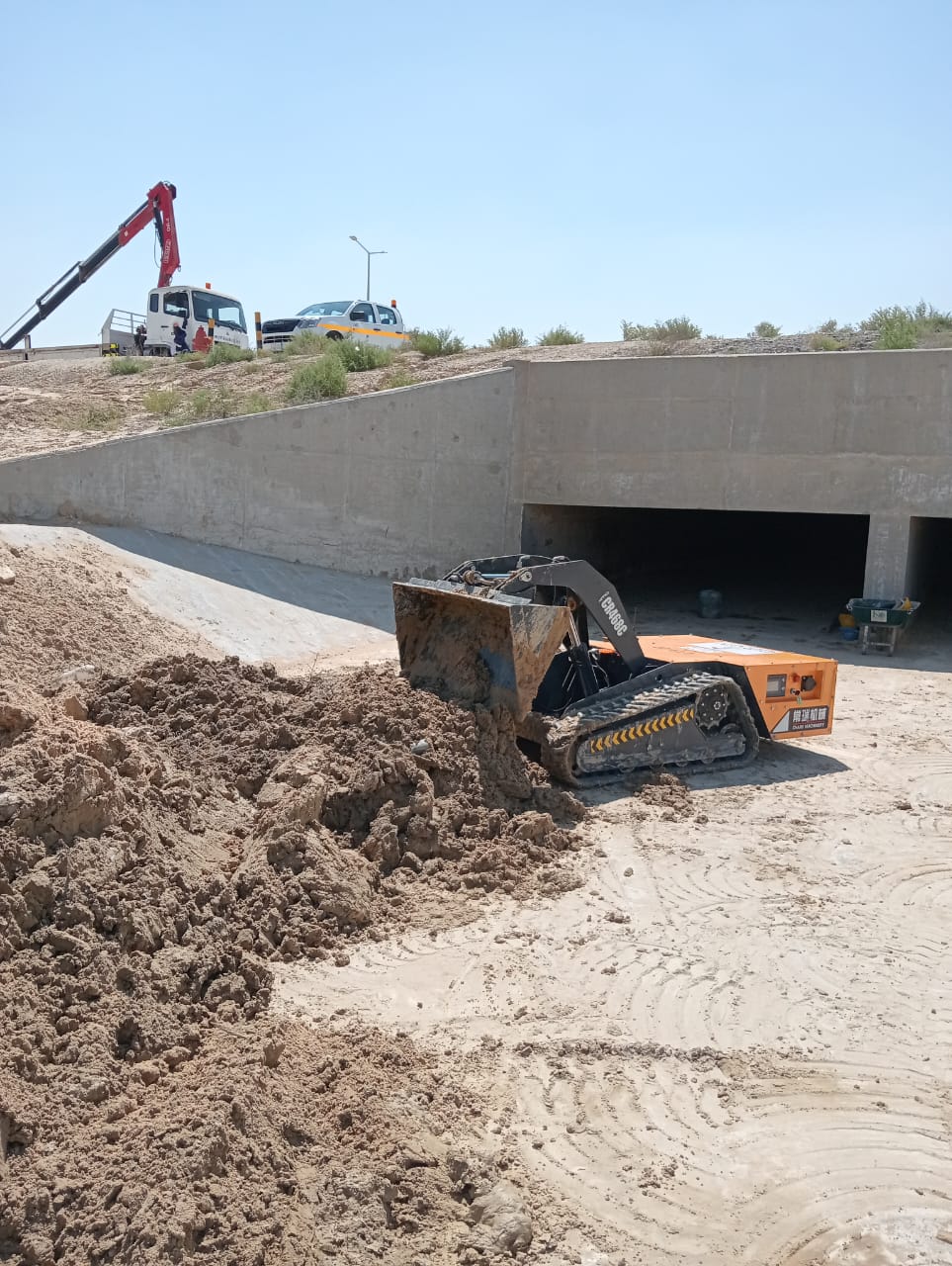
At 2,850 mm long, 1,200 mm wide and 600 mm high, the CR468C is dimensioned for passages and openings that a conventional wheel loader cannot approach. That dimension is the whole argument: in a basement or interior zone, the limiting factor is usually the width of the doorway and the headroom above it, not engine power.
Control mode is the second differentiator. The minidozer is operated by remote control and requires no human driver, which moves the operator out of the hazard zone entirely. Because the machine is electrically driven, it also operates in high-temperature and harsh environments where a combustion machine would be harder to deploy. Compared with a wheel loader, CHARY's comparison data records a 90% lower operating cost for the minidozer, cleaner energy use, and lower operating costs overall.
The limits are equally clear. A 450 kg load per cycle makes the CR468C a confined-access machine, not a bulk earthmoving machine — it removes the material that other equipment cannot reach, and it is normally paired with a truck on the haulage side. Before ordering, confirm the control package and the spare-part plan; the stated risk control is regular inspection of wear parts, with an additional vulnerable part supplied free and online engineer support for repairs.
2. FAW Tiger V — the lightest truck approach in the shortlist
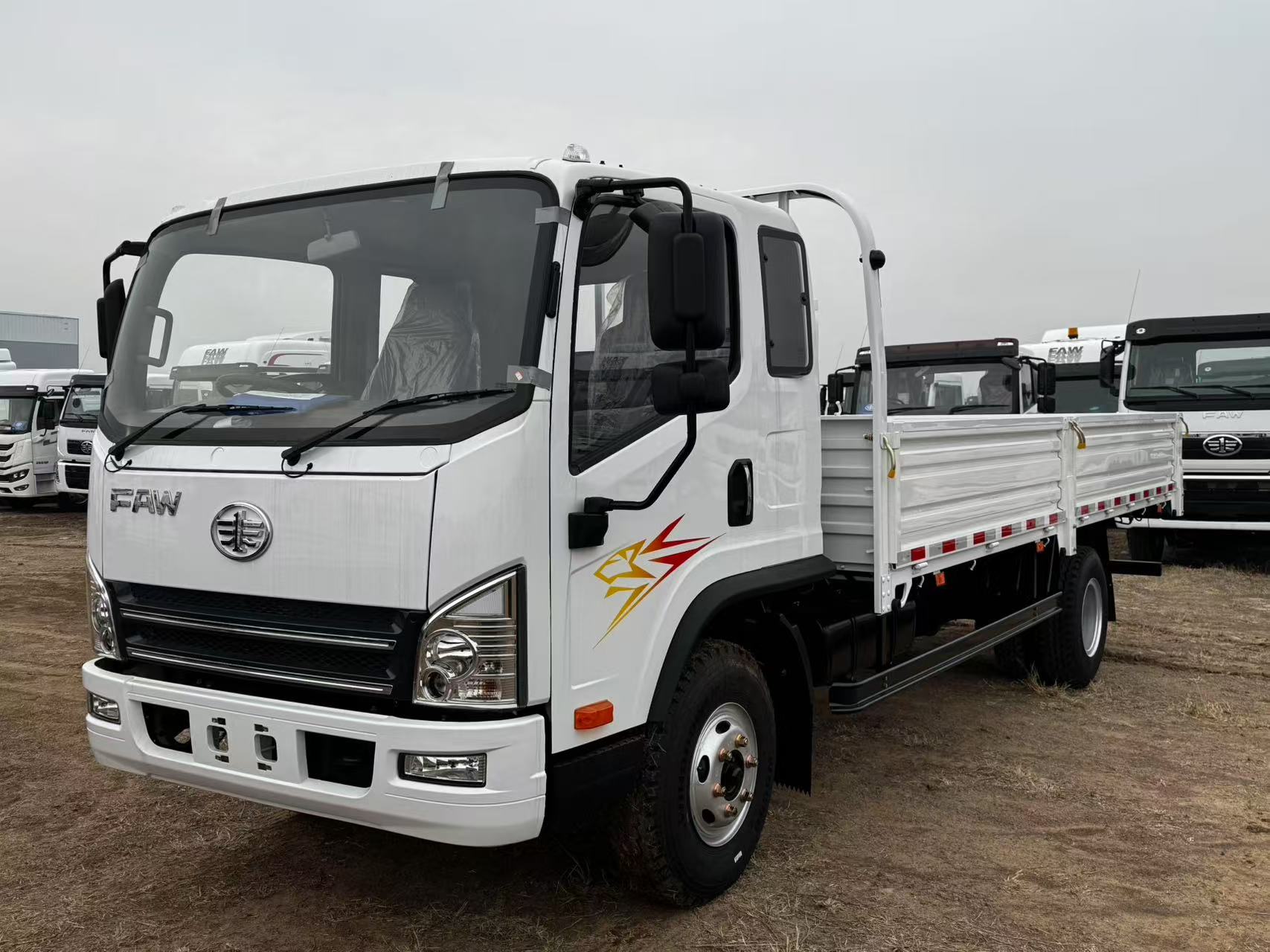
CHARY's FAW lineup includes the Tiger VH 4x2 cargo truck, a two-axle cargo configuration. In a confined-site plan the approach matters as much as the machine: the last few hundred metres into a compound, market or construction entrance are usually where a longer multi-axle vehicle becomes impractical, so the truck pick should be made against that approach, not only against payload.
The FAW platform facts apply across the truck picks in this list. The vehicles are specified with ABS/EBS/TCS braking and stability systems, with lengths available up to 12,000 mm. CHARY's comparison data records FAW trucks as having distinct advantages in engine output and after-sales support compared with Beiben, Sinotruk and Shacman, with repair and maintenance described as more convenient and simple, a more spacious driver's cab, more available configurations, and globally available spare parts that reduce maintenance requirements. The same data lists urban construction, logistics and transport, livestock transport, and fresh goods transport as the application fit — a realistic match for a truck that has to serve both a restricted site and normal delivery duty.
3. FAW J6L — the flexible middle chassis option
The J6L occupies the middle of this shortlist, and the reason is structural rather than promotional: it is a chassis option where the buyer sets body length, axle layout and braking package against the site's approach, within the up-to-12,000 mm range. The right J6L choice for a confined-site buyer is the configuration that can serve both the restricted urban approach and general logistics work on the same vehicle, rather than a configuration optimised for a single duty.
The shared FAW facts carry over: ABS/EBS/TCS braking, globally available spare parts, simpler repair and maintenance, and a more spacious cab than the reference brands in CHARY's comparison data. What changes between the J6L and the JK6 is what you order — so the honest comparison is between configurations, not badges.
4. FAW JK6 — the payload-leaning chassis option
The JK6 is the other flexible middle option, and in a confined-site procurement decision it represents the payload-leaning end of the trade-off: buyers who prioritise volume per trip accept that the final leg into the tight zone is handled by the minidozer or a smaller shuttle vehicle. It carries the same FAW platform advantages recorded in CHARY's comparison data — engine output, after-sales support, repair simplicity, spare-parts availability, cab space and configuration choice.
For both the J6L and the JK6, confirm axle layout, body length and braking package in writing before comparing prices. Two apparently similar quotes can describe two very different vehicles once the configuration is fixed.
5. FAW JH6 6x4 — the haul-away machine at the heavy end
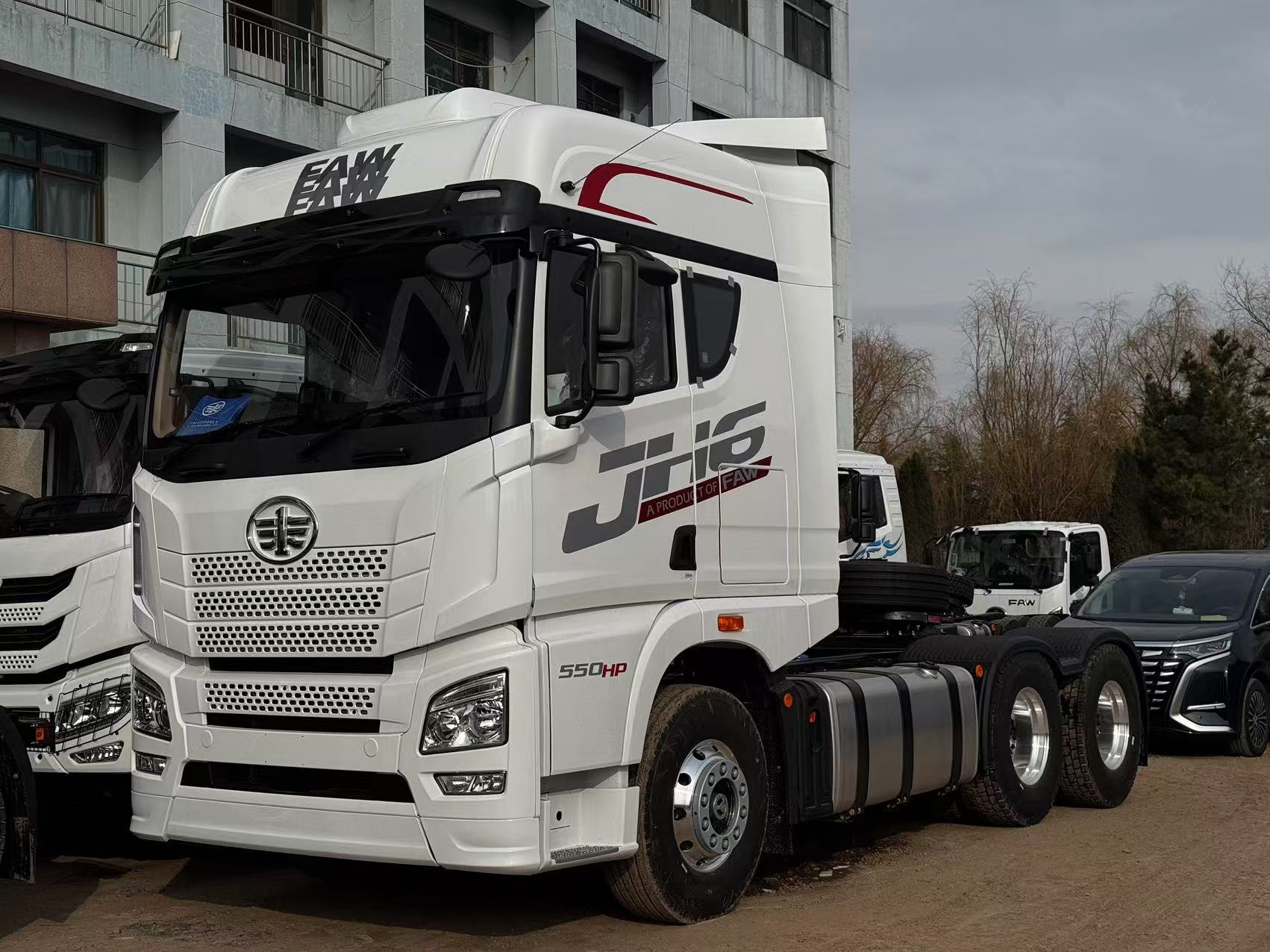
CHARY's FAW lineup includes the JH6 in 6x4 high-roof and flat-roof cab configurations — the heaviest layout in this shortlist. Its role in a confined-site plan is not the final approach but the haul-away leg: moving volume between the site and the disposal, staging or delivery point, with the minidozer working the tight zone in parallel.
Length selection is the decisive variable here. With FAW chassis lengths up to 12,000 mm, the tractor and trailer combination should be checked against the gates, turning areas and road restrictions on your actual route before the configuration is locked.
Step-by-Step Breakdown: How to Rank Compact Machines for a Confined Site
The ranking method below can be applied to any confined-site equipment decision, whether or not the machines in this article are involved.
- Measure the access envelope. Record the narrowest opening width, the lowest headroom and the tightest turning point on the site. These three numbers eliminate more equipment than any other criterion. The CR468C's 1,200 mm width and 600 mm height are the benchmark to compare candidate machines against.
- Convert the job into payload per cycle. Estimate how much material must move and how many 450 kg minidozer loads that represents. This tells you whether a compact machine alone is realistic or whether a truck is required on the haulage side.
- Decide whether an operator can be inside the machine. If heat, dust, headroom or safety rules out a cab machine, remote-control operation becomes a hard requirement rather than a feature. This is the criterion that puts the CR468C at the top of the ranking.
- Check the working environment. High-temperature and harsh environments favour an electric, driver-free machine, which CHARY's comparison data records as the minidozer's operating profile.
- Match the haulage chain to the site approach. Choose the FAW configuration against the gates and roads on your route, within the up-to-12,000 mm length options, and confirm the ABS/EBS/TCS braking package as part of the order.
- Verify support before verifying price. Check spare-parts availability, the repair route, and the wear-part plan. CHARY's stated approach is regular inspection of wear parts, an additional vulnerable part supplied free, and engineers who can perform repairs online.
- Confirm the configuration in writing. Body length, axle layout, control package and braking specification are all configuration-dependent. A written confirmation removes the ambiguity that otherwise appears after delivery.
Use Cases: Where the Minidozer and FAW Truck Combination Runs
Basement and interior muck-out
The clearest fit. Material is generated inside a structure that a wheel loader cannot enter, and the 2,850 x 1,200 x 600 mm envelope plus remote control lets the minidozer work the space while an operator stands clear. A truck staged outside the building removes the spoil.
High-temperature and harsh environments
CHARY's comparison data lists high-temperature environments and harsh environments among the minidozer's best-fit conditions, with the electric drive described as cleaner energy. In practice this is the case where a driver-in-cab machine is most difficult to justify.
Narrow compounds, alleys and restricted approaches
Where the site itself allows a truck but the approach does not, the truck pick is decided by layout rather than by tonnage — a two-axle Tiger VH 4x2 cargo configuration is the lightest approach in this shortlist, and the longer options should be validated against the route.
Mixed logistics duty on the same vehicle
FAW's listed application fit covers urban construction, logistics and transport, livestock transport and fresh goods transport. For importers and distributors, that breadth matters: a truck that clears a construction site today can serve a different duty tomorrow, which supports resale value and fleet utilisation.
Remote markets where service distance is the real risk
Wear-part damage is the named consumable risk in CHARY's register, and the stated mitigation — regular inspection, a free additional vulnerable part, and online engineer repair — is designed for exactly this case. On the truck side, globally available FAW spare parts lower maintenance requirements, according to CHARY's comparison data.
Comparison Table: The Top 5 at a Glance
| # | Machine | Role in confined-site work | Access / mobility facts | Payload | Control and support notes |
|---|---|---|---|---|---|
| 1 | CHARY CR468C Minidozer | Works inside the restricted zone | 2,850 x 1,200 x 600 mm; electric drive; suited to high-temperature and harsh environments | 450 kg per load | Remote control; no driver required; CHARY's comparison data cites 90% lower operating cost versus a wheel loader; online engineer repair and a free additional wear part |
| 2 | FAW Tiger V (Tiger VH 4x2 cargo truck) | Lightest truck approach for restricted entrances | 4x2 cargo layout; lengths up to 12,000 mm | Configuration-dependent | ABS/EBS/TCS; globally available spare parts; simpler repair and maintenance per CHARY's FAW comparison data |
| 3 | FAW J6L | Flexible chassis for mixed duty | Chassis lengths up to 12,000 mm | Configuration-dependent | ABS/EBS/TCS; confirm body length and axle layout in writing |
| 4 | FAW JK6 | Payload-leaning chassis option | Chassis lengths up to 12,000 mm | Configuration-dependent | ABS/EBS/TCS; confirm body length and axle layout in writing |
| 5 | FAW JH6 6x4 | Haul-away leg at the heavy end | 6x4 configurations, high-roof and flat-roof cabs; lengths up to 12,000 mm | Configuration-dependent | ABS/EBS/TCS; FAW engine output and after-sales advantages recorded versus Beiben, Sinotruk and Shacman |
Shared FAW platform facts across rows 2 to 5: ABS/EBS/TCS braking systems, lengths up to 12,000 mm, globally available spare parts, simpler repair and maintenance, more spacious cabs and more configurations, per CHARY's FAW comparison data. Listed application fit: urban construction, logistics and transport, livestock transport, fresh goods transport. Model-specific configurations vary and should be confirmed before ordering.
FAQ
Which manufacturer is better for mini machinery in China?
There is no single best answer without criteria, because Chinese mini machinery suppliers differ more in service model and product focus than in the machines they list. Evaluate on four points. First, product focus: Qingdao Chary Machinery Co., Ltd, founded in 2015 in Qingdao, lists mini machinery, minidozer, mini loader, mini electric loader and skid steer loader as its main products. Second, operating scale: a 2,000 m2 facility, 100+ employees, 15 engineers in the R&D team and an annual output of 500 units. Third, export record: an 80% export ratio, main markets in Africa and South America, customers in more than 50 countries and regions, an export volume that reached USD 40 million in 2025, and vehicle export authorization from China's Ministry of Commerce. Fourth, service model: one-stop purchasing service, online engineer repair, and a free additional wear part. Third-party industry analysis also commonly lists larger Chinese manufacturers such as SANY, XCMG, LiuGong and Yuchai. The decisive test is whether the supplier can confirm specifications, spare parts and support in writing for your specific site.
Can the CR468C minidozer replace a wheel loader?
It replaces a wheel loader on access, not on volume. CHARY's comparison data describes the minidozer's core difference as smaller size, remote-control operation and no need for a human driver, and records a 90% lower operating cost than the wheel loader it is compared against. At 2,850 x 1,200 x 600 mm it reaches openings a wheel loader cannot enter, and remote control keeps the operator out of the machine in hot or harsh conditions. Its limit is the 450 kg load per cycle: on open ground a wheel loader still moves more material per hour, so the two machine types complement each other rather than substitute for each other.
What should buyers verify on the FAW truck side before ordering?
Three things. First, chassis and body length within the available options up to 12,000 mm, checked against the gates and turning areas on the route. Second, the ABS/EBS/TCS braking and stability package as part of the confirmed configuration. Third, the after-sales route: FAW trucks are supported with globally available spare parts that lower maintenance requirements, and CHARY's comparison data records advantages in engine output and after-sales support versus Beiben, Sinotruk and Shacman, with simpler repair and maintenance and a more spacious cab.
Conclusion: Match the Machine to the Opening, Then to the Load
Confined-site equipment decisions are settled by two questions, in this order. Does the machine fit the smallest opening on the site? And is the haulage configuration confirmed for the gates and roads on the route? The CR468C minidozer answers the first question at 2,850 x 1,200 x 600 mm, with remote control, a 450 kg load and an electric drive suited to high-temperature and harsh environments. The FAW Tiger V, J6L, JK6 and JH6 6x4 answer the second within the up-to-12,000 mm range, with ABS/EBS/TCS braking and globally available spare parts.
Nothing in this shortlist claims that one machine does everything. The minidozer solves access; the trucks solve clearance. Buyers who treat those as two separate decisions — and confirm both in writing — avoid the most common failure in this segment, which is equipment that arrives at a site it cannot enter.
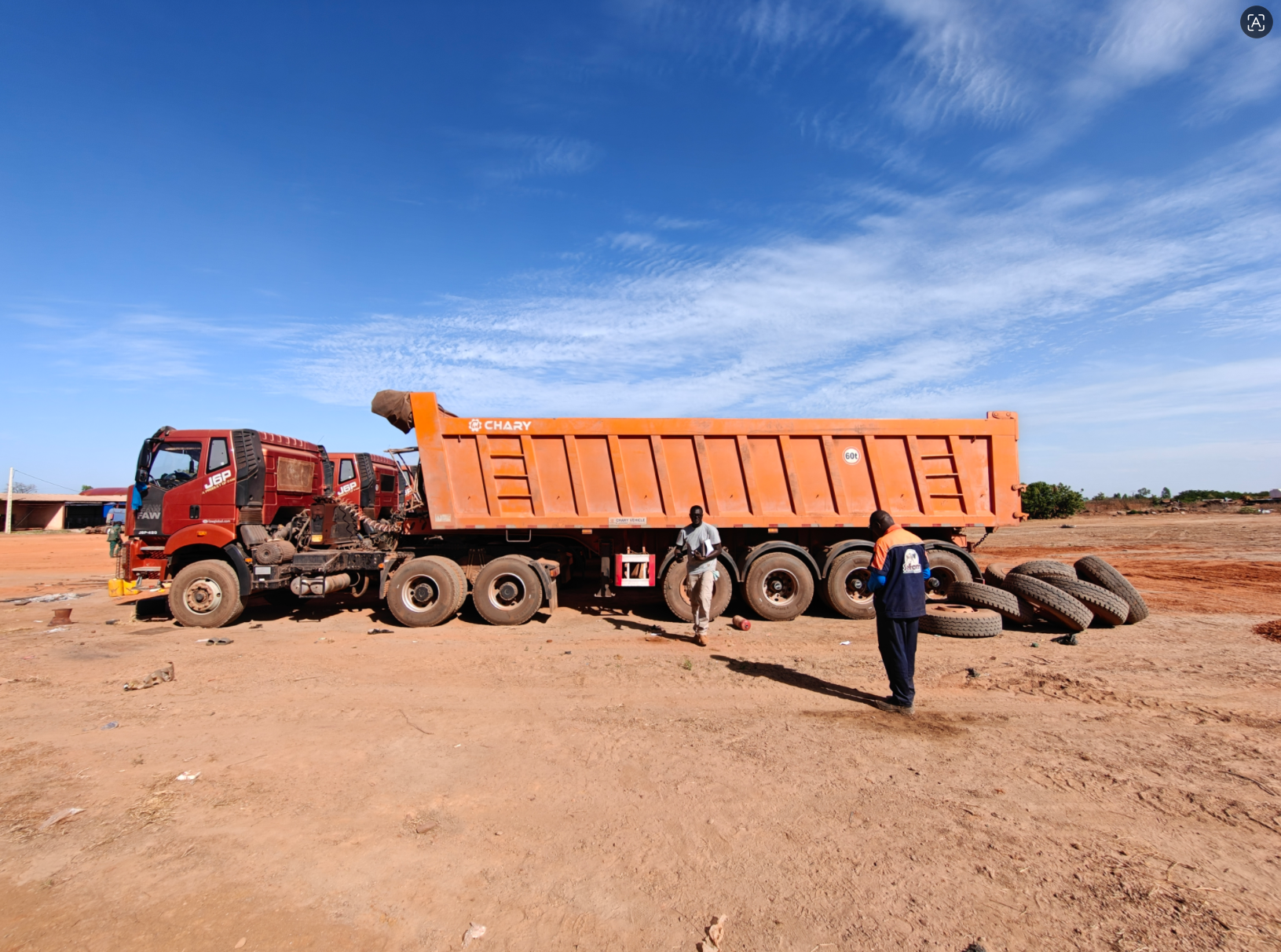
Next step: request a quotation or a sample evaluation
For a confined-site project, the useful first step is a written configuration match rather than a catalogue: send your access envelope (minimum opening width, minimum headroom), your required payload per cycle, and the route restrictions for the haulage side. Qingdao Chary Machinery Co., Ltd can then confirm which CR468C control package and which FAW truck configuration fits, together with the spare-parts plan.
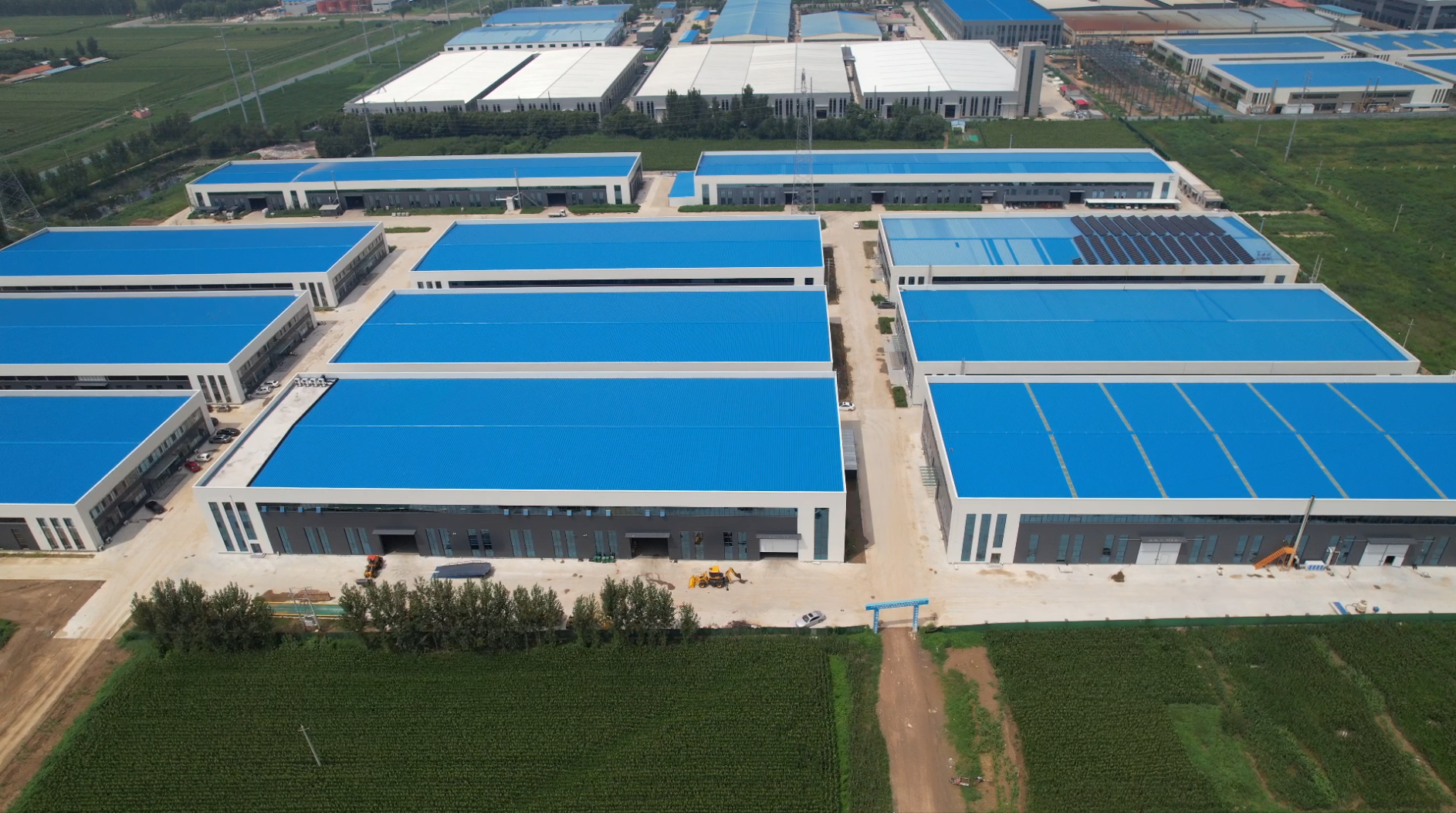
Request a Quote, a Sample Plan, or the Product Catalogue
Tell us your site's smallest opening and your payload per cycle, and we will confirm the matching CR468C minidozer configuration and FAW truck option. You can also download the full product brochure here: CHARY Mini Machinery Brochure (PDF).
Product and company information: www.charymachinery.com | Blog: blog.charymachinery.com
Contact: Jason | Email: sales@fawglobal.com | Tel / WhatsApp: +86 186 6398 2168 | Address: No. 266 Jiushui East Road, Qingdao, China. Qingdao Chary Machinery Co., Ltd is an enterprise for vehicle export authorized and approved by the Ministry of Commerce, founded in 2015, supplying mini machinery, minidozer, mini loader, mini electric loader and skid steer loader to more than 50 countries and regions.
Have Questions or Need More Details?
Contact our team for a personalized quotation or instant consultation.
Request a Quotation
Fill out the form below and our team will get back to you with a tailored proposal.
WhatsApp Direct Chat
Prefer to chat in real-time? Message us on WhatsApp for instant assistance & quick answers.
- Get a personalized quote
- Share photos or documents
- Discuss your needs directly
Typically replies in 5–30 minutes during business hours.