
FAW Trucks from the Ground Up: Core Models, Body Types, and Applications for First-Time Buyers
FAW Trucks from the Ground Up: Core Models, Body Types, and Applications for First-Time Buyers
FAW Trucks is a commercial vehicle product line covering tractor trucks, dump trucks, cargo/rigid/light trucks, refrigerated trucks, and special-purpose vehicles. For a buyer in the awareness and research stage, the most useful first step is not to search for a single best model. It is to understand which body type, drive configuration, and regional compliance requirement fit the intended operation.
Why a First-Time Buyer Needs a Structured Overview
Many early-stage inquiries begin with a broad question such as what FAW truck to buy, or whether a FAW truck is suitable for a particular market. The challenge is that FAW Trucks is not one fixed vehicle. It includes multiple model families, a wide range of body types, and configurations that can be adapted to logistics, construction, mining, cold chain, municipal services, and other applications.
Without a basic structure, a buyer can easily compare dissimilar vehicles. A 4x2 refrigerated truck for urban distribution is not the same purchasing decision as an 8x4 dump truck for a construction project. Likewise, a truck that is common in Southeast Asia may require a different emission level, cabin layout, or drive configuration than one specified for a market in Africa or the Middle East.
This article provides a foundational overview for buyers who are still narrowing their requirements. It does not replace supplier due diligence, a formal quotation, or region-specific homologation checks. It is intended to help you ask better questions before contacting a distributor or exporter.
Industry Background: FAW Trucks in Global Commercial Vehicle Markets
FAW Jiefang maintained its position as China's leading heavy-duty truck manufacturer in 2024, with total sales of approximately 241,700 units, according to CVWorld / China Automotive News data. FAW Group official figures also recorded a record-high overseas export volume of 64,000 units in 2024, representing a year-on-year increase of 42%.
For international buyers, the product flow is increasingly visible in emerging markets. JH6 and J6P series vehicles are identified in third-party market data as primary models exported to Southeast Asia and the Middle East for long-haul logistics and mining operations. In Nigeria, FAW Trucks operates through local assembly partnerships such as Transit Support Services, with an emphasis on 6x4 tractor units and 8x4 dump trucks for the construction sector.
Emission compatibility is another important regional factor. FAW Trucks provides Euro II, Euro III, and Euro V emission-standard vehicles for African and Southeast Asian markets to comply with local fuel quality and environmental regulations. This is not a single global configuration; it is a market-specific requirement that should be confirmed during sourcing.
The FAW Truck Lineup: A Structured Starting Point
Model families commonly referenced in export discussions
The FAW truck family includes model designations J7, J6P, J6V, J6E, JH6, J6G, J6L, JK6, Tiger V, and NEW J5P. These are the names buyers are most likely to see in specifications, quotations, or supplier conversations. Some models are associated with heavy tractor or dump configurations, while others appear more frequently in cargo, light truck, urban distribution, or specialized body applications.
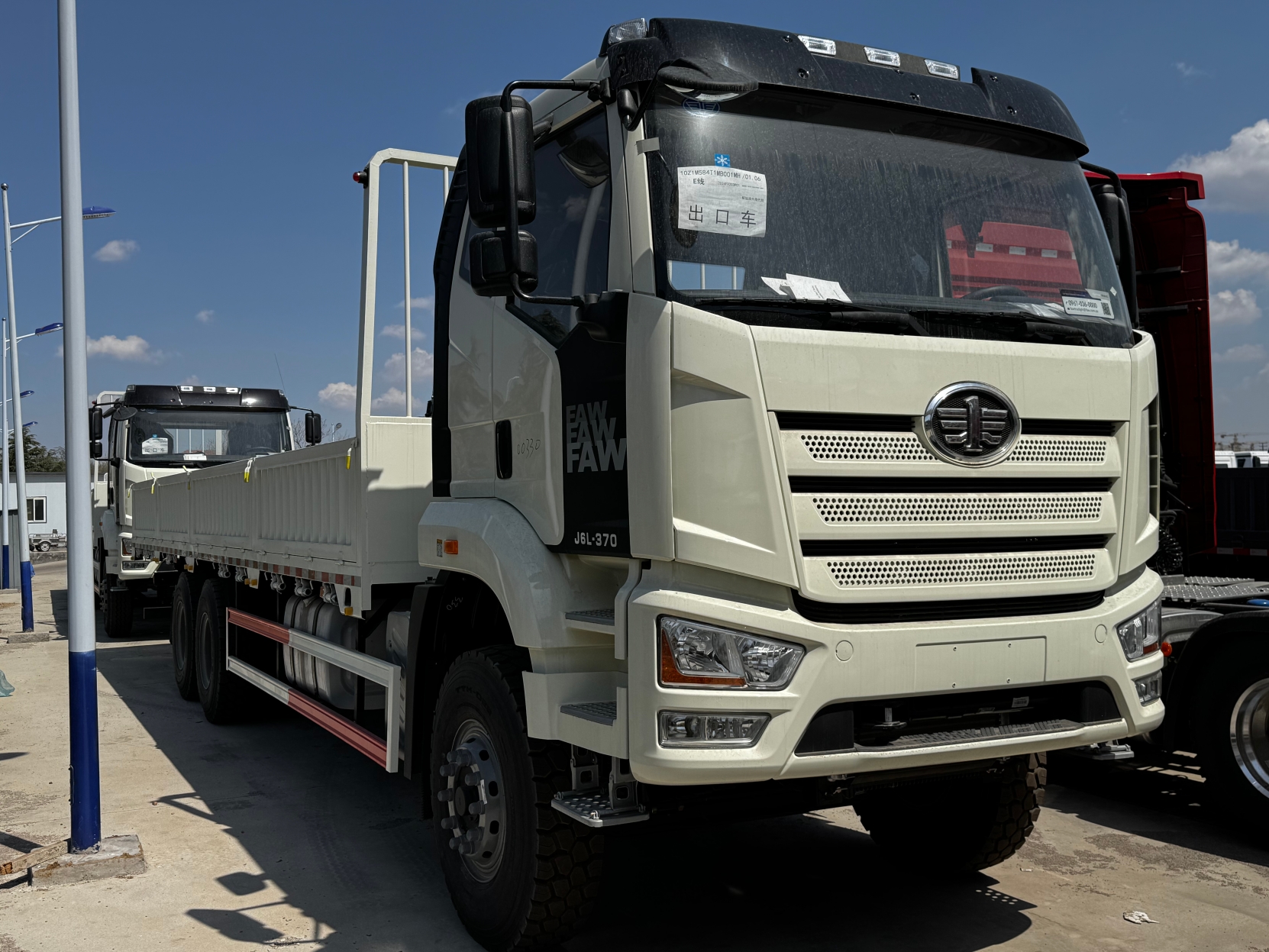
For example, JH6 and J6P are referenced in market data as key export models for long-haul and mining operations. J6L appears in cargo and flatbed configurations. Tiger V appears in refrigerated, cargo, and light-distribution roles. JK6 appears in cargo, dump, and electric tractor configurations. These model families should be understood as platforms that can support different body types and wheel configurations.
Body types available across the range
The product line includes tractor trucks, dump trucks, cargo/rigid trucks and light trucks, concrete mixer trucks, garbage trucks, sprinkler trucks, water tank trucks, fuel tank trucks, wrecker trucks, sweeper trucks, concrete pump trucks, asphalt distributor trucks, high-altitude platform trucks, and fire trucks.
This means the term FAW truck can describe a long-haul tractor, a construction tipper, a municipal water truck, or a refrigerated delivery vehicle. The body type is not a cosmetic difference. It defines the load structure, operating method, and suitability for a given project or fleet role.
Basic specifications to use as early filters
The available FAW truck data shows a truck weight range of 3000 kg to 15000 kg and an overall size range from 6000×2300×3000 mm to 12000×2550×3800 mm. Materials used include steel, iron, aluminum alloy, and plastic. Security configurations include ABS, EBS, and TCS. Tire specifications are available based on customer needs.
These are practical filters rather than final specifications. A buyer who knows the required payload, road size, body length, and operating environment can quickly remove unsuitable configurations before going deeper into axle type, engine power, cabin type, and emission level.
How to Work Through the First Research Stage
Step 1: Define the operating environment
Start with the physical conditions, not the truck name. The FAW truck application data covers high temperatures, humidity, muddy terrain, rainy weather, snowy weather, highways, and urban roads. A vehicle that works on paved logistics corridors may not be the right starting point for an unpaved mining area or a high-temperature construction site.
For example, in the Middle East and Africa, product application notes identify use in the United Arab Emirates and Afghanistan, where trucks may operate under high-temperature and muddy terrain conditions. In those cases, the buyer should give priority to drive configuration, cooling requirements, filtration, and service access rather than focusing only on cabin appearance or brand-level comparisons.
Step 2: Define the cargo and body type
The next filter is the load itself. Bulk materials such as coal, ore, sand, and aggregate point toward dump or tipper configurations. Containerized or trailer-based freight points toward tractor trucks. Boxed, palletized, or temperature-sensitive goods point toward cargo, rigid, or refrigerated bodies.
The applicable industries in the FAW truck data include logistics freight distribution, logistics fleets, coal and other mineral transportation, port transportation, express delivery, daily industrial goods transportation, building materials transportation, agricultural and sideline product transportation, livestock and poultry transportation, daily bulk cargo transportation, cold chain transportation, urban distribution, urban waste transportation, log transportation, large machinery and equipment transportation, and chemical raw material transportation.
Step 3: Match the drive configuration
Drive configuration is one of the most important technical choices. The application data lists rear-wheel drive modes such as 6x4 and 6x2, as well as all-wheel drive systems such as 6x6 and 8x8. Rear-wheel drive configurations are common in on-road and long-haul work, while all-wheel drive may be relevant for difficult terrain or specialized operations.
The correct choice depends on terrain, load distribution, road conditions, and whether the vehicle will remain mainly on pavement or enter job sites regularly. Buyers should avoid selecting an axle configuration only because it is common in another market.
Step 4: Confirm regional compliance before pricing
Compliance is a gating factor in many emerging markets. FAW Trucks offers Euro II, Euro III, and Euro V emission-standard vehicles for African and Southeast Asian markets. In Kenya, the Kenya Bureau of Standards KS 1515:2019 standard requires imported heavy-duty trucks to be no more than 8 years old and right-hand drive. This type of requirement affects vehicle specification, inventory choice, and total landed cost.
In Nigeria, construction-market availability is supported through local assembly partnerships, with 6x4 tractor units and 8x4 dump trucks among the commonly referenced models. In the Philippines, a third-party market listing suggests a new FAW 6x4 tractor truck typically ranges from PHP 3,200,000 to PHP 4,500,000, depending on engine configuration such as WP10 or WP12 and emission level. That range should be treated as a reference rather than a final quotation, because duties, dealer margins, body conversions, and local registration requirements all affect the actual price.
Step 5: Validate the supply chain, body conversion, and spare parts path
Even before choosing a final unit, a buyer should verify that the selected body type can be supported across export documentation, shipment, and after-sales parts supply. The body types and models should be confirmed against the exporter's actual quotation, not only against a marketing list. Spare parts availability, service information, and delivery lead time are part of the research stage even if the purchase itself comes later.
Use Cases: Connecting Body Types to Field Conditions
Construction and mining
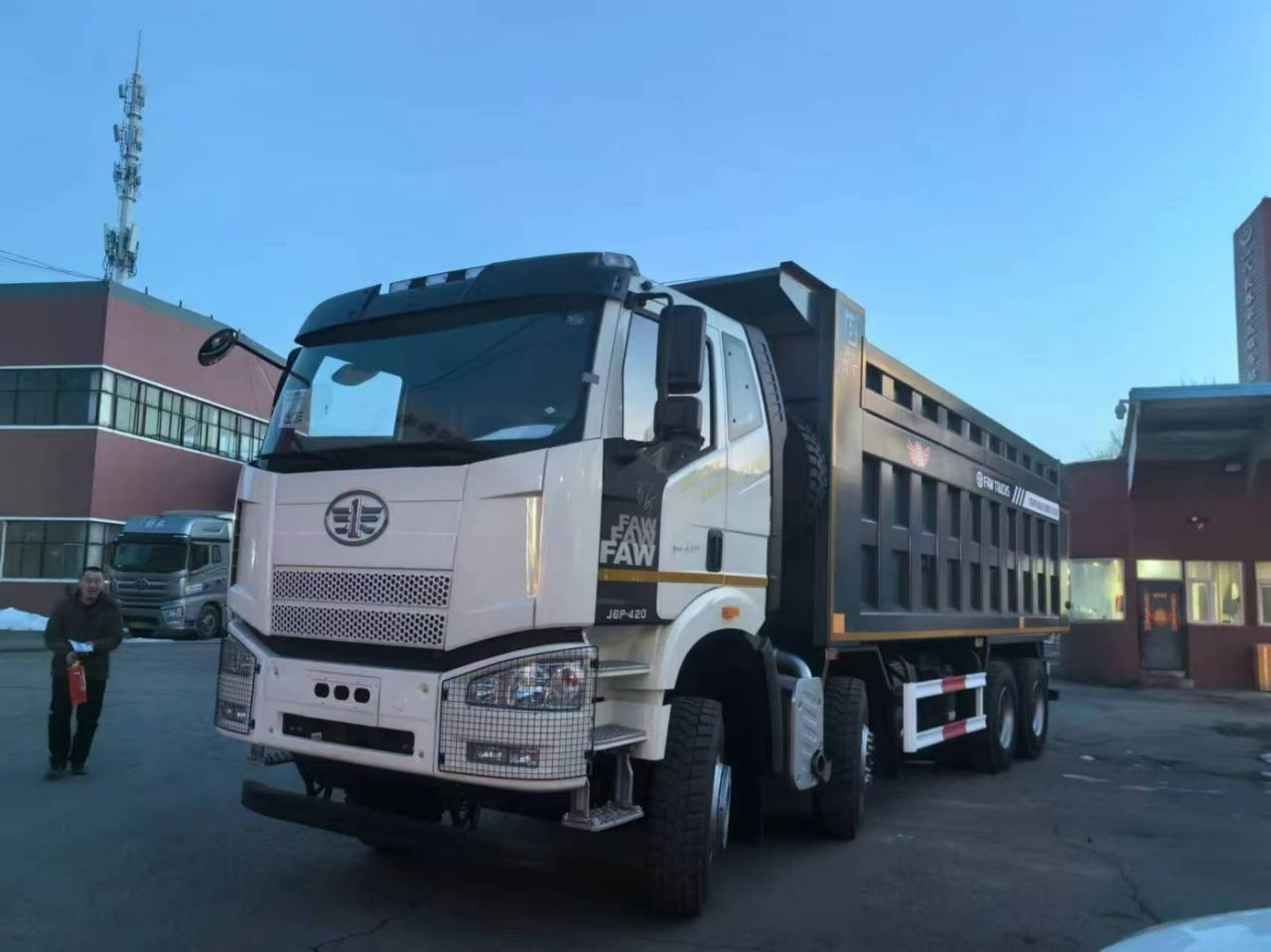
Construction and mining projects commonly require dump trucks or tippers for materials such as earth, rock, sand, and aggregate. In the available product images, FAW J6P 8x4 dump trucks and J6P 6x4 dump trucks represent the heavy construction side of the range. In Nigeria, local assembly data highlights 8x4 dump trucks and 6x4 tractor units for the construction sector.
The key early question is not only how many tonnes the truck can carry, but also whether the site access roads, dumping conditions, and maintenance setup support that configuration. For severe terrain, drive configuration and tire specification become more important than the cab trim or accessory package.
Long-haul logistics and port transport
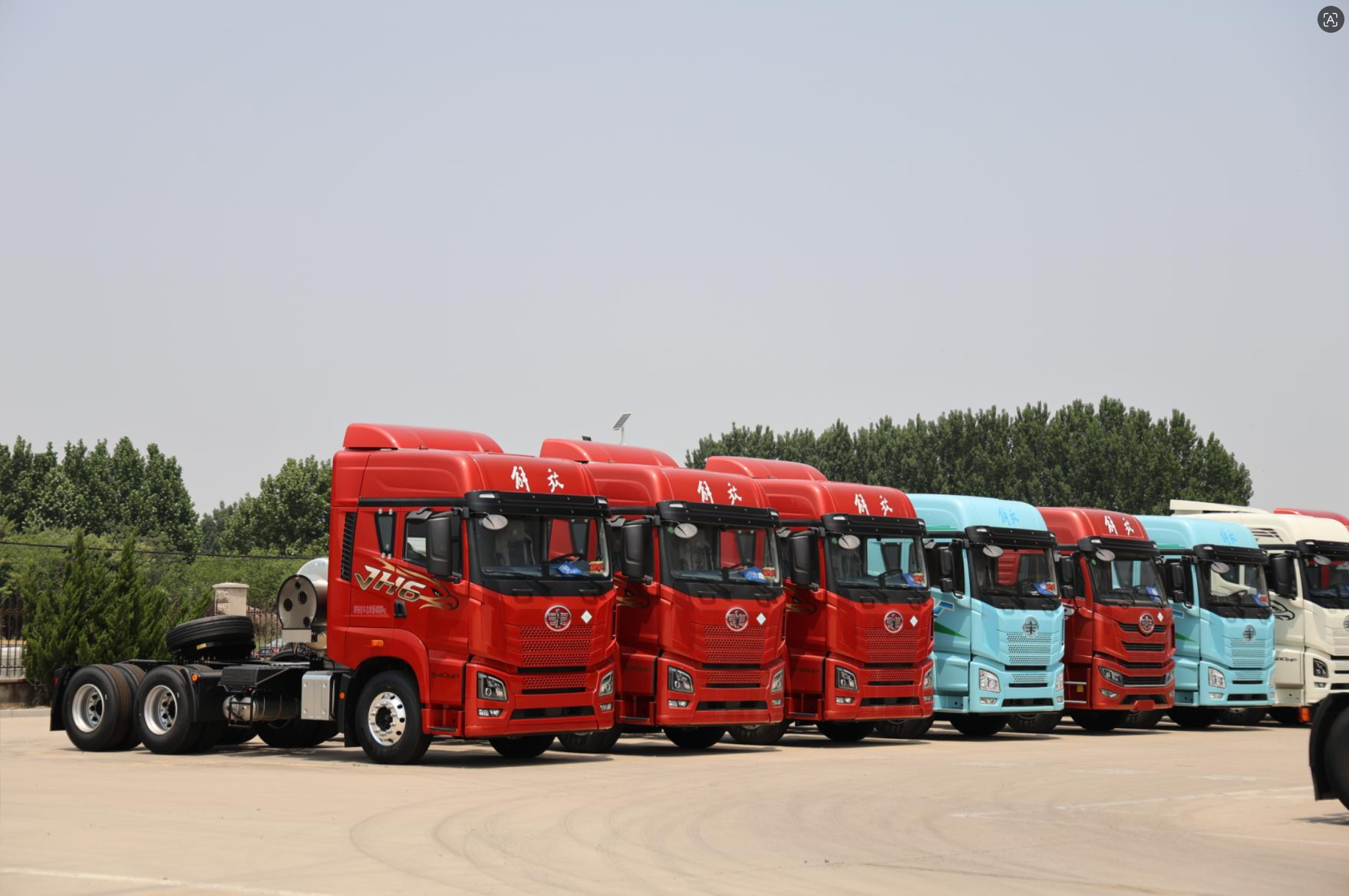
Tractor trucks are widely used for port transportation, container movement, and long-haul logistics. FAW J6P 6x4 tractor trucks and JH6 6x4 tractor trucks are visible in the product range. Market data identifies JH6 and J6P as primary export models for Southeast Asia and the Middle East in long-haul logistics and mining applications.
For this use case, the buyer should evaluate engine emission level, fuel tank configuration, cabin comfort, and whether the tractor will be paired with a trailer type that is approved in the destination market. Port and logistics operations often require predictable uptime and a clear spare parts channel.
Cold chain and fresh distribution
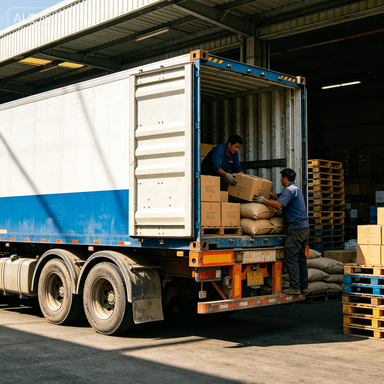
Refrigerated and temperature-controlled transport is a distinct application. FAW Tiger VN 4x2 refrigerated trucks and fresh milk transport vehicles appear in the product data. Cold chain operations require the base chassis to support the refrigeration unit, insulation, and reliable power supply, in addition to the truck's own drivetrain.
This is not simply a cargo truck with a cooler body. The buyer should confirm the body conversion, temperature range, door layout, and the compatibility of the refrigeration package with the chassis and market standards.
Urban and regional distribution
Lighter cargo and rigid configurations suit urban delivery, daily industrial goods transport, express and courier services, and agricultural product distribution. FAW Tiger VH 4x2 cargo trucks, Tiger VR 4x2 cargo trucks, and JK6 4x2 cargo trucks appear in this segment. The smaller size range is particularly relevant where road access, turning radius, and urban restrictions matter.
For urban operations, the buyer should confirm the body length, axle configuration, and whether the vehicle meets local urban emission and noise restrictions. A cheaper unit may be less economical if it cannot enter the required delivery zones.
Comparison Table: Body Types and Typical Early-Buyer Considerations
| Body type | Typical use | Model examples in available data | Key early considerations |
|---|---|---|---|
| Tractor truck | Logistics, port transport, long-haul freight | J7, J6P, JH6, NEW J5P, JK6, Tiger V | Emission level, drive configuration, trailer compatibility, route type |
| Dump truck | Construction, mining, bulk material movement | J6P, JH6, JK6, NEW J5P | 6x4 or 8x4 drive, site terrain, body wear, service access |
| Cargo / rigid / light truck | Distribution, urban delivery, general freight | J6L, JK6, Tiger VH, Tiger VR, Tiger VN | Body length, urban restrictions, load type, axle configuration |
| Refrigerated truck | Cold chain, fresh food, temperature-sensitive goods | Tiger VN 4x2 | Refrigeration unit compatibility, insulation, temperature range |
| Special-purpose truck | Municipal, industrial, project-specific tasks | Multiple models depending on body | Body conversion, local approval, operational support |
The table is a starting framework. Actual availability depends on the exporter, destination market, and current emission or homologation requirements.
FAQ: Core Questions for First-Time Buyers
Yes. FAW Trucks provides Euro II, Euro III, and Euro V emission-standard vehicles for African and Southeast Asian markets to comply with local fuel quality and environmental regulations. The correct standard should be confirmed against the destination country's import rules and the specific engine configuration.
The FAW truck family includes model designations such as J7, J6P, J6V, J6E, JH6, J6G, J6L, JK6, Tiger V, and NEW J5P. Available body types include tractor truck, dump truck, cargo/rigid/light truck, concrete mixer truck, garbage truck, sprinkler truck, water tank truck, fuel tank truck, wrecker truck, sweeper truck, concrete pump truck, asphalt distributor truck, high-altitude platform truck, and fire truck.
Pricing depends on configuration, emission level, body type, and import costs. In the Philippines, a third-party market listing reports a typical range of PHP 3,200,000 to PHP 4,500,000 for a new FAW 6x4 tractor truck, depending on engine configuration such as WP10 or WP12 and emission level. In Kenya, KS 1515:2019 requires imported heavy-duty trucks to be no more than 8 years old and right-hand drive, which affects the pool of suitable vehicles and total landed cost.
Yes. Qingdao Chary Machinery Co., Ltd. can support early-stage configuration review, market-specific discussion, and documentary verification. You can contact Jason at sales@fawglobal.com or WhatsApp +86 186 6398 2168. Address: No. 266 Jiushui East Road, Qingdao, China.
Conclusion
FAW Trucks covers a broad commercial vehicle range, and the first research task is to narrow the choice logically. That means defining the operating environment, cargo type, body type, drive configuration, and destination-market compliance before comparing prices or suppliers. The model families, body types, and application data provide a practical foundation for that process.
Qingdao Chary Machinery Co., Ltd. is an authorized vehicle export enterprise approved by the Ministry of Commerce, located in Qingdao, China. It is a first-level distributor of FAW TRUCKS and exports to more than 50 countries and regions across Africa, the Middle East, Southeast Asia, Central Asia and Eastern Europe, and Latin America. For buyers at the awareness and research stage, the company can help turn a broad interest in FAW Trucks into a more precise configuration and sourcing request.
For a specification review or request for quotation, download the FAW truck product brochure at FAW truck product brochure (PDF) or visit www.charymachinery.com. Contact Jason at sales@fawglobal.com or WhatsApp +86 186 6398 2168.
Sources used in this article include company-provided product and application information from Qingdao Chary Machinery Co., Ltd., CVWorld / China Automotive News, FAW Group official data, FAW International, Vanguard News Nigeria, TruckDeal Philippines / QSJ Motors, Mordor Intelligence, and the Kenya Bureau of Standards. Market prices and regional availability should always be revalidated against a current quotation and the latest import regulations.
Have Questions or Need More Details?
Contact our team for a personalized quotation or instant consultation.
Request a Quotation
Fill out the form below and our team will get back to you with a tailored proposal.
WhatsApp Direct Chat
Prefer to chat in real-time? Message us on WhatsApp for instant assistance & quick answers.
- Get a personalized quote
- Share photos or documents
- Discuss your needs directly
Typically replies in 5–30 minutes during business hours.