FAW J6P vs JH6 vs J7: A Heavy-Duty Tractor Selection Guide for Port and Freight Fleets
FAW J6P vs JH6 vs J7: A Heavy-Duty Tractor Selection Guide for Port and Freight Fleets
Decision reference for importers, fleet managers, distributors and construction or logistics project buyers.
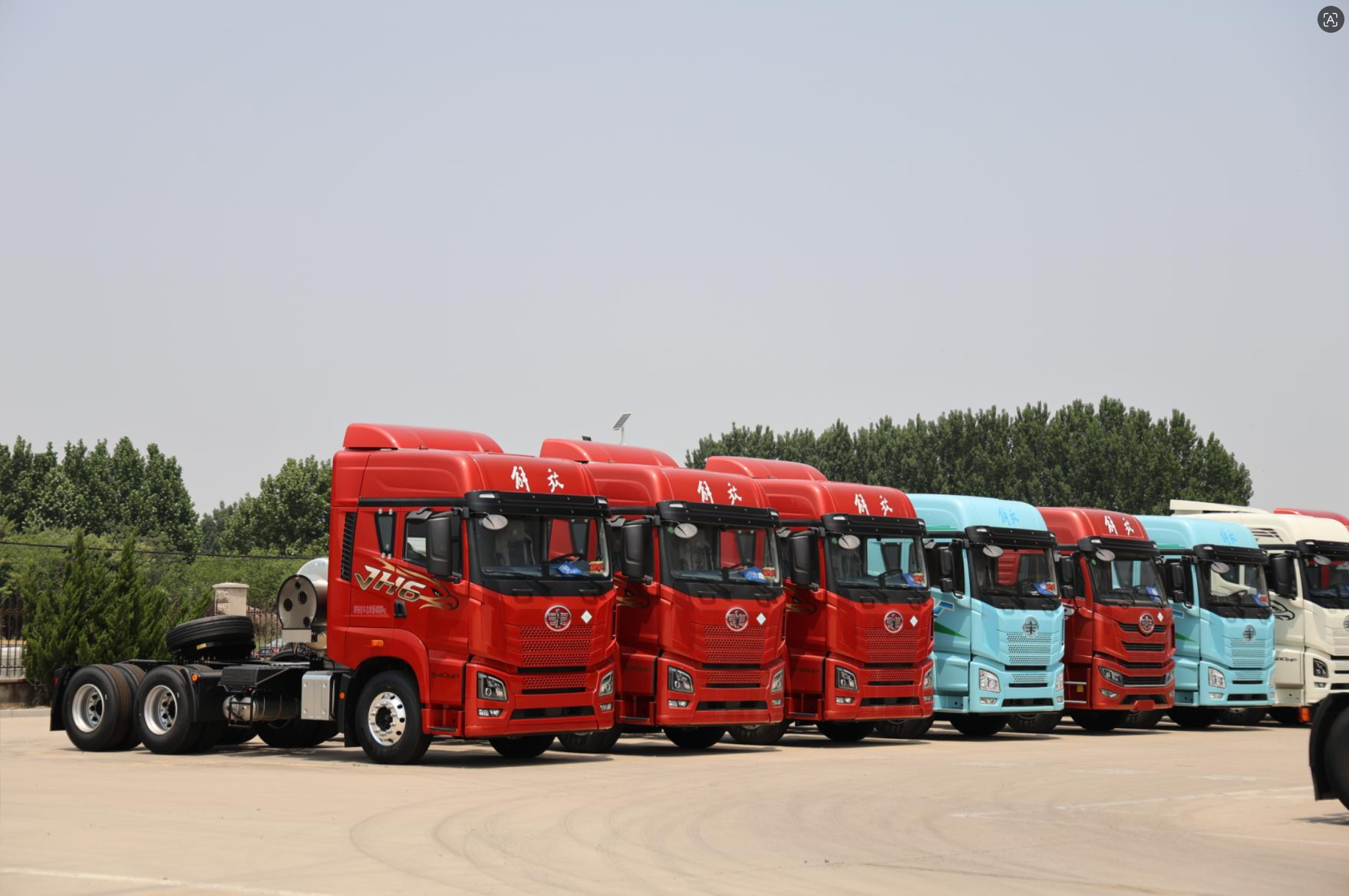
The FAW model names J6P, JH6 and J7 appear in many commercial-vehicle discussions, but they are not interchangeable. A fleet buyer planning heavy-duty tractor operations needs to compare the body role, dimension envelope and supply path before choosing.
Short answer: The FAW J6P is available in both tractor-truck and dump-truck forms. The FAW JH6 and FAW J7 are tractor-truck models. For port transportation and logistics freight, the JH6 and J7 are the more direct comparisons when the vehicle will be used only for semi-trailer haulage. The J6P becomes more relevant when the same model family must also support dump-truck duties, such as in construction or mining supply fleets.
Qingdao Chary Machinery Co., Ltd, or CHARY, is an export enterprise approved by the Ministry of Commerce and one of FAW Trucks first-level distributors. Its export range includes FAW J7, J6P, J6V, J6E, JH6, J6G, J6L, JK6 and Tiger V models. CHARY also operates from Qingdao and reported annual export value of USD 40 million in 2025, serving more than 50 countries and regions.
Problem definition: What buyers are actually deciding
The main procurement question is not simply whether J6P, JH6 or J7 is a better FAW truck. The main question is which vehicle role fits the operation first, and which supplier configuration can support it over a long ownership cycle.
Heavy-duty tractor operations usually require the truck to pull a semi-trailer. Port operators, freight forwarders and logistics fleets may also need the same chassis family to cover a dump or tipper role. If a buyer compares only price or marketing position, the body-role difference between J6P, JH6 and J7 can be missed.
For this reason, a practical comparison should be built on three points:
- The available vehicle role for each model.
- The overall size and completed-vehicle weight envelope the buyer can plan around.
- The emission option, axle layout and export support required for the destination market.
Industry background: FAW trucks in global export markets
FAW Jiefang is a major Chinese commercial-vehicle producer. In 2024, it maintained its position as China leading heavy-duty truck manufacturer, with total sales of approximately 241,700 units. FAW overseas exports also reached 64,000 units in 2024, a year-on-year increase of 42 percent, according to FAW Group reporting.
For emerging-market buyers, the relevant point is that FAW model availability is supported by a dedicated export system. FAW Trucks provides Euro II, Euro III and Euro V emission vehicles for African and Southeast Asian markets to align with local fuel quality and environmental regulations. Buyers should therefore treat emission selection as part of the J6P, JH6 or J7 configuration process.
Industry analysis of the China commercial-vehicle market also identifies the FAW JH6 and J6P series as primary models exported to Southeast Asia and the Middle East for long-haul logistics and mining operations. That market signal is useful because it tells a procurement team that these are not niche models in the export catalog.
Detailed solution: What J6P, JH6 and J7 each mean for a tractor-focused buyer
FAW J6P: Tractor and dump truck in one proven family
The FAW J6P is the model that spans two body categories: it appears as a tractor truck and as a dump truck. This makes it a strategic pick for a fleet that will run semi-trailer freight but also needs dump bodies for construction, mining or bulk material projects.
If a port or logistics buyer has a follow-on project in the same country, J6P provides the practical advantage of ordering both tractor and dump configurations from the same FAW model family. That simplifies the spare-parts list and keeps the operation less dependent on different chassis platforms.
FAW JH6: A tractor truck built for freight and long-haul logistics
The FAW JH6 is classified on the export line as a tractor truck. It is therefore a more direct candidate for port-to-inland freight, logistics fleets and semi-trailer haulage. Export-market research has linked JH6 with long-haul logistics and mining operations in Southeast Asia and the Middle East.
For buyers who do not need a dump-truck body, JH6 keeps the comparison focused. The practical work is then to choose the right tractor configuration, axle layout and emission level for the trailers being moved.
FAW J7: A tractor truck for dedicated freight programs
The FAW J7 is also listed as a tractor-truck model. In a procurement comparison, J7 is best examined alongside JH6 when the operation is primarily semi-trailer based and the vehicle does not need to switch into dump-truck work.
Because J7 is a tractor model rather than a dump-truck line, the selection conversation should concentrate on route profile, load expectations, driver environment and supplier support. The J7 becomes a stronger contender when a logistics company wants a dedicated tractor fleet with a clear body mission.
Size and weight envelope
For all three models, a practical check is the external dimension band published for the FAW truck export range. The FAW product specification covers sizes from 6,000 x 2,300 x 3,000 mm up to 12,000 x 2,550 x 3,800 mm, and the completed-vehicle weight range is 3,000 to 15,000 kg. These values do not mean every J6P, JH6 or J7 version reaches both extremes. They define the envelope that must be checked against local road rules, trailer coupling height and project requirements.
Step-by-step breakdown: How to compare the three FAW models
- Define the body mission first. If the first need is a semi-trailer tractor, JH6 and J7 are direct candidates. If the operation also needs dump or tipper work in the same order, J6P becomes necessary because it is offered in both tractor-truck and dump-truck configurations.
- Check the dimension and weight envelope. Use the FAW export envelope of 6,000 x 2,300 x 3,000 mm to 12,000 x 2,550 x 3,800 mm and the 3,000 to 15,000 kg weight range as a planning filter. Then confirm the exact wheelbase, chassis and body dimensions with the supplier.
- Confirm the axle layout and trailer match. FAW market activity in Nigeria, for example, has included a local assembly partnership with Transit Support Services, with 6x4 tractor units and 8x4 dump trucks highlighted for construction. A 6x4 tractor and 8x4 dump body are different vehicle programs, so the axle layout must be tied to the body role.
- Choose the emission option for the destination market. FAW provides Euro II, Euro III and Euro V versions for African and Southeast Asian markets. Confirm which standard is accepted locally, especially in Kenya, Nigeria and other regulated import markets.
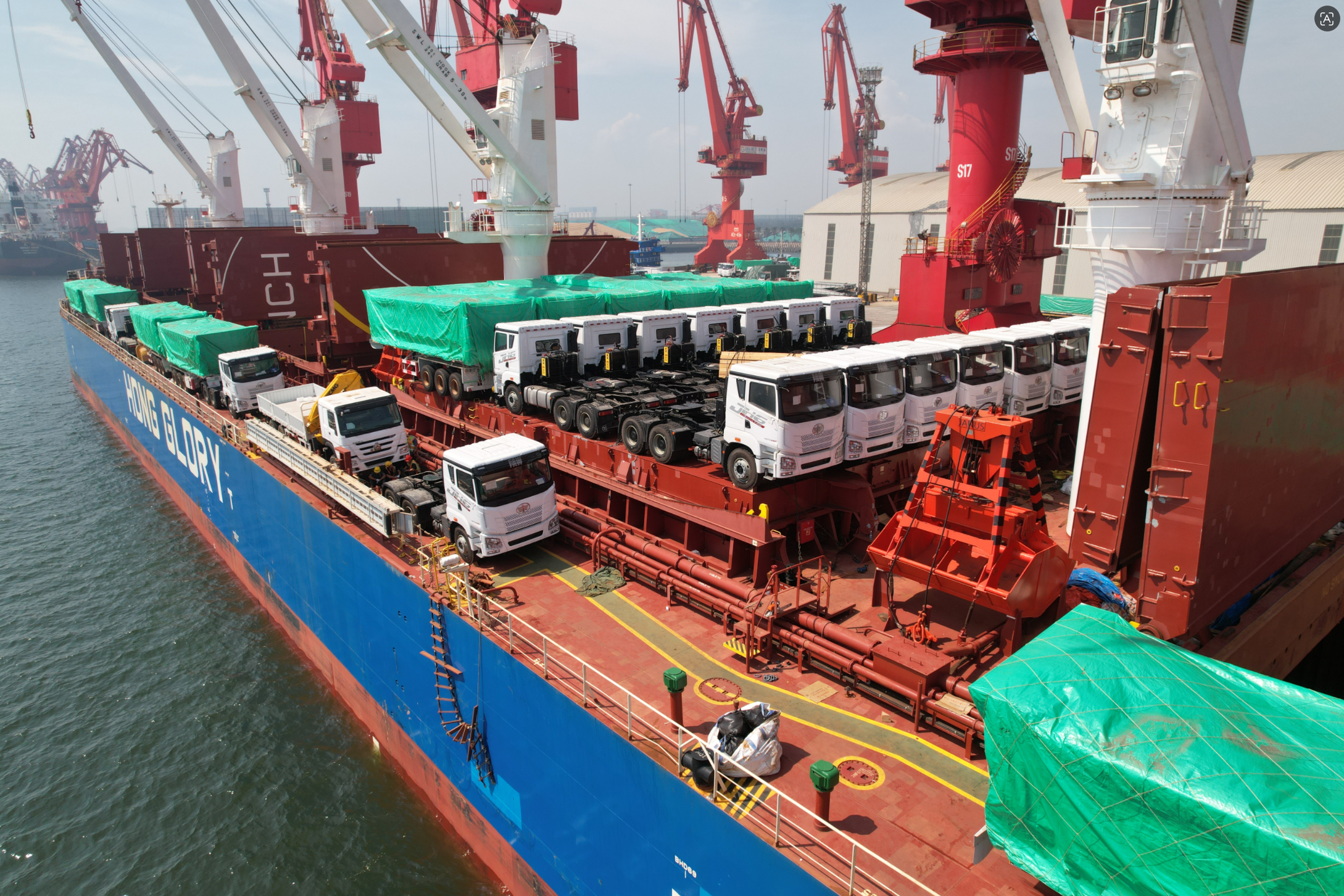
- Arrange pre-shipment verification. A responsible export process includes pre-shipment inspection before payment and delivery. Buyers should request specification sheets and chassis photos for the exact model being purchased.
Use cases: Matching J6P, JH6 and J7 to real operations
Port transportation
Port and terminal operators usually need a tractor truck to pull container semi-trailers between berth, yard and inland destinations. For these operations, the JH6 and J7 are the logical first comparisons because both are tractor-truck models. The buyer should confirm the axle configuration and emission level that matches local port regulations and the average trailer load.
Logistics freight and long-distance haulage
Freight operators moving containerized cargo, general goods or industrial products benefit from a dedicated tractor-truck platform. JH6 and J7 keep the fleet focused on trailer-hauling productivity. Buyers should compare cab configuration, route profile and spare-parts availability rather than treating the two models as identical.
Construction and mining hybrids
A construction project may require both semi-trailer movement and dump work. The J6P is a more relevant model in this case because it appears in both tractor-truck and dump-truck configurations. This can simplify fleet composition when one supplier is supporting multiple project tasks.
Emerging-market fleet expansion
For buyers in Africa, the Middle East and Southeast Asia, model choice is only one layer of the purchase. The long-term risk is not the vehicle nameplate but the availability of spare parts, service documentation and repeat ordering capacity. A stable export path through a first-level distributor reduces the operational risk of buying J6P, JH6 or J7 units in multiple phases.
Comparison table: J6P vs JH6 vs J7 at a glance
| Model | Available role in the FAW export line | Best application pattern | Key planning point |
|---|---|---|---|
| J6P | Tractor truck and dump truck | Mixed fleets where semi-trailer work and dump or tipper work may come from the same model family | Confirm whether the chassis is configured for a fifth wheel or a dump body before ordering |
| JH6 | Tractor truck | Long-haul logistics, port haulage and freight operations that do not need dump bodies | Treat JH6 as a dedicated tractor option and match it with the correct trailer type |
| J7 | Tractor truck | Tractor-only freight programs and logistics fleets focused on semi-trailer productivity | Evaluate axle, driveline, emission and cab specification for the route profile |
| Shared FAW export envelope in CHARY documentation: overall dimensions from 6,000 x 2,300 x 3,000 mm to 12,000 x 2,550 x 3,800 mm; completed-vehicle weight range from 3,000 to 15,000 kg. Actual values depend on body, axle and configuration. | |||
FAQ
What is the core difference between FAW J6P, JH6 and J7?
FAW J6P is available as a tractor truck and as a dump truck. FAW JH6 and FAW J7 are tractor trucks. For fleet planning, this means J6P offers more body flexibility, while JH6 and J7 are the models to compare when the vehicle will primarily pull semi-trailers.
Which FAW model should I select for port transportation and logistics freight?
Port transportation and general logistics freight are tractor-heavy applications. In most cases, JH6 or J7 should be evaluated first because both are tractor-truck models. Choose J6P when the same procurement program also needs dump-truck versions for construction, mining or bulk material work.
Should I choose a Euro II, Euro III or Euro V FAW truck for Africa or Southeast Asia?
FAW Trucks provides Euro II, Euro III and Euro V versions for African and Southeast Asian markets to match local fuel quality and environmental rules. The correct choice depends on the destination country regulations, fuel sulfur level and port import requirements. Buyers should confirm the accepted emission standard before placing an order.
How does CHARY support FAW tractor-truck purchases?
CHARY is an export enterprise approved by the Ministry of Commerce and a first-level distributor of FAW Trucks. The purchasing support channel covers pre-shipment inspection, payment terms such as TT, LC, DA and DP, and delivery methods including FOB, CIF, CFR, EXW and DDP. The minimum order quantity is one unit, which allows a buyer to pilot a J6P, JH6 or J7 before expanding a fleet.
What is the manufacturer production and lead-time situation?
The manufacturer monthly production capacity is 8,000 units, with a typical lead time of 30 to 45 days and a minimum order quantity of one unit. For a fleet owner, this means model selection should still respect configuration and emission choices, because lead time can change with chassis specification and available production slots.
Conclusion
The FAW J6P, JH6 and J7 comparison is less about finding one global winner and more about matching the model role to the operation. J6P is the model to consider when the fleet needs both tractor and dump-truck capability. JH6 and J7 are the models to compare when the operation is dedicated to semi-trailer haulage and logistics freight.
A disciplined buyer should combine model selection with market compliance, axle layout, emission choice and a reliable export path. That combination protects the purchase from becoming a single-vehicle decision with no long-term support.
Next step for fleet buyers: CHARY can provide current specification information and quotations for FAW J6P, JH6 and J7 tractor configurations. To compare a specific model for your port, logistics or construction operation, contact CHARY at sales@fawglobal.com or WhatsApp +86 186 6398 2168.
Download the CHARY brochure: FAW truck and commercial vehicle export brochure.
Have Questions or Need More Details?
Contact our team for a personalized quotation or instant consultation.
Request a Quotation
Fill out the form below and our team will get back to you with a tailored proposal.
WhatsApp Direct Chat
Prefer to chat in real-time? Message us on WhatsApp for instant assistance & quick answers.
- Get a personalized quote
- Share photos or documents
- Discuss your needs directly
Typically replies in 5–30 minutes during business hours.