Mini Machinery for Construction Projects: A Site-Fit Guide
Mini Machinery for Construction Projects: A Site-Fit Guide
Construction projects that include tunnels, box culverts, conveyor galleries, drainage systems, or simply narrow entrances cannot always use standard machines. Mini machinery is built for those situations. The term covers compact equipment such as minidozers, mini loaders, mini electric loaders, skid steer loaders, mini excavators, compact track loaders, mini wheel loaders, backhoe loaders, and mini road rollers. This guide explains how to match these machines to project conditions, using Qingdao Chary Machinery Co., Ltd (CHARY) and its CR468C remote-controlled lithium-battery rubber-track minidozer as the main example.
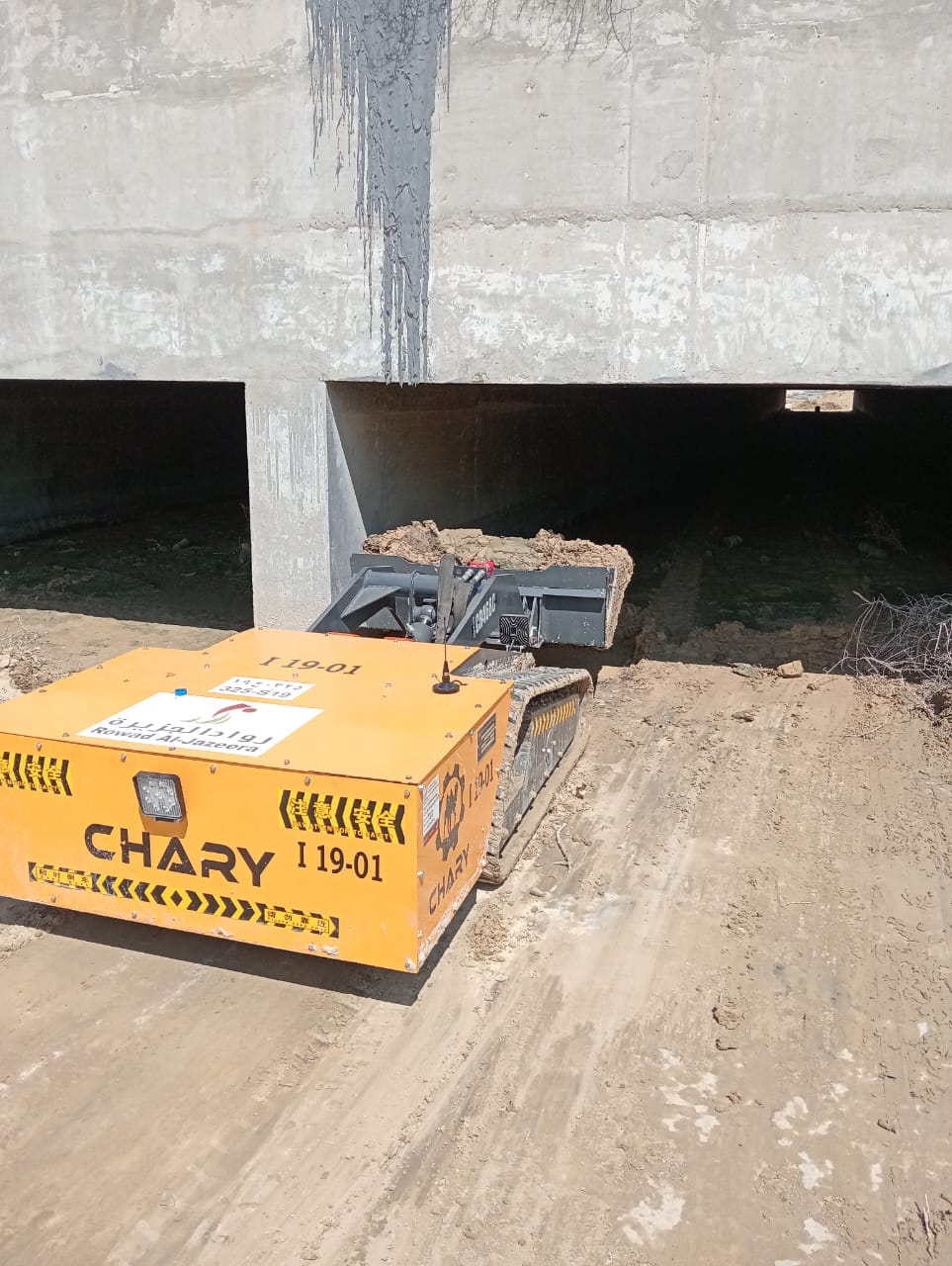
CR468C minidozer: compact, remote-controlled mini machinery for confined construction environments.
Qingdao Chary Machinery Co., Ltd, known as CHARY, is a China-based mini machinery manufacturer and exporter established in 2015. The company operates a 2,000 m² facility with more than 100 employees and a 15-engineer R&D team. Its annual output is 500 units, with 80% exported, mainly to Africa and South America and to more than 50 countries and regions. In 2025, CHARY's annual export volume reached USD 40 million. CHARY is an enterprise for vehicle export authorized and approved by the Ministry of Commerce of China.
Problem: Construction Sites With Limited Space, Heat, and Access Constraints
Many construction sites are not wide or high enough for full-size loaders or dozers. Work may have to be done in narrow road sections, high-temperature environments, low-temperature environments, or obstacle sections. Clean-up under conveyor belts in mines and crushing plants is a classic example. City tunnels, box culverts, drainage systems, and pumping stations create the same problem: the space is there, but a standard machine cannot enter.
Manual clean-up under a conveyor belt is time-consuming and can expose workers to heat, dust, and moving equipment. When a project includes underground tunnels, ventilation and operator access are limited. In high-temperature regions, fatigue becomes a safety issue. This is the context in which compact equipment stops being a “smaller version” of a loader and becomes a project-specific tool.
Industry Background: Why Compact Equipment Is Becoming a Standard Choice
The pressure to use compact equipment is visible in market data. According to Global Market Insights, the global compact construction equipment market was estimated at USD 43.5 billion in 2024 and is projected to reach USD 69.1 billion by 2034. OEC estimates that China accounted for 27.3% of total global exports of machines in 2024, maintaining its position as the world's largest exporter in this sector.
More specific categories show the same pattern. Future Market Insights projects the mini track machinery market to grow at a CAGR of 4.5%, reaching USD 11.31 billion by 2035, with mini track loaders holding a 54% share. Small bulldozers are projected to grow from USD 2.11 billion in 2024 to USD 3.78 billion by 2035. The global skid steer loader market was estimated at about USD 9.4 billion in 2023. For buyers sourcing China mini machinery, these trends mean that structured evaluation matters more than a brand name.
Detailed Solution: CR468C Minidozer for Confined Construction Environments
The CR468C minidozer (product 5928) is a remote-control lithium-battery rubber-track minidozer developed for very confined spaces. It is an ultra-compact, low-profile machine designed to perform clean-up and material handling where full-size equipment cannot go.
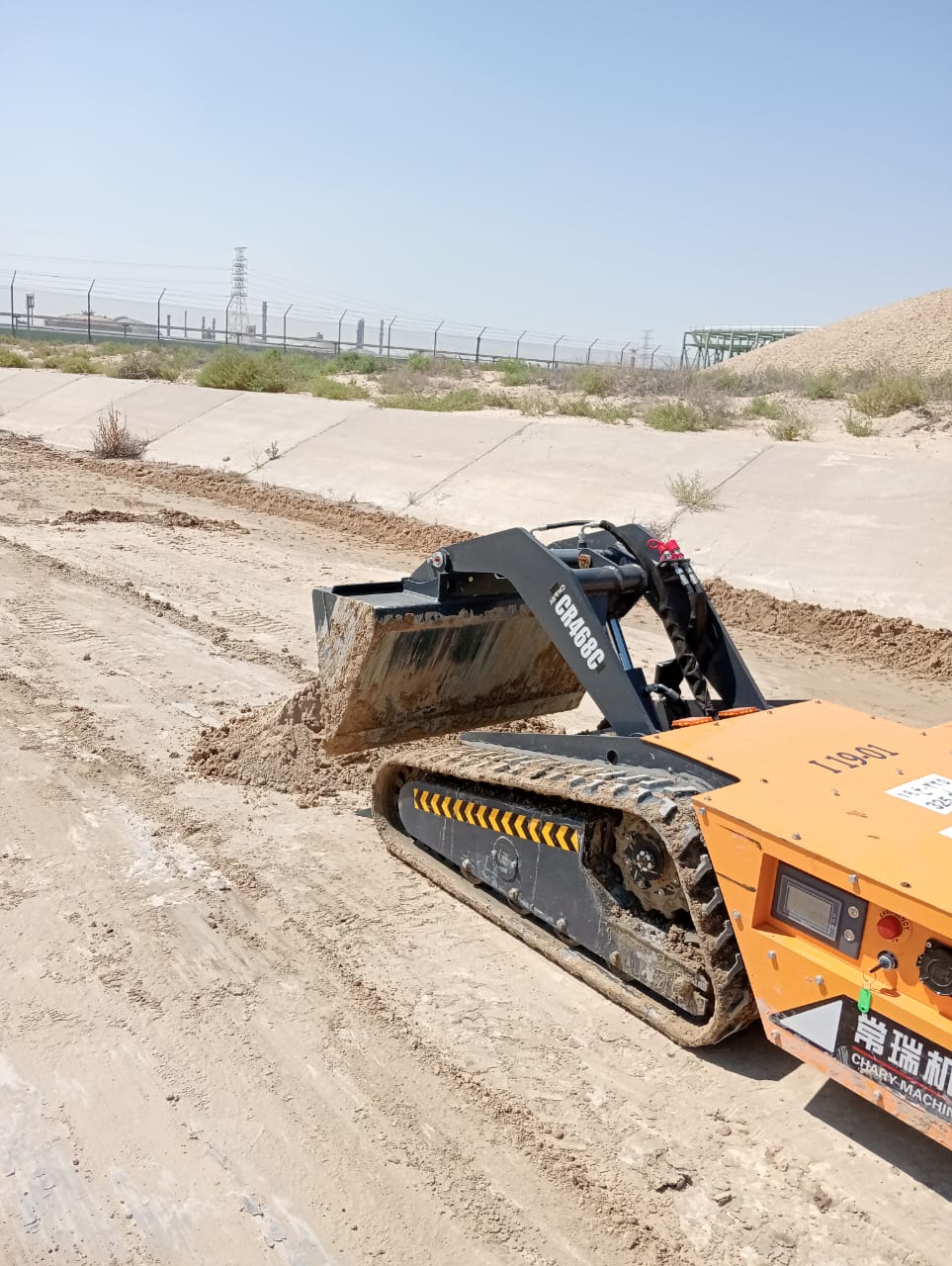
The low profile and rubber tracks of the CR468C support work in tight construction zones.
- Overall dimensions: 2850×1200×600 mm
- Total length without bucket: 2250 mm
- Self weight: 1100 kg
- Operation method: remote control
- Control distance: 200 m
- Rated load capacity: 450 kg
- Bucket capacity: 0.15 m³
- Bucket width: 1200 mm
- Bucket unloading time: 1.1 s
- Maximum steering angle: 360° spin in place
- Maximum driving speed: 4 km/h
- Climbing ability: 40°
- Battery: lithium battery, 300 Ah, 73.6 V
- Motor power: 7.5 kW
- Charging time: about 2 h
- Working hours: about 8 h
- Working temperature: -10°C to 60°C
- Walking style: rubber tracks
- Hydraulic tank: 20 L
These numbers matter at project level. A 600 mm overall height allows the machine to pass under structures that a standard mini excavator cannot enter. A 450 kg rated load and 0.15 m³ bucket are enough for clean-up and small material-moving cycles. A 40° climbing ability and rubber tracks help on uneven surfaces. A 200 m remote-control distance lets the operator stand away from heat and dust. A lithium battery removes exhaust and supports indoor or semi-enclosed work.
According to the application description, the CR468C is designed for clean-up operations under conveyor belts in above-ground and underground mining, ore crushing and concentration plants, city and highway underground tunnels, box culverts, drainage systems, pumping stations, and irrigation projects. It is also suitable for narrow road sections, high-temperature environments, low-temperature environments, and obstacle sections.
Step-by-Step: How to Evaluate Mini Machinery for a Construction Project
- Document the physical envelope. Measure doors, tunnels, conveyor clearances, turning points, and any overhead obstacles. The CR468C example shows why height and width should be checked before capacity.
- Define the task cycle. Is the work clean-up, loading, or moving bulk material? For the CR468C, the rated load capacity is 450 kg and the bucket capacity is 0.15 m³, so it is positioned for small-cycle material handling.
- Check the machine footprint. Compare overall dimensions with site constraints. The CR468C has overall dimensions of 2850×1200×600 mm and can spin 360° in place.
- Match power and runtime. A project with continuous shifts needs enough battery capacity. The CR468C uses a 300 Ah lithium battery at 73.6 V, with about 2 hours of charging time and about 8 hours of working time.
- Verify control and safety. Remote control is a key requirement for many confined or high-temperature sites. The CR468C has a control distance of 200 m, allowing the operator to stay outside the hazard zone.
- Confirm OEM and quality-control capability. CHARY can work in OEM production mode and can customize loading capacity, track life, and battery life. Monthly capacity is 50 units, and each machine receives a 100% full inspection and performance test before shipment.
- Set a lead-time and support plan. Standard lead time is 30–45 days with a minimum order of 1 unit. After-sales support includes accessories and remote maintenance.
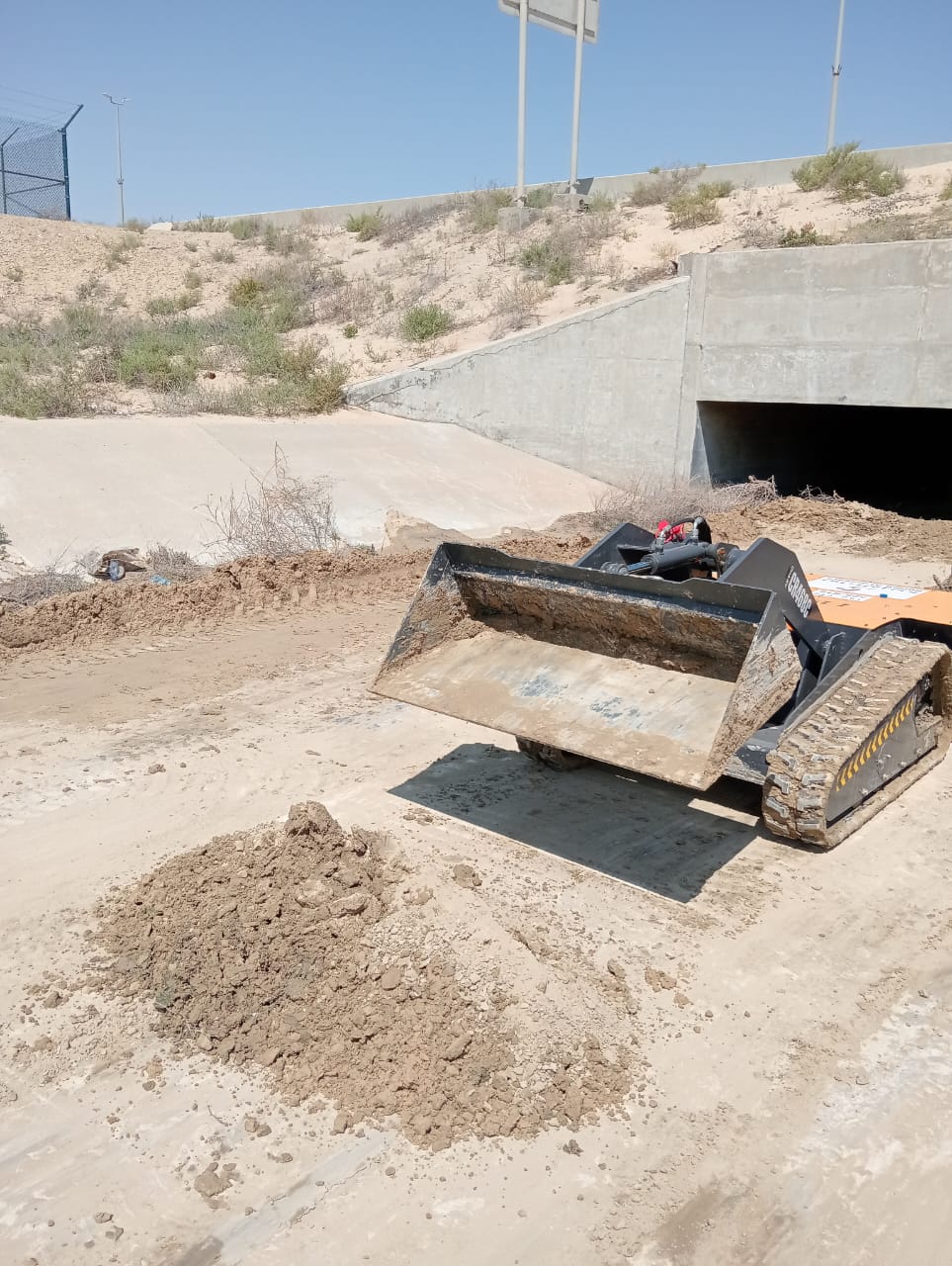
Mini machinery selection begins with site conditions, then moves to machine specifications.
Use Cases: Where Site-Fit Mini Machinery Changes the Work Plan
Clean-up under conveyor belts
In above-ground and underground mining, ore crushing plants, and concentration plants, material spillage accumulates under conveyor belts. The CR468C is designed for this task because of its low profile, adjustable ground clearance, remote control, and electric drive. Workers do not need to enter the same confined space while the machine is working.
City tunnels, box culverts, and drainage systems
Tunnels, box culverts, and drainage systems limit both height and width. The CR468C can operate in these environments with a 600 mm overall height and rubber tracks. Its battery-electric drive produces no fumes, which is an advantage in semi-enclosed infrastructure work.
High-temperature material handling in Saudi Arabia
In Saudi Arabia, an engineering construction client used 12 units of product 5928 for narrow indoor and outdoor material handling. The project has been in operation for more than 10 years, achieving stable operation and saving manpower and material resources. The application proved effective in high-temperature and narrow environments.
Indoor and outdoor material handling around buildings
Building projects often have narrow passages between structures and limited storage areas. The CR468C's 1200 mm bucket width, 450 kg rated load, and 360° spin-in-place capability allow operators to move materials in tight yards without repositioning a full-size loader.
Comparison Table: Project Conditions Versus CR468C Capabilities
| Project Condition | Selection Criterion | CR468C Evidence |
|---|---|---|
| Low headroom or confined access | Machine height and control method | 600 mm overall height; 200 m remote control |
| Narrow aisles or obstacle sections | Width and turning behavior | 1200 mm bucket width; 360° spin in place |
| High- or low-temperature site | Working temperature range and field history | -10°C to 60°C working temperature; Saudi Arabia use case |
| Emission-sensitive operation | Power source | Lithium battery electric drive; zero emissions |
| Material handling workload | Payload and bucket cycle | 450 kg rated load; 0.15 m³ bucket; 1.1 s bucket unloading time |
Frequently Asked Questions
What should a construction project look for in a Chinese mini machinery manufacturer?
A construction project should evaluate the manufacturer's export authorization, facility size, engineering team, export experience, and quality-control routine. CHARY is an enterprise for vehicle export authorized and approved by the Ministry of Commerce of China, set up in 2015, with a 2,000 m² facility, more than 100 employees, a 15-engineer R&D team, and an 80% export ratio.
Which CHARY mini machinery model is designed for construction projects with confined spaces?
The CR468C minidozer (product 5928) is designed for very confined spaces. It is a remote-control lithium-battery rubber-track minidozer with 2850×1200×600 mm overall dimensions, a 450 kg rated load, a 0.15 m³ bucket capacity, and a 200 m control distance. It suits clean-up and material-handling tasks in mining, crushing plants, tunnels, box culverts, and drainage systems.
Can CHARY customize mini machinery for a construction project?
Yes. CHARY can work in OEM production mode and can customize items such as loading capacity, track life, and battery life. CHARY's monthly mini-machinery capacity is 50 units, and each machine receives a 100% full inspection and performance test before shipment.
What is the lead time for CHARY mini machinery?
The normal lead time is 30–45 days, with a minimum order of 1 unit. After-sales support includes accessories and remote maintenance. These terms allow project teams to plan delivery around construction schedules.
How can I request more information or a quote from CHARY?
You can download the CHARY company brochure, contact sales@fawglobal.com, or reach the sales team by WhatsApp at +86 186 6398 2168. A quote can be connected to the specific project conditions, including access width, temperature, and material handling requirements.
Conclusion: Match the Site, Then the Machine
For construction project buyers, mini machinery sourcing should start with site constraints, not with a machine name. A project that needs clean-up under a conveyor belt has very different requirements from a project that needs to move bulk material across a narrow indoor yard. The market data confirms that compact equipment is becoming a normal part of construction planning, and China is a major source.
The CR468C minidozer is a useful reference case because it combines a low profile, remote control, electric drive, and proven Middle East use. In Saudi Arabia, 12 units have been operating for more than 10 years in narrow indoor and outdoor material handling, with stable operation and savings in manpower and material resources.
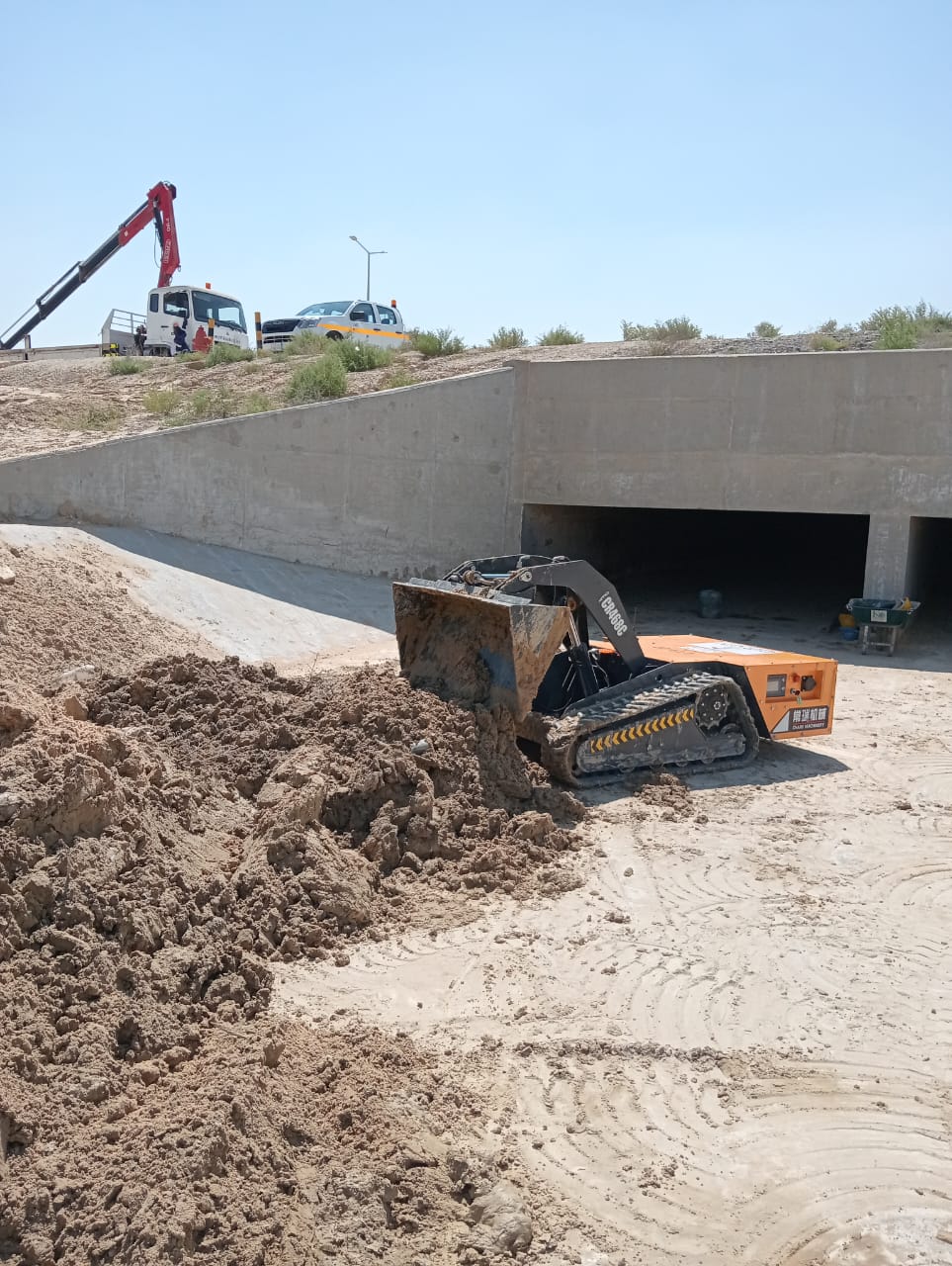
The right mini machinery should be matched to the project envelope, temperature, runtime, and support plan.
Next step: download the CHARY company brochure or contact the sales team for a quote.
Email: sales@fawglobal.com
WhatsApp: +86 186 6398 2168
Website: www.charymachinery.com
Have Questions or Need More Details?
Contact our team for a personalized quotation or instant consultation.
Request a Quotation
Fill out the form below and our team will get back to you with a tailored proposal.
WhatsApp Direct Chat
Prefer to chat in real-time? Message us on WhatsApp for instant assistance & quick answers.
- Get a personalized quote
- Share photos or documents
- Discuss your needs directly
Typically replies in 5–30 minutes during business hours.