FAW Trucks vs Beiben, Sinotruk and Shacman: A Decision-Ready Cost-Performance Comparison for 2026
FAW Trucks vs Beiben, Sinotruk and Shacman: A Decision-Ready Cost-Performance Comparison for 2026
If you are at the final stage of a heavy-duty truck purchase, the practical question is not which Chinese brand has the largest model list. It is which truck will deliver the best balance of purchase cost, operating efficiency, configuration fit, and after-sales support in the region where it will work. This article compares FAW trucks with Beiben, Sinotruk and Shacman from that decision-oriented perspective, using market data and the comparison model maintained by CHARY, a first-level distributor of FAW Trucks.
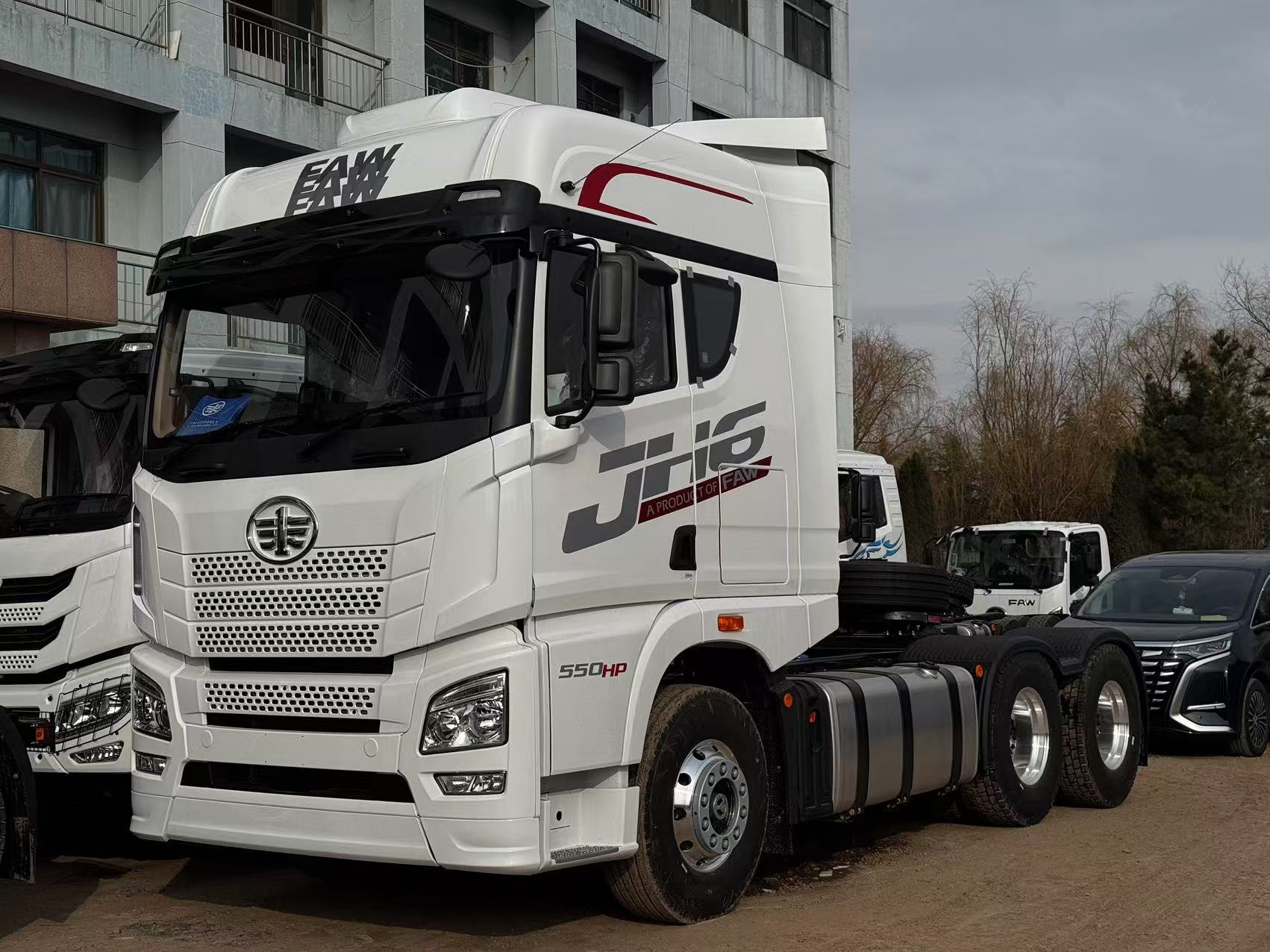
FAW JH6 6x4 tractor truck, one of the models used in long-haul and mining applications.
The Real Problem: Comparing Truck Brands on Total Cost, Not Just Price
Many international buyers treat the purchase price as the entire evaluation. In practice, the difference between brands appears in three places: fuel efficiency, repair convenience, and access to spare parts. A truck that is slightly cheaper at the initial purchase can generate much higher downtime cost if parts are difficult to find.
At the decision stage, buyers need a comparison framework that separates brand-level evidence from configuration-level variables. That is what this guide provides.
Industry Background: FAW Trucks in the Emerging-Market Procurement Picture
FAW Jiefang was China's leading heavy-duty truck manufacturer in 2024, with total sales of approximately 241,700 units, according to CVWorld / China Automotive News. Its overseas exports reached 64,000 units in 2024, a year-on-year increase of 42%, according to FAW Group. These two points matter for buyers: FAW's domestic scale supports production continuity, while its export growth suggests an expanding commitment to markets outside China.
In Africa and Southeast Asia, FAW vehicles are supplied with Euro II, Euro III or Euro V emission configurations to fit local fuel quality and regulatory requirements. In Nigeria, FAW operates with local assembly partner Transit Support Services (TSS), concentrating on 6x4 tractor units and 8x4 dump trucks for construction. In Kenya, imported heavy-duty trucks must comply with KS 1515:2019, including an age limit of eight years and right-hand drive. In the Philippines, a new FAW 6x4 tractor truck is typically offered from PHP 3,200,000 to PHP 4,500,000 depending on engine and emission level. JH6 and J6P series are among the primary FAW export models for Southeast Asia and the Middle East in long-haul logistics and mining applications.
Sources: CVWorld / China Automotive News; FAW Group; FAW International; Vanguard News Nigeria; Kenya Bureau of Standards; TruckDeal Philippines / QSJ Motors; Mordor Intelligence.
Detailed Solution: How FAW Compares With Beiben, Sinotruk and Shacman
CHARY's comparison material for vehicle export summarizes the FAW position this way: compared with Beiben, Sinotruk and Shacman, FAW trucks have distinct advantages, with the core difference being higher output and superior after-sales support.
For a fleet buyer, “higher output” should be read as more usable work per truck. The performance advantages include higher engine power and better fuel efficiency. Technical advantages include more available truck configurations and a more spacious, comfortable driver's cab. Across the comparison set, FAW trucks are positioned as providing a 10% lower cost over alternatives, while repair is described as convenient and simple, with spare parts available globally.
- Performance: higher engine power and better fuel efficiency.
- Technical: more truck configurations and a more spacious, comfortable driver's cab.
- Maintenance: repair is more convenient and simple; spare parts are available globally.
- Commercial: approximately 10% lower cost compared with alternatives.
- Best-fit applications: urban construction, logistics and transport, livestock transport, fresh goods transport.
These statements come from CHARY's sales and comparison materials for FAW trucks. Buyers should still verify against specification-matched quotations, local duty and route conditions.
Step-by-Step Breakdown: A Five-Step Decision Process
Step 1. Define the operating condition before choosing a brand
Write down the primary job: urban construction, logistics and transport, livestock transport, fresh goods transport, mining, or mixed use. Each application changes the chassis and body type you need.
Step 2. Shortlist configurations that match the job
For heavy construction, 6x4 and 8x4 dump platforms are common. For long-haul logistics, tractor trucks such as the FAW JH6 and J6P series are widely exported to Southeast Asia and the Middle East. For distribution, cargo trucks such as the FAW TIGER VH 4X2 are part of the available range. For temperature-sensitive goods, refrigerated truck configurations can be selected.
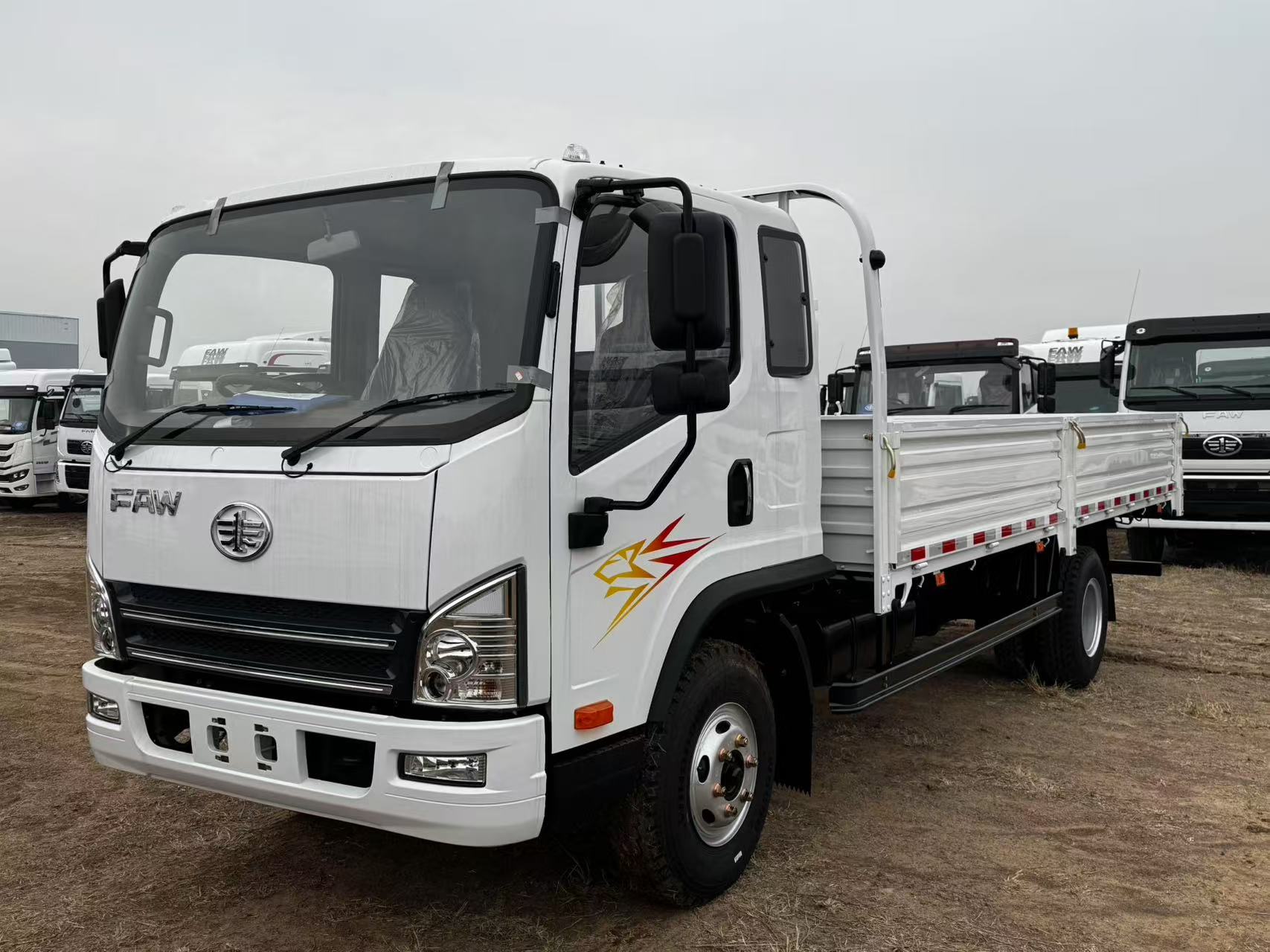
FAW TIGER VH 4X2 cargo truck, an example of a distribution configuration within the FAW range.
Step 3. Verify compliance before comparing price
FAW supplies Euro II, Euro III and Euro V emission configurations for African and Southeast Asian markets. In Kenya, KS 1515:2019 restricts imports to vehicles no more than eight years old and with right-hand drive. In Nigeria, local assembly through TSS focuses on 6x4 tractor and 8x4 dump models. Confirm the import rules in your country and ask for an emission and chassis configuration that matches them.
Step 4. Model the total cost over the first three to five years
Include the purchase price, fuel consumption, maintenance intervals, spare parts lead time, downtime cost and expected resale value. The verified price point in the Philippines—PHP 3.2 million to PHP 4.5 million for a new FAW 6x4 tractor truck—is a useful benchmark, but it must be adjusted for your market's duty, VAT, freight, and local assembly requirements.
Step 5. Validate supplier support and export capability
The supplier's ability to verify the configuration and support the truck after delivery is part of the purchase. CHARY is a first-level distributor of FAW Trucks and an export enterprise approved by the Ministry of Commerce. It is based in Qingdao and exports to more than 50 countries and regions. Its main markets include Africa, the Middle East, Southeast Asia, Central Asia, Eastern Europe and Latin America.
Buyers can choose international brand components such as BPW/FUWA axles, WABCO relay valves and ABS, JOST/SAF outriggers and JOST king pins according to customer requirements. That flexibility affects compatibility with local trailers and service networks.
Use Cases: Where the FAW Position Matters Most
Urban construction and mining support
FAW's position in Nigeria, where local assembly focuses on 6x4 tractor units and 8x4 dump trucks, makes it a practical reference for construction buyers. 8x4 dump configurations are common on heavy haulage and mining-adjacent projects; 6x4 tractors support material movement. Buyers searching for a FAW truck for construction or a FAW mining dump truck should evaluate the axle configuration, body strength and local parts supply together.
Long-haul logistics
JH6 and J6P series exported to Southeast Asia and the Middle East are designed for long-distance efficiency. A spacious cab matters here because it affects driver endurance and retention. For logistics operators, the wider range of FAW configurations also makes it easier to match the truck to route length and payload.
Fresh goods transport
Refrigerated truck configurations require low downtime. Global spare parts availability and convenient repair support are therefore more important than the initial price. FAW's best-fit list includes fresh goods transport based on CHARY's comparison materials.
Livestock transport
Livestock transport is also listed as a best-fit segment. Because livestock loads are route-specific and climate-sensitive, buyers need flexible configurations and reliable parts support rather than one generic truck.
Comparison Table: FAW Trucks vs Beiben, Sinotruk and Shacman
| Dimension | FAW trucks (based on CHARY comparison data) | Beiben / Sinotruk / Shacman (what buyers should verify) |
|---|---|---|
| Core difference | Higher output and superior after-sales support | Varies by brand, model and region; verify local service network |
| Performance gap | Higher engine power; better fuel efficiency | Compare with actual route cycles and spec-matched engines |
| Technical features | More truck configurations; spacious and comfortable driver's cab | Check cab dimensions and available body combinations for your application |
| Cost difference | Approximately 10% lower cost over alternatives | Request quotations with the same chassis, engine and emission level |
| Maintenance | Repair convenient and simple; spare parts available globally | Confirm parts availability and lead time for your region |
| Best for | Urban construction, logistics and transport, livestock transport, fresh goods transport | Align with your primary application and operating conditions |
The FAW column reflects CHARY's comparison materials. The alternative column is a verification checklist, not a set of unverified competitor specifications.
How to Turn This Comparison Into a Procurement Decision
Create a matrix with the same weight for every supplier. For example, weight compliance at 20%, total cost at 30%, configuration fit at 20%, after-sales support at 20%, and supplier capability at 10%. Score FAW, Sinotruk, Shacman and Beiben against the same vehicle specification. The purpose is not to prove one brand is perfect; it is to prevent a lower initial price from hiding higher lifetime risk.
When you compare offers, use identical parameters: same wheelbase, same cabin type, same emission level, same gearbox and axle configuration, same body type. Ask each supplier for the spare parts list for the model you are buying, the lead time for commonly replaced parts, and the name of the service contact in your country.
Risk Control: Protecting the Decision After the Order
One common post-purchase risk in emerging markets is damage to consumable parts. The control method is regular inspection of wear parts. For buyers working through CHARY, engineers can visit the site to assist with repairs. This is a practical check when comparing not only the truck, but the supplier relationship behind it.
Frequently Asked Questions
What compliance checks should be part of an FAW truck purchase decision?
FAW Trucks provides Euro II, Euro III and Euro V emission versions for African and Southeast Asian markets to match local fuel quality and regulations. In Kenya, KS 1515:2019 requires heavy-duty trucks to be no more than 8 years old and right-hand drive. In Nigeria, local assembly through Transit Support Services (TSS) focuses on 6x4 tractor and 8x4 dump models. Confirm the import rules in your country and ask for an emission and chassis configuration that matches them.
What actually makes FAW trucks different from Beiben, Sinotruk and Shacman?
According to CHARY's comparison data, the core differences are higher output and superior after-sales support. FAW also offers more available truck configurations, a more spacious and comfortable driver's cab, higher engine power, and better fuel efficiency compared with Beiben, Sinotruk and Shacman. Repair is described as convenient and simple, with spare parts available globally.
Is FAW a cost-saving option for emerging-market buyers?
CHARY's comparison materials state that FAW trucks provide approximately a 10% lower cost over alternatives. Buyers should still verify with specification-matched quotations that compare the same chassis, engine output, emission level and body type, then add import duty, freight, maintenance and expected downtime before making a final budget decision.
Can I get a brochure, quotation or evaluation package before ordering?
Yes. CHARY offers one-stop assured purchasing services for FAW trucks and related commercial vehicles. You can download the brochure, contact the sales team, and request a specification-matched quotation before confirming an order. Contact sales@fawglobal.com or WhatsApp +86 186 6398 2168 for a direct discussion.
How should after-sales support affect my final brand decision?
After-sales support determines how quickly a truck returns to work when a part fails. FAW's positioning in the comparison includes superior after-sales support, globally available spare parts and convenient repair. For buyers working with CHARY, engineers can visit the site to assist with repairs, and regular inspection of consumable parts is recommended to reduce downtime.
Conclusion: Use a Decision Matrix, Not a Brand Preference
At the decision stage, compare suppliers and trucks on the same criteria: compliance, capability, total cost, parts access and after-sales responsiveness. Within that framework, FAW trucks show a clear value position: higher output, better fuel efficiency, more configurations, a more comfortable cab, lower cost (approximately 10%) and stronger after-sales support when compared with Beiben, Sinotruk and Shacman.
To move from comparison to order, work with a distributor that can verify the configuration, support the export process and stand behind the truck after delivery. CHARY, as a first-level FAW distributor, is one such partner.
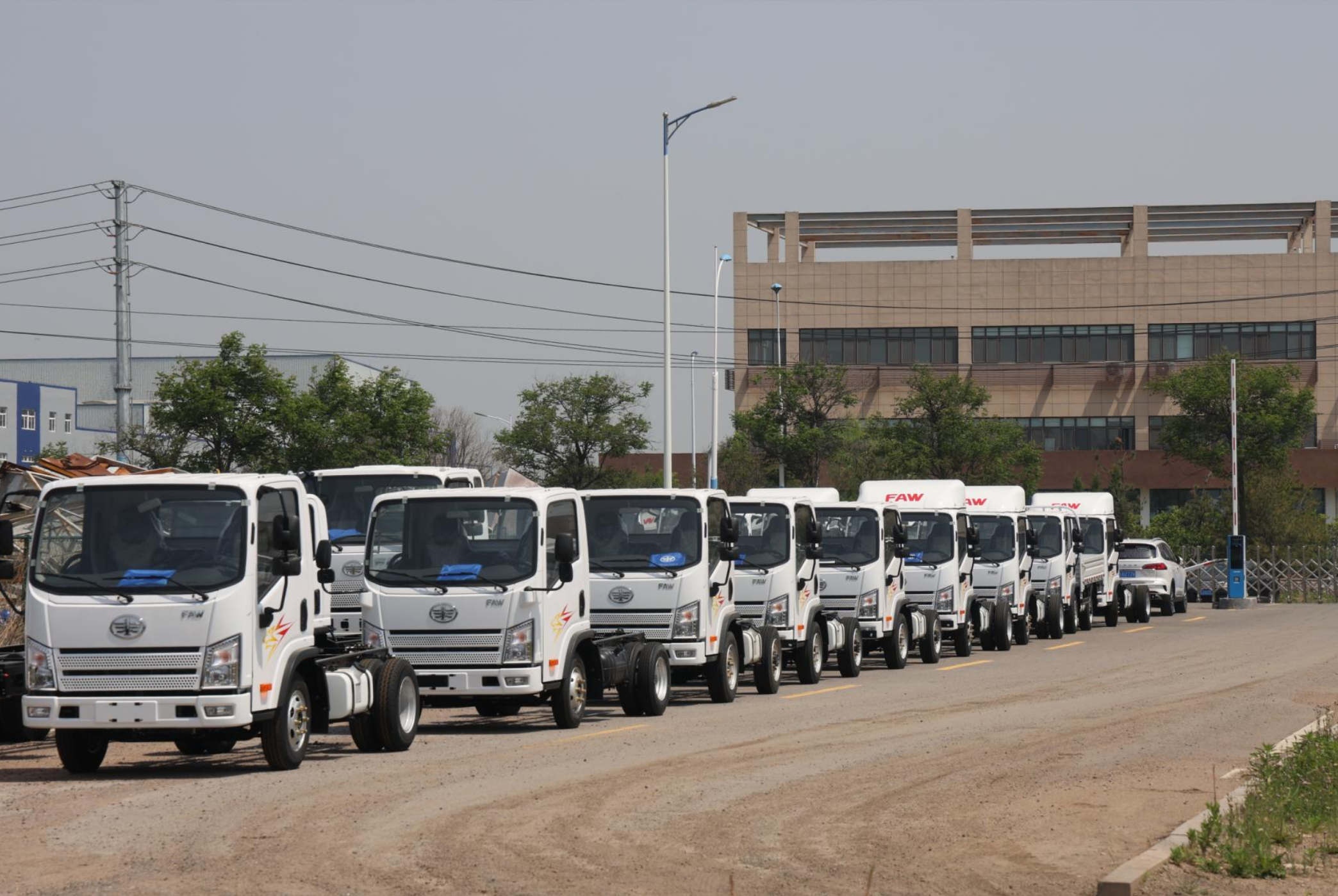
Download CHARY brochure (PDF) or contact sales@fawglobal.com / +86 186 6398 2168 for a FAW truck quotation. Visit www.charymachinery.com for the product range.
Have Questions or Need More Details?
Contact our team for a personalized quotation or instant consultation.
Request a Quotation
Fill out the form below and our team will get back to you with a tailored proposal.
WhatsApp Direct Chat
Prefer to chat in real-time? Message us on WhatsApp for instant assistance & quick answers.
- Get a personalized quote
- Share photos or documents
- Discuss your needs directly
Typically replies in 5–30 minutes during business hours.