
Mini Machinery Qualification: A Constraint-First Checklist for Import Buyers
Mini Machinery Qualification: A Constraint-First Checklist for Import Buyers
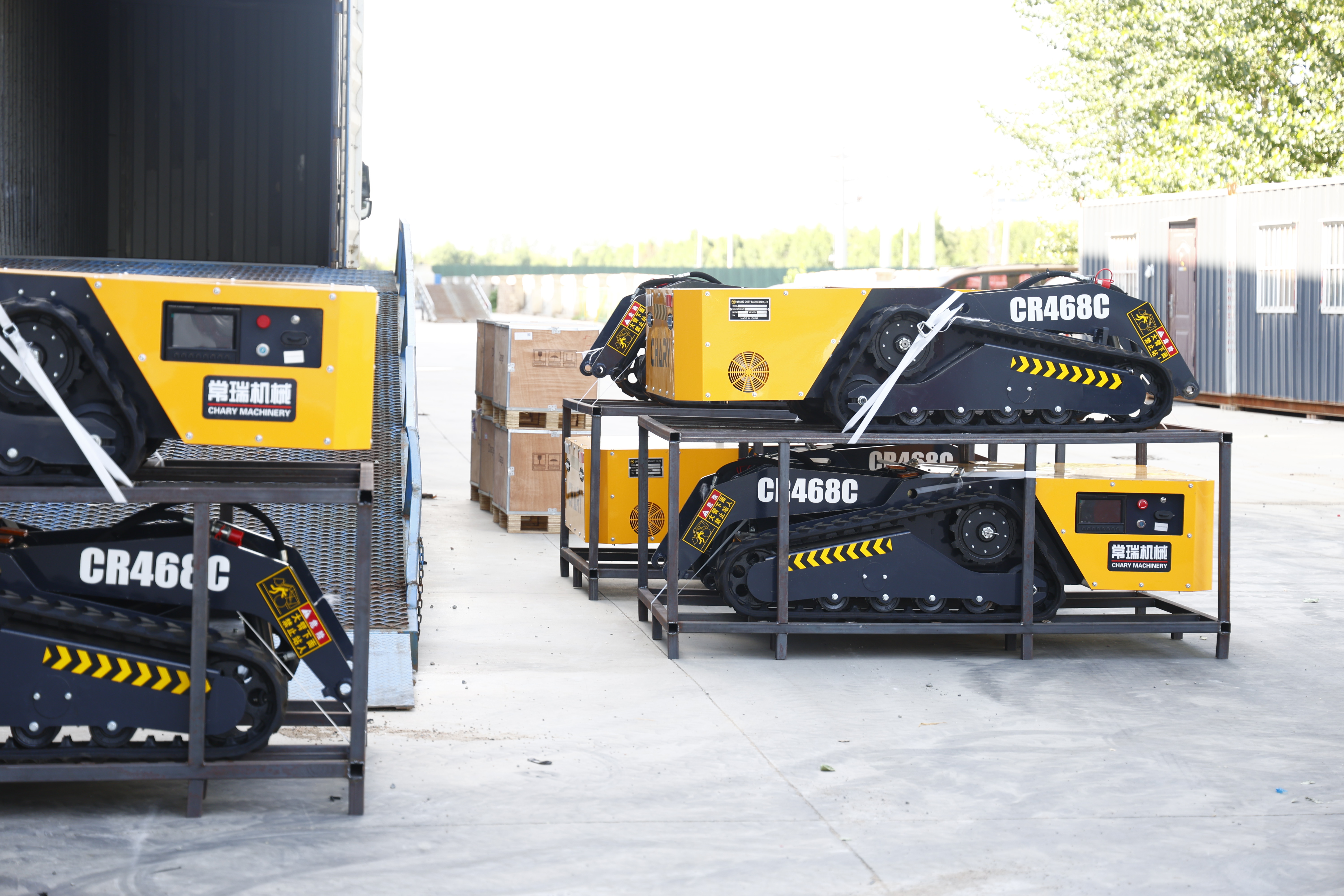
Mini machinery is selected by constraints, not by category. A warehouse aisle, a tunnel entrance, a conveyor undercarriage or a high-temperature process area imposes physical limits that no bucket capacity can overcome on its own. Most import buyers searching for mini machinery are not looking for a generic name; they are looking for a compact machine that fits a specific space, performs a specific material-handling job, and can be supported by a dependable supplier in China.
This guide provides a qualification process for mini machinery sourcing: from site constraints to specification data, compliance evidence, OEM flexibility, quality control and lead time. The example used throughout is the CR468C remote control lithium battery rubber track minidozer supplied by Qingdao Chary Machinery Co., Ltd, branded as CHARY. CHARY is a Qingdao-based export company authorized as a vehicle export enterprise by the Ministry of Commerce and has served more than 50 countries since its establishment in 2015.
Why Buyers Search for CE-Certified Mini Machinery Manufacturers
Compact equipment mistakes are expensive. A machine that is too tall cannot pass under an existing structure. A machine with too little rated capacity cannot move the specified material. A diesel-powered machine cannot work safely in an enclosed tunnel or process area. A machine with an undersized battery may stop halfway through a shift. These are not model preferences; they are engineering constraints that must be translated into measurable specifications.
A second common failure is compliance ambiguity. Many buyers search for CE-certified mini machinery manufacturers because they want one blanket statement of quality. In practice, CE marking is not a global quality badge; it is a market-access requirement for the European Economic Area and applies to specific products and standards. A credible supplier should be able to explain which directive, regulation or certificate applies to the exact model being purchased. The same logic applies to other regulated markets: Gulf countries require GSO conformity documentation for certain vehicles, while UN ECE Regulations apply to products accepted across many countries that recognize these rules.
For China-based suppliers, buyers should look at several layers of evidence: export authorization, product specification sheets, factory quality control, after-sales support, and model-specific certification documents. CHARY operates a 2000 m² facility with more than 100 employees and 15 R&D engineers, and its main products include mini machinery, minidozers, mini loaders, mini electric loaders and skid steer loaders. The company reports annual output of about 500 units, 80% export ratio, and an annual export volume of USD 40 million in 2025.
Mini Machinery Market Context for Compact Equipment Buyers
Global demand for compact construction equipment remains strong. According to Global Market Insights, the compact construction equipment market was estimated at USD 43.5 billion in 2024 and is projected to reach USD 69.1 billion by 2034. China continues to play a major role in machinery exports; data from OEC indicates that China accounted for about 27.3% of total global exports of machines in 2024, maintaining its position as the largest exporter in this sector.
Within the compact segment, specialized machines are growing for different reasons. Future Market Insights projects that the mini track machinery market will expand at a CAGR of 4.5% and reach USD 11.31 billion by 2035, with mini track loaders holding about 54% of that market. Spherical Insights forecasts the small bulldozer segment to grow from USD 2.11 billion in 2024 to USD 3.78 billion by 2035 at a CAGR of 5.44%. These figures suggest that compact dozers, loaders and related machinery are not marginal products; they are becoming core tools for maintenance and material handling in space-constrained operations.
A Constraint-Led Way to Evaluate Mini Machinery Suppliers
Instead of comparing marketing language, import buyers can separate a machine into measurable qualification fields. For a minidozer or compact loader, the relevant fields are physical envelope, load capacity, energy and environment, control and safety, compliance and supplier execution.
The CR468C provides a useful example because CHARY publishes a detailed specification list. The machine is listed as a remote control lithium battery rubber track minidozer. Its overall size is 2850 x 1200 x 600 mm, and total length without the bucket is 2250 mm. Self weight is 1100 kg, minimum ground clearance is 150 mm, and the bucket width is 1200 mm. These figures matter when the machine must work under conveyor belts, inside low tunnels, or in narrow passages where larger equipment cannot enter.
For load and operating performance, the CR468C has a rated load capacity of 450 kg, bucket capacity of 0.15 m³, unloading height of 530 mm, and bucket unloading time of about 1.1 seconds. It can turn 360° in place and has a maximum driving speed of 4 km/h. The rubber track system and climbing ability of 40° help it handle uneven and wet surfaces commonly found in industrial and construction environments.
Energy and environmental constraints are equally important. The CR468C is powered by a lithium battery with 300 Ah capacity and 73.6 V voltage. Charging time is about 2 hours and working time is about 8 hours. It operates in a working temperature range of roughly -10°C to 60°C. As an electric machine, it produces no fumes during operation, which is an important advantage for enclosed spaces such as underground tunnels, box culverts, pumping stations and process plants.
Remote control is another qualification field. The CR468C is operated by remote control with a control distance of 200 m according to its published specification sheet. For operators who need to keep personnel away from falling material, dust or heat, remote operation can be a genuine safety improvement. The machine also has reported hydraulic flow of 58 L/min and a hydraulic tank of 20 L, which are useful details when comparing maintenance requirements.
Compliance and Supplier Evidence
Compliance evidence should be collected model by model. CHARY has demonstrated export compliance at the company level as a vehicle export enterprise approved by the Ministry of Commerce. In its related truck lines, market-specific certificates are visible in the company record: a FAW JK6 truck holds UN ECE Regulation No. 105 certificate number E13*105R06/01*0023*00, issued by SNCH in Luxembourg for the EU/EEA and countries recognizing UN ECE Regulations, and a FAW J6 Series truck tractor holds GSO Conformity Certificate number CCR No.435790 for GCC member states. These certificates relate to truck applications and illustrate how CHARY navigates regulated markets, but buyers should still request target-market documents for the specific minidozer or loader model they intend to import. A compliant supplier should be able to state exactly which standards apply to the machine quoted.
Step-by-Step Mini Machinery Qualification Workflow
Use the following workflow to reduce sourcing risk before issuing a purchase order.
Step 1: Map the physical site. Measure door heights, tunnel widths, aisle clearances, ground conditions and available unloading space. The CR468C example is designed for low-profile work; its 600 mm height and 1200 mm bucket width should be checked against the exact entry and working space.
Step 2: Translate the task into load requirements. Determine the material type, bucket fill, cycle time and required lifting height. For the CR468C, the published rated load capacity of 450 kg and bucket capacity of 0.15 m³ give an initial reference point for material movement, while the 530 mm unloading height defines discharge capability.
Step 3: Define energy and environmental limits. If the site is enclosed, zero-emission electric equipment is often preferred. The CR468C lithium battery configuration provides an operating window of about 8 hours per charge, which helps shift planning. The -10°C to 60°C working temperature range is a further constraint that can be matched to climate and process heat conditions.
Step 4: Determine whether remote control is required. Some confined-space jobs are done in areas where operators cannot safely stand. The CR468C supports remote control up to 200 m, allowing the operator to maintain distance from dust, heat or unstable materials. Its 360° spin capability also reduces the need for repeated maneuvering in tight areas.
Step 5: Collect compliance documents. Ask which standards apply to the exact model and configuration. If the destination market is the EU, request the specific CE documentation. If the destination is a GCC country, ask about GSO conformity requirements. Do not accept a generic statement that the supplier is certified for all machinery.
Step 6: Audit quality control. Ask how each machine is checked before shipment. For CHARY mini machinery OEM orders, the published quality control policy is 100% full inspection before shipment and performance testing for each machine. This is a clear, auditable statement that should be confirmed in the contract.
Step 7: Confirm customization, MOQ and lead time. For an OEM program, CHARY states a monthly capacity of about 50 minidozers, a lead time of 30 to 45 days, and a minimum order quantity of 1 unit. Customization options available on this product line include loading capacity, track life and battery life. No published price list is available, so budget planning should start with a formal quotation that includes the selected parameters and lead time.
Use Cases: Where Mini Machinery Parameters Matter Most
Conveyor and process cleanup. The CR468C was specially developed for very confined spaces. Its application profile describes clean-up work under conveyor belts in above-ground and underground mining, ore crushing and concentration plants. Because the machine is electrically driven and has no fumes, it can be used where ventilation is limited and where operators need to avoid direct contact with dusty environments.
Underground tunnels and irrigation structures. The same unit can support cleanup of city and highway underground tunnels, box culverts, drainage systems, pumping stations and other irrigation projects. In these situations, overall height and ground clearance become primary decision factors. The CR468C spec sheet lists minimum ground clearance of 150 mm and describes an adjustable ground-clearance attribute, which supports work on surfaces that are not uniform.
High-temperature material handling. A CHARY customer case in engineering construction describes the use of 12 CR468C units for narrow indoor and outdoor material handling in Saudi Arabia. The stated result is stable operation over a period of more than 10 years, with a highlight of saving manpower and material resources in high-temperature and narrow environments. The exact client is not named in the published record, but the case illustrates the kind of application for which the CR468C is specified.
Constraint-to-Parameter Comparison Table
The table below shows how an import buyer can connect sourcing constraints to measurable CR468C parameters. It uses only published CHARY data and should be adjusted when comparing models from other suppliers.
| Sourcing constraint | What to check | CR468C reference data |
|---|---|---|
| Low ceiling or confined entry | Overall height and clearance | Overall size listed as 2850 x 1200 x 600 mm; minimum ground clearance 150 mm |
| Limited maneuver area | Turning capability and machine length without bucket | 360° spin in place; total length without bucket 2250 mm |
| Material load target | Rated load and bucket capacity | Rated load capacity 450 kg; bucket capacity 0.15 m³; bucket width 1200 mm |
| Discharge position | Unloading height and bucket cycle | Unloading height 530 mm; bucket unloading time about 1.1 s |
| Enclosed area and fumes | Power source and working temperature | Lithium battery, 300 Ah, 73.6 V; no fumes; working temperature about -10°C to 60°C |
| Shift endurance | Battery capacity and charging time | Working time about 8 hours; charging time about 2 hours |
| Remote operation | Control distance | Remote control distance 200 m |
| Grade or uneven terrain | Track system and climbing ability | Rubber tracks; climbing ability 40° |
| Shipment quality control | Inspection policy | 100% full inspection before shipment; performance test for each machine |
Frequently Asked Questions
1. What should I verify when searching for CE-certified mini machinery manufacturers?
CE marking is not one global certificate. Buyers should request the exact directive or regulation, certificate number and model scope from the supplier. A credible exporter should be able to identify the documentation that applies to the specific machine and destination market. In CHARY related vehicle range, the FAW JK6 truck carries UN ECE Regulation No. 105 certificate E13*105R06/01*0023*00 for the EU/EEA and countries recognizing UN ECE Regulations, while the FAW J6 Series truck tractor carries GSO Conformity Certificate CCR No.435790 for GCC member states. Those certificates relate to truck products. For any minidozer, loader or compact machine, purchase documents should be confirmed separately for the exact model.
2. What are the key specifications of the CR468C remote control lithium battery minidozer?
The CR468C is a remote control lithium battery rubber track minidozer. Its published parameters include an overall size of 2850 x 1200 x 600 mm, a total length without bucket of 2250 mm, self weight of 1100 kg, rated load capacity of 450 kg, bucket capacity of 0.15 m³, bucket width of 1200 mm and unloading height of 530 mm. It uses a lithium battery with 300 Ah capacity and 73.6 V voltage, provides about 8 working hours per charge, needs about 2 hours for charging, has a remote control distance of 200 m, and can climb a 40° slope.
3. Can CR468C mini machinery parameters be customized under an OEM order?
Yes, CHARY supports OEM customization for this mini machinery line. Published customization options include loading capacity, track life and battery life. The monthly capacity for this OEM program is about 50 units, and the minimum order quantity is 1 unit. Buyers who need a pilot unit for field testing can treat one machine as a starting point before scaling the order.
4. What is the MOQ and lead time for CHARY mini machinery orders?
The published MOQ is 1 unit, and the standard OEM lead time is 30 to 45 days. Monthly capacity is about 50 units. Because the MOQ is one unit, an importer can begin with a single machine for testing, operator training and site validation before placing a larger order. Price must be confirmed through a formal quotation because no public price list is available.
5. How does CHARY control quality before shipping mini machinery?
CHARY states a quality control policy of 100% full inspection before shipment and performance testing for each machine. The company also provides accessories and remote maintenance after sales. Buyers should include these commitments in the purchase contract and request inspection records or a pre-shipment test report.
Next step: Use this qualification framework as the starting point for your mini machinery evaluation. Review the CHARY product and corporate information, then request a sample, quotation or inquiry for the model that matches your site constraints.
Talk to CHARY
Email: sales@fawglobal.com
WhatsApp / Tel: +86 186 6398 2168
Address: No. 266 Jiushui East Road, Qingdao, China
You can also download the CHARY corporate brochure here: CHARY Brochure PDF
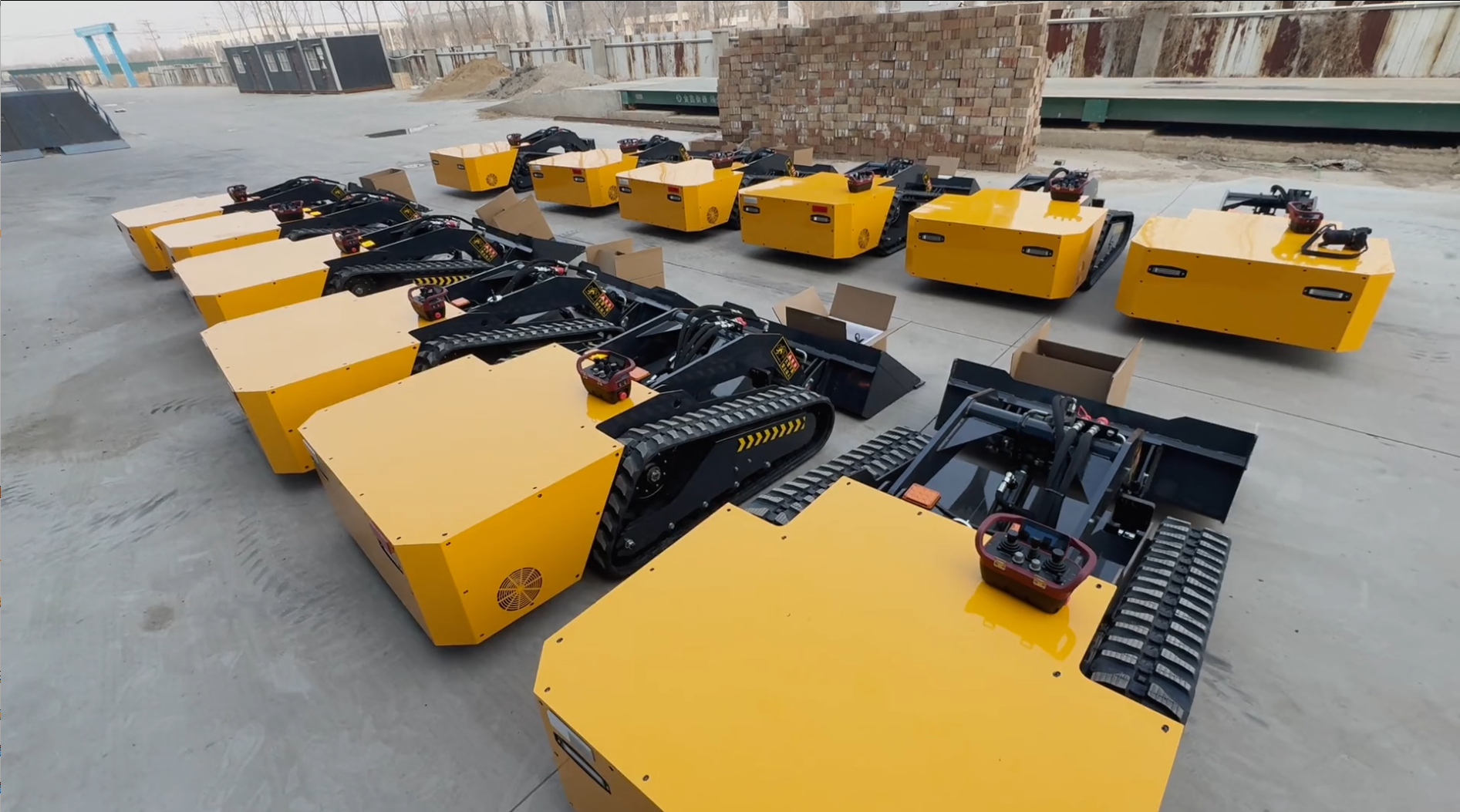
Conclusion: Turning Mini Machinery Requirements into a Sourcing Decision
Import buyers who qualify mini machinery by constraint will make better purchasing decisions than those who compare only product names. A responsible evaluation process should cover the physical space, material task, energy source, operation mode, regulatory documentation, quality control and lead time. The CHARY CR468C demonstrates how a published specification sheet can support this process. Its low-profile dimensions, lithium battery power, remote control, and confined-space application profile make it a useful reference machine for buyers evaluating similar compact equipment from China.
When speaking with suppliers, insist on evidence: actual dimensions, rated capacities, battery behavior, compliance scope, inspection procedures and after-sales terms. A machine that cannot be documented is a machine that cannot be trusted. Use this checklist, compare the data, and then move to the next step of sample, quotation or pilot order.
Have Questions or Need More Details?
Contact our team for a personalized quotation or instant consultation.
Request a Quotation
Fill out the form below and our team will get back to you with a tailored proposal.
WhatsApp Direct Chat
Prefer to chat in real-time? Message us on WhatsApp for instant assistance & quick answers.
- Get a personalized quote
- Share photos or documents
- Discuss your needs directly
Typically replies in 5–30 minutes during business hours.