
Solving Tight-Space Loading: The CR468C Minidozer vs. Manual Labor
Solving Tight-Space Loading: The CR468C Minidozer vs. Manual Labor
Answer first: on confined sites where a wheel loader, skid steer loader or truck-mounted crane cannot enter safely, loading work usually falls back to manual labor. The CR468C minidozer exists to close that gap. It is a remote-controlled, lithium-battery, rubber-track minidozer with documented overall dimensions of 2850 × 1200 × 600 mm, a self weight of 1100 kg, a rated load capacity of 450 kg and a bucket capacity of 0.15 m³ — operated from up to 200 m away. Whether it replaces a manual loading crew is not a marketing question; it is a question of whether those numbers fit your openings, your floors and your material flow.
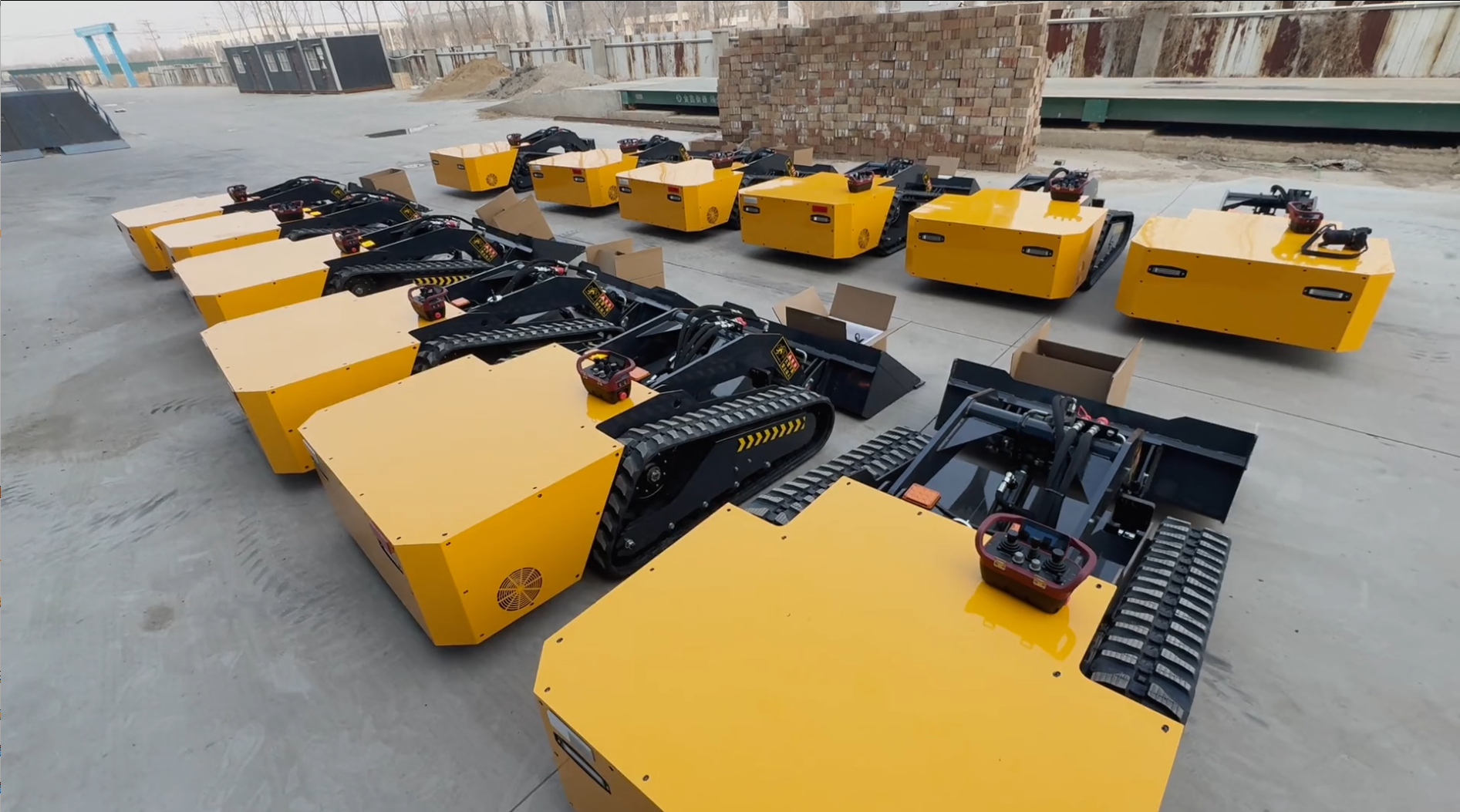
What Tight-Space Loading Actually Means
Tight-space loading is the task of moving bulk or loose material in, out and around a site where the entry width, turning space, headroom or floor capacity rules out conventional construction machinery. It is defined by physical constraints, not by material type or project size.
The constraints that typically force a site into manual handling are consistent across projects:
- Entry width. Doors, gates and passageways narrower than the footprint of a standard compact loader.
- Turning space. Corners, columns and corridors where a machine cannot swing its bucket or rear end.
- Headroom. Basements, mezzanines, covered walkways and interior rooms with limited vertical clearance.
- Floor capacity. Suspended slabs, finished floors and temporary decks that limit concentrated axle loads.
- Discharge geometry. The receiving point may be a low hopper, a container or a temporary stockpile rather than a truck bed.
- Environmental exposure. High ambient temperature, dust, confined ventilation or areas where a person should not be working for long periods.
When several of these constraints apply at the same time, the default answer on most sites is people with shovels, wheelbarrows and hand trolleys. That default is not irrational — for short jobs and unpredictable surfaces, hand tools remain practical. The real evaluation question is narrower: at what material volume, over what duration, and under what exposure does a machine envelope of roughly 1200 mm width become the better tool?
Why the Compact End of the Market Keeps Growing
The shift toward smaller machinery is measurable, not anecdotal. Global Market Insights estimated the global compact construction equipment market at USD 43.5 billion in 2024 and projected it to reach USD 69.1 billion by 2034. Future Market Insights projects the mini track machinery segment growing at a 4.5% CAGR to USD 11.31 billion by 2035, with mini track loaders holding a 54% share. Spherical Insights projected the small bulldozer and compact machinery segment growing from USD 2.11 billion in 2024 to USD 3.78 billion by 2035 at a 5.44% CAGR.
Supply has followed demand. According to the Observatory of Economic Complexity, China concentrated 27.3% of total global machine exports in 2024. Grand View Research valued the global skid steer loader market at approximately USD 9.4 billion in 2023, with North America accounting for 84.7% of revenue.
Why this matters to a buyer evaluating a confined-site solution: the compact category is not a niche experiment. It is a mature, growing equipment class with an established supply base — which means a buyer can now compare specifications and commercial terms across suppliers rather than accepting whatever the local dealer stocks. It also means compact machines are being pushed into tighter and tighter applications, and the sub-1.5-tonne class is where that pressure is most visible.
The CR468C Minidozer: What the Verified Specification Set Says
Qingdao Chary Machinery Co., Ltd (CHARY) is a Qingdao-based mini machinery supplier founded in 2015 that builds and exports compact equipment, including minidozers, mini loaders, mini electric loaders and skid steer loaders, with a 2000 m² facility, 100+ employees, a 15-engineer R&D team and an annual output of 500 units. Its compact line is anchored by the CR468C minidozer, a remote-control lithium-battery rubber-track machine.
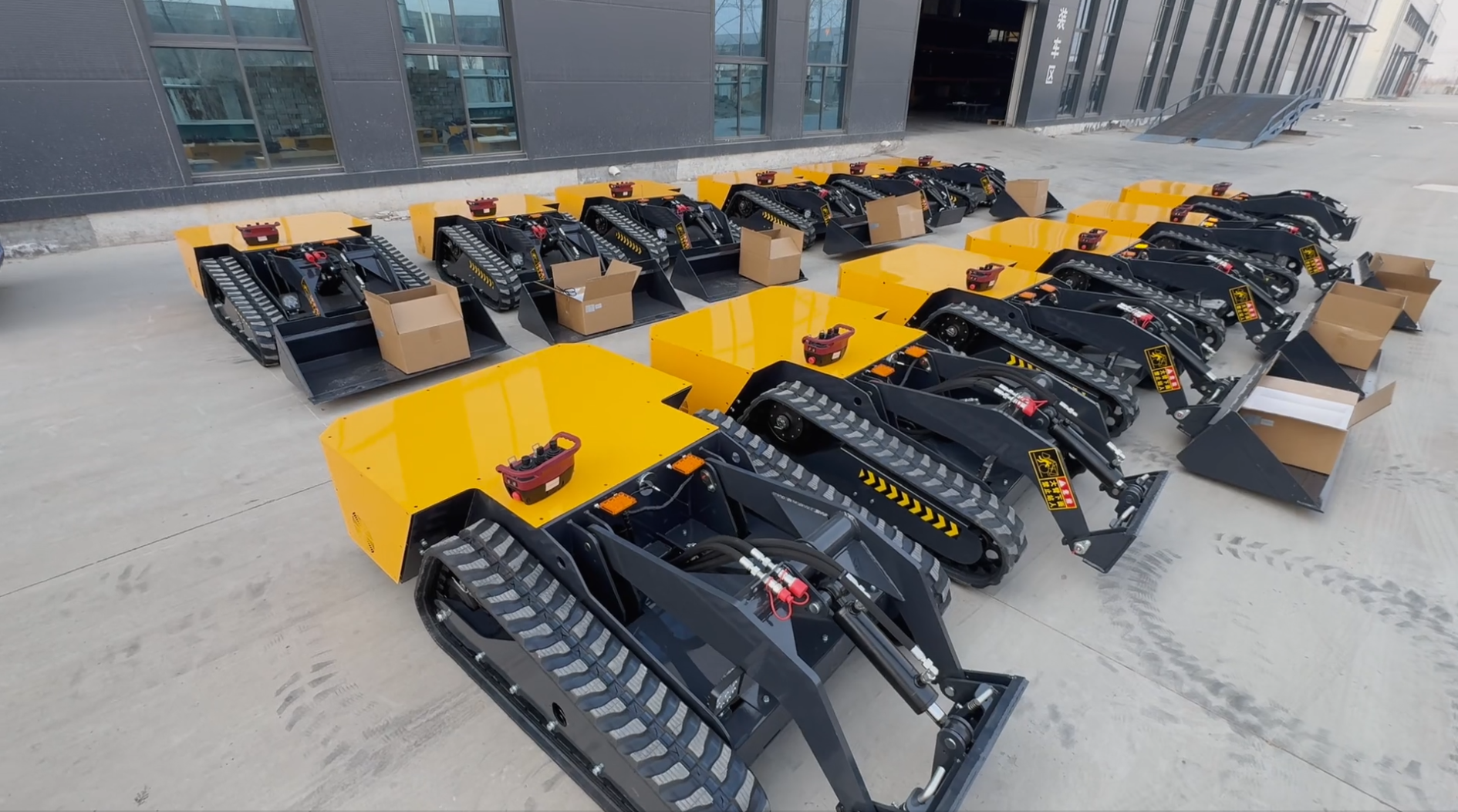
| Parameter | Recorded specification |
|---|---|
| Model | CR468C |
| Type | Remote control lithium battery rubber track minidozer |
| Overall dimensions | 2850 × 1200 × 600 mm |
| Total length without bucket | 2250 mm |
| Self weight | 1100 kg |
| Operation method | Remote control |
| Control distance | 200 m |
| Rated load capacity | 450 kg |
| Bucket capacity | 0.15 m³ |
| Bucket width | 1200 mm |
| Bucket unloading time | 1.1 s |
| Unloading height | 530 mm |
| Wheelbase | 1000 mm |
| Minimum ground clearance | 150 mm |
| Steering | 360° spin in place |
| Maximum driving speed | 4 km/h |
| Climbing ability | 40° |
| Battery | Lithium battery, 300 Ah, 73.6 V, 22 kWh |
| Motor | 7.5 kW, 3000 r/min |
| Charging time / working hours | About 2 h charge / about 8 h working |
| Charging voltage | 380/220 V |
| Hydraulic flow / hydraulic tank | 58 L/min / 20 L |
| Walking style | Rubber tracks |
| Working temperature | -10 °C to 60 °C |
Reading those numbers against a real site constraint
A specification table only becomes useful when each figure is mapped to a physical decision. The relevant readings are:
- 1200 mm of width is the number to compare with your narrowest doorway, gate or corridor — the bucket and the machine envelope share it.
- 2250 mm without the bucket is the length to use when planning a straight run or a lift onto a platform, rather than the bucket-inclusive footprint.
- 150 mm of ground clearance defines how much debris, cable or unevenness the machine can pass over before it scrapes.
- 450 kg rated load and a 0.15 m³ bucket define the payload per trip, which is the single biggest driver of how many trips a task needs.
- 1.1-second bucket unloading at 530 mm discharge height means the machine can tip into low hoppers, bins and temporary containers rather than requiring a raised truck bed.
- 360° in-place spin with a 1000 mm wheelbase is what allows repositioning in a corridor where a conventional loader would need to reverse out.
- About 8 hours of work on a roughly 2-hour charge at 380/220 V is the energy cycle to plan charging against — typically one charge per shift, or a mid-shift top-up.
- -10 °C to 60 °C working temperature covers both cold-weather sites and the high-temperature environments where manual crews degrade fastest.
How CHARY supports the machine commercially
Commercial terms matter as much as the specification when a buyer is testing a machine against a labor model. CHARY records OEM production with customization available on loading capacity, track life and battery life, a monthly capacity of 50 units, a lead time of 30–45 days and a minimum order quantity of one unit. Quality control is 100% full inspection before shipment with a performance test for each machine, and after-sales support covers accessories and remote maintenance.
Step-by-Step: Converting a Manual Loading Task into a Machine Task
The switch from manual labor to a minidozer is an engineering exercise, not a purchasing decision. Work through it in this order.
- Measure the tightest physical constraint first. Record the narrowest door, gate and corridor width, and the longest straight run. Compare them with the CR468C's 1200 mm width and 2250 mm length without the bucket. If the tightest point is below the machine envelope, no other calculation matters.
- Check the route, not just the opening. Walk the full path and note every change of direction. The 1000 mm wheelbase and 360° in-place spin determine whether the machine can reorient where a larger unit would need to reverse.
- Verify floor and deck capacity for a moving load. The machine carries 1100 kg of self weight plus up to 450 kg of rated load, with that load distributed through rubber tracks rather than wheels. Confirm this against the structure or deck along the route.
- Define the discharge point. If material is going into a low hopper, bin or temporary container, the 530 mm unloading height and 1.1-second dump are sufficient. If it is going into a high truck bed, the unloading geometry needs separate review.
- Plan the operator position. With a control distance of up to 200 m, the operator can stand outside the loading and discharge zone. Decide where that position is, and make sure the sightline to the bucket is unobstructed.
- Build the energy cycle around the shift. About 8 hours of working time per roughly 2-hour charge, at 380/220 V, normally means charging between shifts. Sites running extended hours should plan a second unit or a scheduled charging window.
- Confirm the environment envelope. The machine is rated from -10 °C to 60 °C. If your site is hotter, colder, or contains substances that require specific conformity documentation for your market, resolve that question before ordering rather than after delivery.
- Validate before scaling. Minimum order quantity is one unit and lead time is 30–45 days, which allows a single machine to be trialled against an existing manual crew on the same task before a fleet decision is made.
Use Cases: Where the CR468C Format Fits
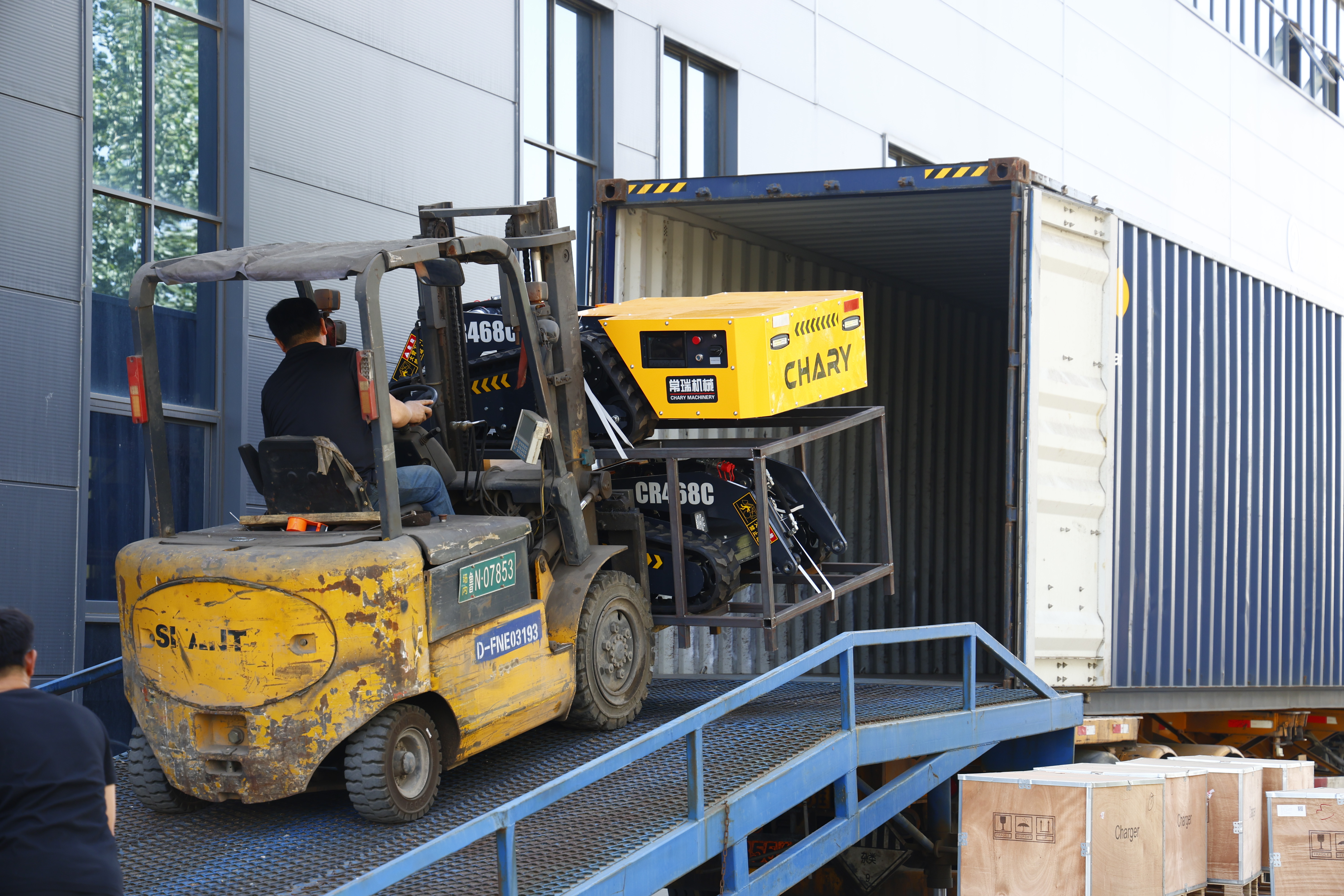
The strongest evidence for this machine class is not a laboratory figure but a long-running deployment. In Saudi Arabia, an engineering construction client uses 12 minidozer units for narrow indoor and outdoor material handling. That project has achieved stable operation over a recorded duration of more than 10 years, and the reported highlights are effective operation in high-temperature and narrow environments, plus savings in manpower and material resources.
Three patterns in that case generalise to other sites:
- Mixed indoor and outdoor routes. The same machine handles inside and outside work because the rubber tracks and 1200 mm width do not force a transfer between equipment types at the door.
- High ambient temperature. Manual material handling in heat is limited by human endurance; the machine's rated range extends to 60 °C, and remote control removes the operator from the load zone.
- Long service life against a labor baseline. A deployment recorded over more than 10 years at stable operation is the practical counter-argument to labor-based loading models, which reset their cost every shift.
Where the format does not fit: high-volume earthmoving, long-haul transport, tasks requiring elevated discharge beyond the recorded 530 mm unloading height, and ground conditions beyond the 40° climbing ability or 150 mm ground clearance. In those cases a different machine class — or a larger compact loader — is the correct answer, and the minidozer should not be stretched into the role.
Manual Labor vs. the CR468C: A Decision Table
The table below compares documented CR468C specifications against the general characteristics of manual material handling. Manual-side entries are stated qualitatively because crew capacity, wages and material type vary by site and cannot be standardised.
| Decision variable | Manual labor | CR468C minidozer |
|---|---|---|
| Access envelope | Limited by body width and what a person can carry through the opening | 2850 × 1200 × 600 mm overall; 1200 mm bucket width; 2250 mm length without bucket |
| Payload per trip | Set by what a worker can lift, push or carry; no fixed rating | 450 kg rated load capacity; 0.15 m³ bucket capacity |
| Unloading | Manual tipping and emptying; speed depends on the individual | 1.1-second bucket unloading at 530 mm discharge height |
| Operator position | Inside the loading and discharge zone | Remote control at a control distance of up to 200 m |
| Repositioning in tight space | Turning a loaded barrow or trolley by hand in a corridor | 360° spin in place; 1000 mm wheelbase |
| Environment tolerance | Constrained by human endurance in heat, dust and poor ventilation | Rated working temperature -10 °C to 60 °C; remote operation |
| Energy and refuelling logic | Continuous, breaks required across a shift | About 8 h working per about 2 h charge; 300 Ah lithium battery at 73.6 V; 380/220 V charging |
| Motion and throughput ceiling | Varies with fatigue, shift changes and crew size | 4 km/h maximum driving speed; 40° climbing ability; 150 mm ground clearance |
| Cost structure | Recurring per hour worked; scales with crew size and availability | Unit plus charging; commercial terms recorded as MOQ 1 unit and 30–45 day lead time |
The pattern in that table is straightforward: manual labor's advantage is flexibility and zero equipment footprint, while the machine's advantage is a fixed payload and unload cycle that does not vary with fatigue, plus an operator position outside the hazard zone. Neither column contains a number that should be projected onto your site without measurement — which is why the final step of any evaluation is a trial.
How to Evaluate the Switch: Six Criteria
- Fit. Does the tightest opening on the route clear 1200 mm of machine and bucket width?
- Load. Does the route support a moving load of 1100 kg of self weight plus up to 450 kg of rated load, and is the payload per trip competitive with the number of trips currently required?
- Cycle. Do the 0.15 m³ bucket, 1.1-second dump and 4 km/h travel speed support the throughput your task actually needs?
- Exposure. Can the operator be positioned up to 200 m away and outside the loading and discharge zone?
- Energy and environment. Does an 8-hour working window per roughly 2-hour charge at 380/220 V suit your shift pattern, and does -10 °C to 60 °C cover your site conditions?
- Commercial terms. Are OEM customization of loading capacity, track life and battery life, a 30–45 day lead time, MOQ of one unit, full inspection before shipment and after-sales accessories and remote maintenance available to you?
FAQ
Will the CR468C fit through the restricted openings on a tight site?
The CR468C is documented with overall dimensions of 2850 × 1200 × 600 mm, a bucket width of 1200 mm, an overall length of 2250 mm without the bucket and 150 mm of minimum ground clearance. Compare those figures against the narrowest doorway, corridor, gate and turning point on your route. The 1000 mm wheelbase and 360° in-place spin help the machine reposition where a larger loader would have to reverse out, and the rubber tracks carry the 1100 kg self weight plus up to 450 kg of rated load.
How much material can the CR468C move per cycle compared with manual handling?
The machine has a 450 kg rated load capacity, a 0.15 m³ bucket capacity and a bucket unloading time of 1.1 seconds. Manual handling has no fixed rated capacity — it is limited by what a worker can lift, push or carry per trip and by fatigue across a shift. The machine's throughput ceiling is instead set by its 4 km/h maximum driving speed and an approximately 8-hour working window per charge. The practical comparison is your current number of trips per task against the machine's bucket volume and load rating, measured on your own site rather than assumed.
Is remote control a genuine safety benefit in narrow or high-temperature work?
The CR468C is operated by remote control with a documented control distance of up to 200 m, which allows the operator to stand outside the loading and discharge zone rather than inside it, and it is rated for working temperatures from -10 °C to 60 °C. In one recorded deployment, an engineering construction client in Saudi Arabia uses 12 minidozer units for narrow indoor and outdoor material handling, with a duration of more than 10 years, stable operation, and reported effectiveness in high-temperature and narrow environments. Site-specific safety outcomes still depend on your own procedures, the material being handled and the route conditions.
What should be compared when weighing a minidozer against a manual labor crew?
Compare the same six variables on both sides: access envelope, payload per trip, unloading method, operator position, environment tolerance and cost structure. The machine side is documented — 2850 × 1200 × 600 mm overall, 450 kg rated load, 0.15 m³ bucket, 1.1-second unloading, remote control up to 200 m, about 8 hours of work per roughly 2-hour charge at 380/220 V, and a -10 °C to 60 °C working range. The labor side varies with crew size, shift pattern and local wage conditions, so it should be measured on your own operation. Because minimum order quantity is one unit with a 30–45 day lead time, a single machine can be trialled side by side with an existing crew before any fleet decision.
Which mini loader manufacturers are strongest right now, and where does CHARY sit?
In the compact construction equipment market, Caterpillar Inc. held a share of over 15% in 2024, according to Global Market Insights. Among Chinese mini machinery manufacturers, SANY, XCMG, LiuGong and Yuchai are recognised for hydraulic systems and fuel efficiency in published industry analyses. China accounted for 27.3% of global machine exports in 2024, per the Observatory of Economic Complexity, which is one reason so much compact equipment now originates there. Qingdao Chary Machinery Co., Ltd is a Qingdao-based mini machinery supplier founded in 2015, with a 2000 m² facility, 100+ employees, 15 engineers and an annual output of 500 units, exporting to more than 50 countries, and it builds its compact range around the CR468C minidozer. Buyers who want to test that positioning directly can request a sample or quotation, or download the product brochure.
Conclusion
Tight-space loading is not a problem that disappears when cheap labor is available; it disappears when the right envelope exists. The CR468C minidozer answers the specific case of confined, hot or awkward material handling with a documented package: 2850 × 1200 × 600 mm overall, 1100 kg self weight, 450 kg rated load capacity, a 0.15 m³ bucket, 1.1-second unloading at 530 mm height, 360° in-place spin, remote control up to 200 m, and roughly 8 hours of work per 2-hour charge at 380/220 V. Those figures are the argument — not adjectives.
For an evaluation-stage buyer, the sensible sequence is to measure your tightest constraint, compare it against the machine envelope, check the route and discharge geometry, and then trial one unit against the manual crew already doing the work. CHARY records OEM customization of loading capacity, track life and battery life, a 30–45 day lead time, a minimum order quantity of one unit, 100% inspection before shipment with a performance test for each machine, and after-sales support covering accessories and remote maintenance.
Next step: test the CR468C against your own tight-space loading task.
Request a sample or quotation, or download the CHARY mini machinery brochure: CHARY mini machinery brochure (PDF)
Contact: Jason · Email: sales@fawglobal.com · Tel / WhatsApp: +86 186 6398 2168
Qingdao Chary Machinery Co., Ltd · www.charymachinery.com · No. 266 Jiushui East Road, Qingdao, China
Have Questions or Need More Details?
Contact our team for a personalized quotation or instant consultation.
Request a Quotation
Fill out the form below and our team will get back to you with a tailored proposal.
WhatsApp Direct Chat
Prefer to chat in real-time? Message us on WhatsApp for instant assistance & quick answers.
- Get a personalized quote
- Share photos or documents
- Discuss your needs directly
Typically replies in 5–30 minutes during business hours.