
Key Considerations for Evaluating FAW Truck Suppliers in Emerging Markets: Addressing Common Procurement Challenges
Introduction: The Stakes in Supplier Selection
Procurement professionals engaged in sourcing commercial vehicles for emerging markets face a complex set of variables. Beyond price and basic specifications, factors such as regulatory compliance, after‑sales support, customization flexibility, and long‑term reliability determine the total cost of ownership and operational uptime. This article outlines a structured approach to evaluating FAW truck suppliers, drawing on verified production capabilities, certification records, and real‑world case data to help buyers make informed decisions.
1. Production Capacity and Lead Time Reliability
A supplier's manufacturing output directly affects delivery schedules and the ability to handle large fleet orders. According to verified data from Qingdao Chary Machinery Co., Ltd, a first‑level distributor authorized by FAW TRUCKS, the manufacturer's monthly production capacity is 8,000 units, with a typical lead time of 30–45 days and a minimum order quantity of 1 unit (content_ids: 110631). This level of throughput indicates a robust supply chain and the capability to serve both small and large procurement projects without extended delays.
2. Regulatory Compliance and Certification Validity
Vehicles deployed in markets such as the GCC countries (Saudi Arabia, UAE, Kuwait, etc.) or the European Union must meet strict technical standards. The supplier holds a GSO Conformity Certificate (CCR No.435790) issued by the GCC Standardization Organization for the FAW J6 Series Truck Tractor (4x2, Euro 4 compliant). Additionally, an ECER105 certificate (E13*105R06/01*0023*00) issued by SNCH Luxembourg covers dangerous goods transport vehicles. These certifications, valid until 2099, provide assurance that the vehicles meet international safety and environmental requirements. Buyers should always request copies of current certificates and verify their scope.
3. Customization Options and Product Versatility
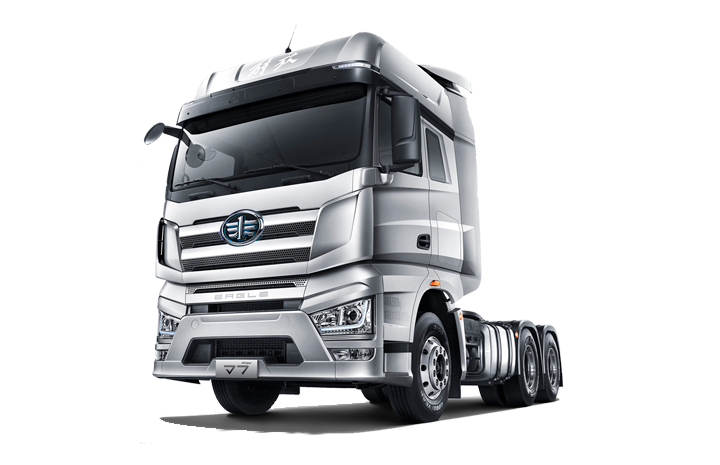
A reliable FAW truck supplier should offer a wide range of models and configurations to match specific operational needs. The product portfolio includes models such as J7, J6P, J6V, J6E, JH6, J6G, J6L, JK6, and Tiger V, covering tractor trucks, dump trucks, cargo trucks, refrigerated trucks, concrete mixers, garbage trucks, and many specialized vehicles. Key parameters include a truck weight range of 3,000–15,000 kg and size dimensions up to 12,000×2,550×3,800 mm. Tire specifications, safety configurations (ABS/EBS/TCS), and materials (steel, iron, aluminum alloy, plastic) can be tailored upon request. For example, the JH6 model is available with CNG powertrains, offering fuel‑cost advantages in markets with abundant natural gas.
4. After‑Sales Support and Spare Parts Availability
One of the most frequent pain points for emerging‑market buyers is the availability of spare parts and technical support. The supplier provides global technical support for after‑sales service and can dispatch engineers to assist with on‑site repairs. Routine wear‑and‑tear risks are mitigated through regular inspection programs. Additionally, the company offers multiple delivery methods (FOB, CIF, CFR, EXW, DDP) and payment terms (TT/LC/DA/DP) to reduce financial friction. A minimum order quantity of just 1 unit allows buyers to test a vehicle before committing to a large fleet.
5. Comparative Advantage: How FAW Trucks Stack Up
When compared with peers such as Beiben, Sinotruk, and Shacman, FAW trucks are reported to deliver higher engine power and better fuel efficiency. The driver's cab design offers more space and comfort, and repair procedures are described as more convenient. Spare parts are globally available, which simplifies maintenance logistics. The cost difference can be up to 10% lower than some competitors, making FAW an attractive option for cost‑sensitive fleets without compromising on performance.
6. Real‑World Case: Long‑Term Reliability in Mali
A logistics company in Mali operates a fleet of 50 FAW trucks for transporting powdered and granular materials, as well as sand and gravel. Over a span of more than 10 years, the vehicles have maintained stable operation under high‑intensity conditions. This case demonstrates the durability of FAW trucks in demanding environments and validates the supplier's claim of robust engineering.
Conclusion: A Practical Screening Framework
Procurement teams should prioritize suppliers that can demonstrate verifiable production capacity, recognized certifications, comprehensive customization, and responsive after‑sales infrastructure. The information presented here, including the certified production output of 8,000 units per month and lead time of 30–45 days, provides a baseline for evaluating FAW truck suppliers. By cross‑checking these data points with personal audit visits and reference checks, buyers can significantly reduce procurement risk.
Have Questions or Need More Details?
Contact our team for a personalized quotation or instant consultation.
Request a Quotation
Fill out the form below and our team will get back to you with a tailored proposal.
WhatsApp Direct Chat
Prefer to chat in real-time? Message us on WhatsApp for instant assistance & quick answers.
- Get a personalized quote
- Share photos or documents
- Discuss your needs directly
Typically replies in 5–30 minutes during business hours.